 Intellect Plus
Auxiliary historical sciences
23 cards. Each one is a 40-second story with a five-minute read behind it.
 The evolution of Russian identity is written in its bannersRussia's national symbols are not static relics; they are a shifting visual dialogue between imperial legacy, Soviet triumph, and modern statehood. From the merchant tricolors of …
 Listening is not a passive act; it is a tool for personality changeMost people believe listening is something that happens to them. In reality, active listening is a deliberate psychological intervention. When practiced correctly, it doesn't just…
 The Peruvian flag was redesigned because it looked too much like Spain'sImagine fighting for independence while flying a banner that confuses your enemies with the very empire you are trying to overthrow. Peru’s national colors were born from revoluti…
 The only national flag in the world with two different sidesParaguay holds a unique distinction in vexillology. While most nations display a single design, Paraguay’s flag features a completely different emblem on its front and back. This …
 The Chilean flag's red stripe is a tribute to independence-era bloodChile’s national colors are more than just aesthetic choices; they are woven from the geography of the Andes and the violence of revolution. While many see a simple tricolor, the …
 Why a burning ship might yell 'Yuliet alfa vore' to be savedIn the middle of a maritime emergency, language barriers can be fatal. The International Code of Signals (INTERCO) solves this by turning complex needs into standardized phonetic …
 A coat of arms is defined by words, not by picturesIn the world of heraldry, a visual image is secondary to its verbal description. A blazon is a precise, technical language that allows a reader to reconstruct an exact emblem from…
 Is this 4th-century Greek manuscript the most reliable witness to the original New Testament?Kept in the Vatican Library since at least the 1400s, Codex Vaticanus is a foundational Greek Bible manuscript. Scholars prize it for its antiquity and textual quality, often usin…
 Why Ecuador’s flag colors were inspired by a conversation with a German poetThe vibrant yellow, blue, and red of Ecuador’s flag are not merely patriotic symbols; they are a direct legacy of a 1785 conversation between Venezuelan General Francisco de Miran…
 Is the European flag a secular symbol or a hidden tribute to the Virgin Mary?The iconic blue flag with twelve golden stars is synonymous with European unity, yet its origins remain shrouded in debate. While officially representing perfection and completene…
 The Venezuelan flag was inspired by a German philosopher's theory of primary coloursFrancisco de Miranda, the architect of Venezuela's tricolour, claimed his design emerged from a late-night conversation with Johann Wolfgang von Goethe. While the flag's yellow, b…
 The letter S began as a tooth and once had a long, elegant twin.The nineteenth letter of the Latin alphabet has a surprisingly complex lineage. It evolved from a Semitic pictogram of a tooth into the versatile character we use today. For centu…
 The Telugu people have shaped South Asian culture for over two millenniaFrom ancient military prowess to the largest film industry in India, the Telugu people have left an indelible mark on history. As the most populous Dravidian linguistic group, the…
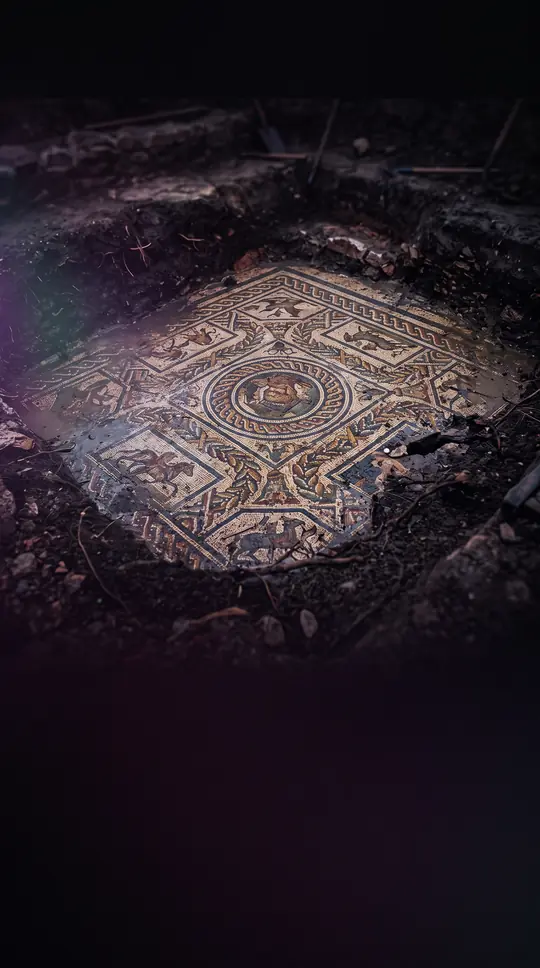 The oldest known dig was ordered by a Babylonian king 2,600 years agoExcavation is controlled destruction: once a layer is dug away, all that survives are the notes, drawings and photographs made of it. Modern archaeologists peel sites apart one th…
 Why there is no year zero, unless you ask an astronomerThe calendar most of the world uses was invented by a monk around 500 AD, extended backwards by Bede, and still skips straight from 1 BC to AD 1. Astronomers found that gap so awk…
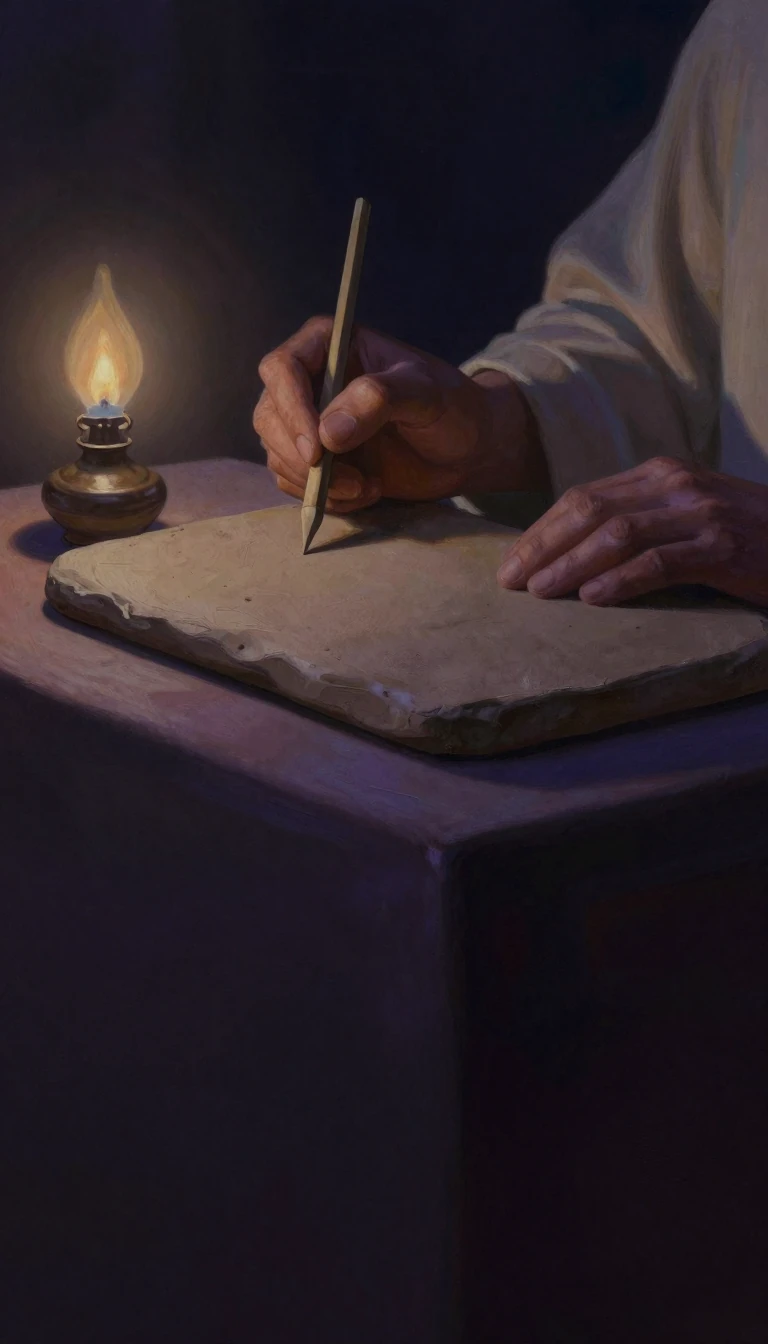 A house fire can preserve writing for millennia, if the tablets are clayEpigraphers read writing that was never meant for a library: words carved in rock, stamped into metal, scratched on pots or painted on walls. Some of it survived only by luck, lik…
 The oldest flag ever found is 4,400 years old and made of bronzeNobody knows who raised the first flag, but the oldest one yet discovered comes from Shahdad in Iran, around 2400 BC, and it is metal rather than cloth. Fabric flags came later, p…
 Anglo-Saxon kings traced their ancestry to Woden, then kept going to AdamConfucius has the largest surviving family tree on Earth, kept for more than 2,500 years. At the other extreme, English royal chroniclers simply invented descent from the god Wode…
 The three lions of England probably trace back to one Angevin countMedieval heralds happily gave coats of arms to Christ, King Arthur's knights and ancient heroes. In reality, hereditary arms appeared only in the twelfth century. One of the earli…
 Livy wondered what if Alexander had attacked Rome, inventing alternate historyHistoriography is history about history: not what happened, but how people have chosen to tell it. Its long story includes Herodotus sorting reliable reports from unreliable ones,…
- The Philippines flies its flag upside down to announce a warMost national flags have one fixed orientation, but the Philippine flag legally flips in wartime, putting its red stripe above the blue. Flags carry more coded meaning than they s…
- Dating a manuscript by its handwriting is far fuzzier than it soundsPalaeographers can often tell roughly when and where a manuscript was written just from the shapes of its letters. Roughly is the key word. Specialists warn against dating a hand …
 When archaeologists say culture, they mean pots that keep turning up togetherNobody ever dug up a people, only their leftovers. An archaeological culture is a bundle of objects, buildings and burial habits that recur together in one place and time. Decidin…