 Intellect Plus
Mass media
46 cards. Each one is a 40-second story with a five-minute read behind it.
 The editor who shaped the news and then became the newsGerard Baker’s career at the Wall Street Journal serves as a masterclass in the tension between objective reporting and ideological gatekeeping. From managing newsrooms to moderat…
 The volatile chemistry of a hip-hop superduo forged in spiritual pursuitWhen Kanye West and Kid Cudi joined forces as Kids See Ghosts, they weren't just making music; they were chasing a shared spiritual frequency. Their partnership has been defined b…
 How a theatrical American Idol runner-up became a global rock iconAdam Lambert transformed from a reality television contestant into a powerhouse vocalist leading one of history's greatest rock bands. By blending theatrical training with modern …
 Why that viral online movement might be a corporate-funded illusionAstroturfing is the deceptive practice of masking a campaign's true financial backers to make a top-down corporate or political agenda appear as a spontaneous, grassroots movement…
- Why colossal falsehoods can be more persuasive than small, everyday deceptionsThe big lie is a propaganda tactic that relies on the sheer scale of a fabrication to bypass critical thought. By presenting a claim so audacious that people struggle to believe a…
 Why the world's most successful digital services are free, until they aren'tThe freemium model turns software into a two-tier ecosystem. By offering a basic, no-cost version to build a massive user base, companies can then monetize power users through sub…
- How a 34-year-old became France's youngest and first openly gay prime ministerGabriel Attal rose from a junior ministerial role to the head of the French government in record time. His tenure was defined by a snap election, a hung parliament, and a bold, of…
 Is hacktivism a noble form of digital civil disobedience or just malicious cyber crime?Hacktivism merges programming prowess with political protest, aiming to influence social change through the digital realm. From anonymous website defacements to massive denial-of-…
 The Élysée Palace was built on the profits of colonial slavery and the slave trade.Completed in 1722, the official residence of the French president hides a dark origin story. Its construction was financed by a massive dowry from the wealthiest man in France, wh…
 How a self-described mod actor built a career spanning from The Office to MarvelMartin Freeman is a rare actor who successfully navigated the transition from iconic television mockumentary roles to global blockbuster franchises. Beyond his screen presence, hi…
 Beyond the Python: The Radical Medievalist and Anarchist Mind of Terry JonesTerry Jones was far more than a comedy legend. While he famously dismantled punchlines in Monty Python, he spent his later years challenging historical orthodoxies, campaigning ag…
 How a century-old animation studio evolved into a global live-action juggernautWalt Disney Pictures began as a modest cartoon shop in 1923, but it eventually transformed into a Hollywood powerhouse. By pivoting from hand-drawn shorts to live-action blockbust…
 Why a legendary rapper abandoned his stage name to reclaim his true identityBorn Dante Terrell Smith, the artist known as Mos Def spent decades as a titan of conscious hip-hop. In 2011, he retired his famous moniker, arguing that the industry had turned h…
 How a $580 million social media giant lost its crown in less than a decadeOnce the world's most popular website, Myspace defined the early internet before a rapid collapse. From its meteoric rise as a cultural powerhouse to a series of disastrous corpor…
 Why the Soviet Union spent decades spreading lies about Hitler's final momentsAdolf Hitler died by suicide in his Berlin bunker on 30 April 1945, yet for years, Joseph Stalin insisted he had escaped to South America. This deliberate disinformation campaign …
- Is Marc Benioff the ultimate blueprint for the modern, politically active tech billionaire?From a teenage programmer selling games to the CEO of a global software giant, Marc Benioff has redefined corporate leadership. He pioneered the 1-1-1 philanthropic model, bought …
 TikTok started life as the export version of a Chinese app built in seven monthsByteDance built Douyin in roughly seven months in 2016 and saw it pass 100 million users within a year. Its founder then argued that China held only a fifth of the world's interne…
 Time magazine was almost called Facts, pitched at busy men with an hourTwo Yale graduates in their mid-twenties wanted a news digest a busy reader could finish in about an hour. They first planned to call it Facts, then settled on Time with the sloga…
 Vogue started as a weekly society paper that also courted menThe first Vogue, out in New York in December 1892 for ten cents, chronicled the parties, pastimes and clothes of Manhattan's upper class, with sport and social news thrown in for …
- At its peak one manga magazine sold 6.53 million copies a weekWeekly Shōnen Jump began in 1968 as a fortnightly latecomer chasing two established rivals. By the 1995 New Year issue it was printing 6.53 million copies, reaching an estimated 1…
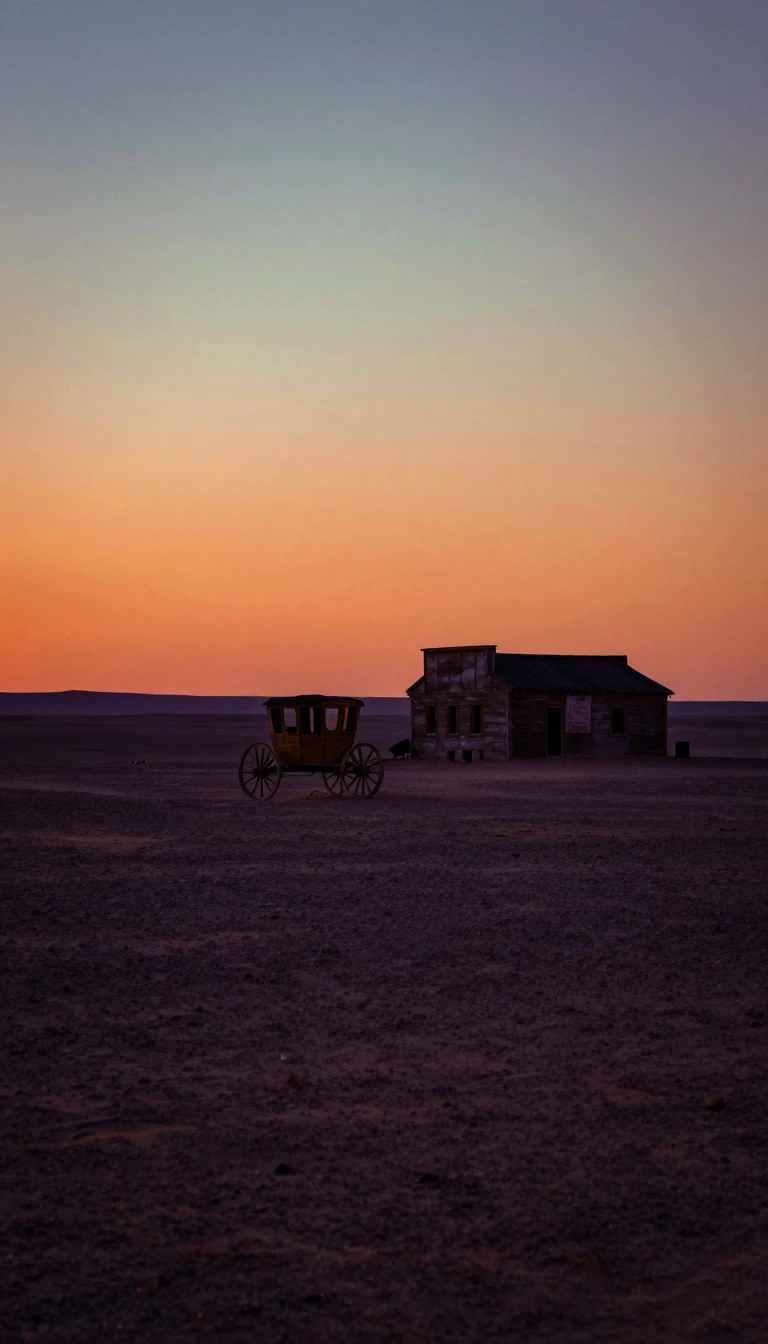 The first Western story on film was made in Blackburn, EnglandThe Great Train Robbery of 1903 is often called the first Western, but that is wrong. Edison was filming Wild West performers as early as 1894, and the earliest known Western with…
 Wikipedia was a side project meant to feed a stricter expert encyclopediaIn January 2001 Larry Sanger suggested a wiki as a feeder for Nupedia, an online encyclopedia whose expert-written articles went through formal review. The feeder launched five da…
 The British Library adds about three million items to its shelves every yearPhysical books were long humanity's main way of storing knowledge, and the British Library alone holds more than 170 million items, growing by some three million a year. Publishin…
 Thomas Edison secretly bankrolled the journal Science and got friendly coverageWhen the journalist John Michels launched Science in 1880, Thomas Edison helped fund it. In return the inventor, then under fire for delays on his light bulb, received favourable …
 Scientific American once reported on a boat-lifting invention by Abraham LincolnAmerica's oldest continuously published magazine began in 1845 as a four-page weekly obsessed with the Patent Office. Its early pages covered perpetual motion schemes, the univers…
 America's largest television network is not ABC, CBS or NBC but PBSThe commercial giants dominate talk of American television, but the largest network is the non-profit Public Broadcasting Service. Unlike its rivals, PBS has no single central sch…
- The Hitchhiker's Guide began as a radio pitch about destroying Earth six timesDouglas Adams first proposed a radio series called The Ends of the Earth, six episodes each finishing with the planet wiped out in a new way. While drafting the first, he needed a…
 The word multimedia was coined to advertise a 1966 Long Island disco showLong before CD-ROMs and streaming, multimedia described a nightclub act. The singer and artist Bob Goldstein used it in July 1966 to promote Lightworks at L'Oursin in Southampton,…
- National Geographic began as a dry journal for just 165 membersThe first issue, in September 1888, went to 165 charter members and contained no photographs to speak of. Then, in January 1905, the editors ran several full-page pictures of Tibe…
- Nature turns away more than nine in ten papers submitted to itGetting published in Nature can make a scientific career: fewer than 8 percent of submissions are accepted. Yet the journal began in 1869 not as an elite gatekeeper but as a publi…
 NBC's peacock logo was invented to sell colour televisionIn 1956 NBC unveiled a stylised peacock to show off its pioneering colour broadcasts, and the Peacock Network nickname stuck. The company was already three decades old by then, fo…
- Why is man bites dog news, while dog bites man is not?News prizes the unusual. An ordinary event rarely qualifies, but a reversal of the expected does, which is the point of the old newsroom saying about men biting dogs. Across cultu…
- America's first newspaper was shut down immediately after its first issueIn 1690 Richard Pierce and Benjamin Harris printed a newspaper in Boston without government permission, and the authorities promptly suppressed it. It took a libel trial in 1735 a…
- Newspapers were not killed simply by the internet beating printThe obvious story says digital news defeated paper. The fuller picture is messier: most papers now publish online anyway, and anyone can subscribe digitally. What really drained t…
- The first news photograph ever printed had to be copied as an engravingOn 25 June 1848 someone photographed barricades in Paris during the June Days uprising. Presses could not yet reproduce photographs, so L'Illustration published it in July as an e…
 One of the founders of public relations could not explain what he didIvy Lee rebuilt the battered Rockefeller reputation and, with Edward Bernays, drafted an early definition of public relations. Yet asked at a hearing to describe his job, Lee admi…
 Facebook started with two students each putting in 1,000 dollarsIn January 2004 a Harvard sophomore coded a site he called TheFacebook, and he and classmate Eduardo Saverin agreed to invest 1,000 dollars apiece. It went live on 4 February. By …
 The word meme was invented by an evolutionary biologist in 1976Richard Dawkins coined meme in The Selfish Gene as a cultural counterpart to the gene: a unit of culture that copies itself from mind to mind. Seventeen years later Mike Godwin ap…
 In America, a blogger reviewing a free gadget must legally say soThe US Federal Trade Commission requires bloggers who write about products they were given for free to disclose the gift. The rule exists because in the United States almost anyon…
 Le Monde was launched on de Gaulle's wish, then spent decades defying himIn late 1944 Charles de Gaulle wanted France to have a prestigious paper speaking to the world, almost an unofficial voice of the Republic. The man chosen to run it, Hubert Beuve-…
- Magazines share their name with gunpowder stores and Russian shopsMagazine comes from the Arabic makhazin, storehouses, reaching English through French and Italian. It first meant a military depot. In 1731 an English editor borrowed the word for…
- The first printed mass medium was probably not books but cheap European printsChina printed the Diamond Sutra in 868 and invented clay movable type in 1041. Yet limited literacy and costly paper held back a mass market there. The earliest true mass medium w…
- Scientific journals began as a Paris review of books and court rulingsBefore journals, scientists shared ideas by private letter. In 1664 Denis de Sallo, writing under a pseudonym, and printer Jean Cusson won a royal privilege from Louis XIV to publ…
 The word cartoon started as heavy paper for frescoes, then became a jokeFor centuries a cartoon was a full-size design drawn on sturdy pasteboard, used to guide painters of frescoes and weavers of tapestries. The funny meaning arrived in 1843, when Pu…
 The school edition of Fahrenheit 451 was itself quietly edited about 75 timesRay Bradbury's novel about a society that burns books became a classroom staple, yet the Ballantine paperback most schools used contained roughly 75 edits, omissions and changes f…
 Propaganda began as the name of a Vatican missionary office in 1622In 1622, as part of the Counter-Reformation, the Catholic Church set up the Congregation for Propagating the Faith to spread Catholicism in non-Catholic lands, known informally as…