 Intellect Plus
Inventions
983 cards. Each one is a 40-second story with a five-minute read behind it. Page 14 of 17.
 Why the floppy disk remains the enduring icon of the digital save buttonInvented by IBM in 1971, the floppy disk evolved from a flexible 8-inch sheet to a rigid 3.5-inch standard. Though long superseded by flash storage, its cultural footprint persist…
 How high-pressure fluid and sand unlocked the world's vast unconventional energy reservesFracking is a well stimulation technique that injects high-pressure fluid into deep bedrock to create cracks, allowing trapped oil and gas to flow. By using proppants like sand to…
 Flash memory stores data by trapping electrons inside an insulated floating-gate transistor.Invented at Toshiba in 1980, flash memory revolutionized storage by allowing data to be electrically erased and reprogrammed. It relies on floating-gate MOSFETs, where electrons a…
 Why the FDA does not actually approve your nonstick frying panThe FDA regulates everything from vaccines to household pets, yet it does not approve nonstick coatings like Teflon. Instead, these materials are merely deemed compliant or accept…
 The fountain pen is a masterpiece of fluid dynamics, not just a writing tool.A fountain pen does not merely hold ink; it manages a delicate, invisible exchange between gravity, air pressure, and capillary action. While often viewed as a relic, this instrum…
 Can a trade bloc survive when its members keep leaving for the European Union?Established in 1960 as an alternative to the European Economic Community, the European Free Trade Association has seen most of its original founders defect to the EU. Today, it pe…
 Can a smartphone be truly ethical, or is it just a fairer alternative?Fairphone aims to disrupt the electronics industry by prioritizing supply chain transparency and modular design. While the company has earned acclaim as the world's most ethical s…
 Is the eurozone a permanent commitment or a reversible economic experiment for its members?The eurozone is a currency union of 21 nations sharing the euro as their sole legal tender. While its architects designed the monetary union to be irrevocable, legal scholars and …
 How a medieval warrior saint became the enduring symbol of the English nationThe red cross on a white field is synonymous with England, yet its origins are shrouded in myth. While often linked to Richard the Lionheart, historical evidence points to a more …
 The European Economic Area allows countries to access the EU market without joining it.The European Economic Area (EEA) is a unique commercial treaty that extends the European Union's common market to Iceland, Liechtenstein, and Norway. It grants these non-EU states…
 The high-ranking Nazi official who crumbled into a sobbing mess during his trialErnst Kaltenbrunner was a towering, scarred SS general who orchestrated the Holocaust as chief of the Reich Security Main Office. Yet, when faced with the reality of the Nuremberg…
 How many humans have ever lived, and why are population counts so uncertain?Estimating the total number of people who have ever existed is a complex exercise in historical guesswork. While modern census data offers precision, looking back thousands of yea…
 Dalmatia is a historical region defined by shifting borders and ancient tribal rootsTracing the history of the eastern Adriatic coast reveals a complex tapestry of Roman provinces, Venetian maritime power, and Ottoman expansion. Today, this region is a historical…
- How Nepal’s demographic shift from rural isolation to urban growth reshaped its national identity.Nepal has transformed from a collection of isolated mountain communities into a nation defined by rapid internal migration and shifting fertility rates. As the country moves towar…
 Why the global human population is shifting toward an older and more urban futureWith over 8.2 billion people on Earth, our demographic landscape is undergoing a profound transformation. While the total population continues to climb toward a projected 10.4 bil…
- How a remote English county became the unlikely cradle of the Industrial RevolutionDerbyshire is more than just a scenic landscape of limestone dales and gritstone moors. Its unique geography—characterized by fast-flowing streams and rich mineral deposits—made i…
 Data mining is a misnomer for the automated discovery of hidden, valuable patterns.Data mining is not about digging for data, but extracting knowledge from massive, complex sets. By applying machine learning and statistical models, it uncovers hidden dependencie…
 Is your skin inflammation actually eczema, or is it something else entirely?Dermatitis is a broad term for skin inflammation, often used interchangeably with eczema. While it affects millions globally, its causes remain elusive, ranging from genetic predi…
 The daguerreotype was the first public photographic process, but its origins remain shrouded in myth.Before the daguerreotype, capturing a fleeting image required hours of manual labor. Louis Daguerre’s 1839 invention changed everything, turning the camera obscura into a machine …
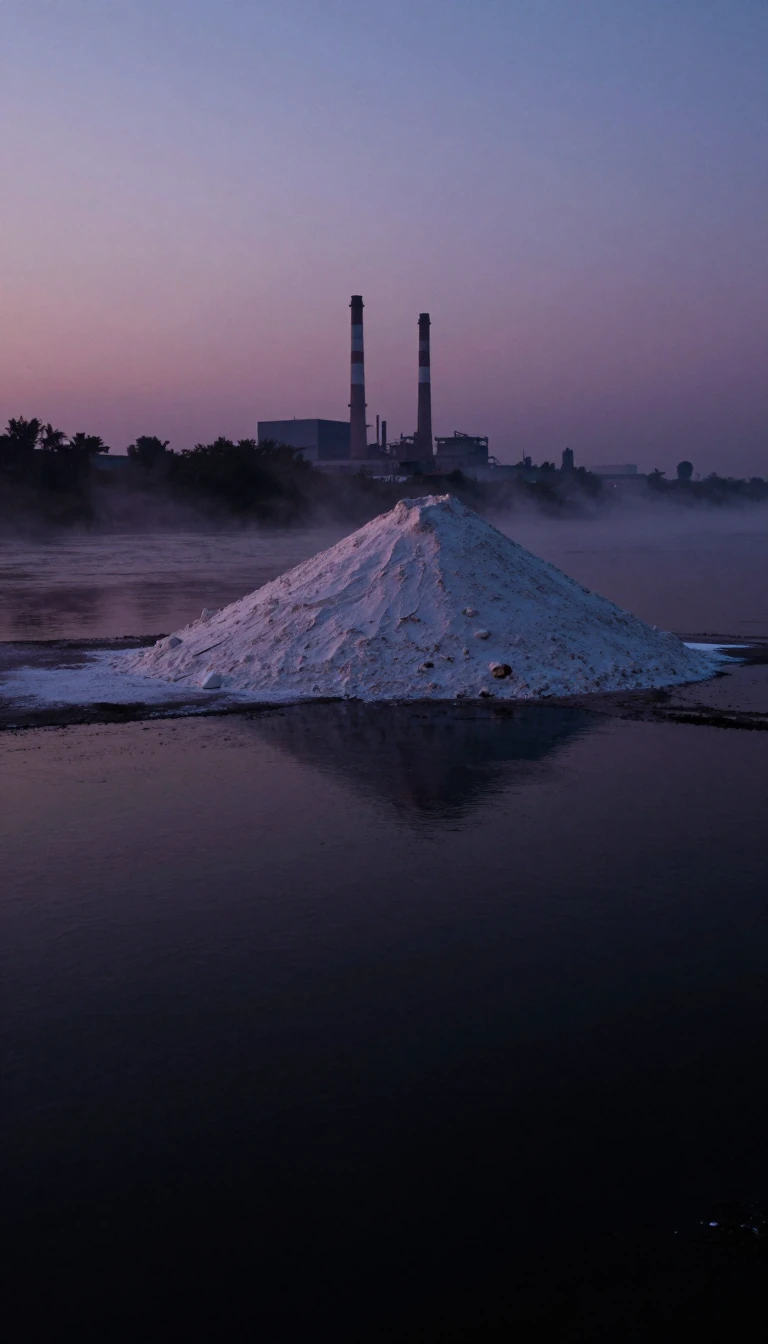 How a porous, grey coal residue fueled the Industrial Revolution and modern steelmaking.Coke is not just a fuel; it is the backbone of industrial history. By baking coal in airless ovens, we strip away volatile impurities to create a high-carbon, smokeless powerhouse…
 Is consumerism a tool for economic freedom or a trap of endless, wasteful materialism?Consumerism is a shapeshifting concept. To some, it represents the ultimate power of the buyer to dictate the economy. To others, it is a destructive force of mindless waste and s…
 Is the ancient game of Chaturanga the true ancestor of modern chess?Before chess conquered the world, India played Chaturanga. This ancient strategy game, named after the four divisions of a traditional army, likely served as the foundational blue…
 The cloud is not a place, but a complex, often opaque, shared infrastructure model.We treat the cloud as a magical, ethereal storage space, but it is actually a rigid, physical, and highly regulated system. While it promises infinite scalability and convenience,…
 Why coaxial cable can run along metal gutters without losing its signal powerCoaxial cable is an engineering marvel that confines electromagnetic fields entirely within its structure. By keeping signals trapped between an inner conductor and an outer shiel…
 The pound sterling began as a literal weight of silver, not a coin.For centuries, the British pound was merely a unit of account representing 240 silver pennies. It took 500 years for the penny to be the only coin minted, and even longer for the …
 Why the study of ancient Greek and Roman culture shaped Western civilization for centuries.Classics, the study of ancient Greek and Roman antiquity, once served as the bedrock of elite Western education. From the Renaissance to the 18th century, these classical models d…
 How centuries of conquest and global trade forged the identity of British cuisineBritish food is often misunderstood as bland, yet it is a complex tapestry woven from Roman imports, medieval spice routes, and colonial exchange. From the invention of the sandwi…
 Is a blockchain a revolutionary decentralized ledger or just a glorified, cumbersome database?Blockchain technology promises a future of secure, decentralized record-keeping by linking data blocks through cryptographic hashes. While it famously solved the double-spending p…
 From Victorian telegraphs to digital giants: the evolution of Britain's primary telecommunications providerBT Group’s history spans nearly two centuries, evolving from the world’s first public telegraph company into a modern telecommunications titan. Through state monopolies, privatiza…
 How a small Massachusetts city evolved from a Puritan outpost to a global innovation hub.Cambridge began as a colonial settlement for Puritan ministers, but today it is the epicenter of biotech and software breakthroughs. From the invention of the first network router…
 Canary Wharf: From a derelict fruit dock to a global financial skyscraper powerhouse.Once a bustling hub for Mediterranean fruit imports, Canary Wharf collapsed into bankruptcy shortly after its 1991 launch. Today, it stands as a premier global financial district,…
 Why a miscalculation involving lithium-7 made Castle Bravo the most powerful US nuclear testOn March 1, 1954, the United States detonated the Castle Bravo device at Bikini Atoll. Designed to yield 6 megatons, it unexpectedly unleashed 15 megatons of energy. This massive …
 How a simple blast of air turned steel from a luxury into a foundationBefore 1856, steel was a prohibitively expensive material reserved for small tools and cutlery. Henry Bessemer changed everything by discovering that blowing air through molten pi…
 How Ma Bell Built a Global Telecommunications Empire and Then Was Forced to BreakFor over a century, the Bell System held a vertical monopoly over North American telecommunications. Known as Ma Bell, this massive conglomerate owned everything from the local ph…
- How three small European nations became the laboratory for the entire continent's integrationLong before the European Union, Belgium, the Netherlands, and Luxembourg pioneered a radical model of cross-border cooperation. Today, this trio functions as a high-stakes testing…
- How a Moravian mission town built the skeleton of the modern American skyscraperBethlehem, Pennsylvania, is famous for its Moravian roots and Christmas traditions, but its industrial legacy reshaped the global skyline. By pioneering the wide-flange structural…
- Why the Austrian school of economics rejects the mathematical models of modern financeThe Austrian school argues that economic life is driven by individual choices rather than statistical aggregates. By prioritizing human action over mathematical modeling, this het…
- Was Lucy a bipedal climber or a ground-dwelling ancestor of modern humans?Australopithecus afarensis, the species famously represented by the Lucy skeleton, remains one of the most debated hominins in history. Living millions of years ago, this creature…
 Long before digital robots, ancient engineers built mechanical marvels that mimicked life itself.From bronze watchdogs in Greek myth to programmable flute players in medieval Baghdad, automata have captivated humanity for millennia. These self-operating machines were designed…
- The B61 is the versatile, dial-a-yield nuclear bomb defining modern American strategic deterrence.As the primary thermonuclear gravity bomb in the United States arsenal, the B61 is a marvel of engineering that balances tactical flexibility with strategic power. Featuring a var…
- The world's most common writing tool was once a failed, coarse industrial experiment.Before it became a ubiquitous office staple, the ballpoint pen was a clunky invention that struggled to write on paper. It took decades of chemical refinement and precision engine…
- Bakelite was the world's first synthetic plastic, revolutionizing how we manufacture everyday objects.Before Bakelite, the chemical industry focused on dyes and explosives. In 1907, Leo Baekeland created a heat-resistant, nonconductive material that could be molded into any shape.…
 Does cutting government spending actually fix a deficit or just destroy economic growth?Austerity is often sold as fiscal discipline, but the math is rarely that simple. When governments slash budgets during a recession, they may inadvertently trigger a deeper slump.…
- Why We Pretend to See the Invisible: The Psychology of Collective IllusionsHans Christian Andersen’s 1837 fairy tale about a vain emperor and his invisible clothes is more than a children’s story. It is a profound exploration of social pressure, where in…
- Is the British Monarchy’s Survival Guaranteed by Law or Just Habitual Public Preference?While the United Kingdom has functioned as a constitutional monarchy for centuries, a persistent republican movement has challenged the crown since the 1600s. Despite legal threat…
 How Napoleon’s blockade of Britain accidentally sparked Italy’s industrial revolutionWhen Napoleon enforced the Continental System to cripple British trade, he intended to protect French manufacturing. Instead, the blockade inadvertently forced the Kingdom of Ital…
- The Six Arrows: How Mustafa Kemal Atatürk Engineered a Modern Republic from Ottoman RuinsKemalism was not merely a political platform but a radical, state-led project to transform Turkey into a secular, modern nation. By enshrining six core principles into the constit…
 Why the Tagged Image File Format is jokingly called Thousands of Incompatible File FormatsCreated in the mid-1980s to unify a fragmented scanner market, TIFF became a powerhouse of desktop publishing. Yet, its extreme flexibility—allowing for countless custom tags and …
 Beyond the Pharaohs: The Ancient Engineering and Archery Mastery of the Nubian PeopleLong before the Aswan High Dam reshaped the Nile, the Nubians were a formidable civilization in the central valley. Renowned as elite archers and architects of a complex society, …
- Born from a patent dispute, PNG became the internet's most resilient image formatIn 1994, a royalty demand on the GIF format sparked a digital rebellion. Developers united to create a free, non-patented alternative, resulting in the Portable Network Graphics f…
 JSON: The simple, language-independent data format that powers the modern webBorn from a need to replace clunky browser plugins, JSON has become the universal language for web data. Though derived from JavaScript, this lightweight format is now used across…
 How a lawnmower in the sky changed the nature of modern warfare foreverBorn from a bankrupt company and initially dismissed as a noisy nuisance, the Predator drone evolved from a simple reconnaissance tool into a global combat icon. By separating the…
- The MQ-9 Reaper transformed the drone from a simple scout into a lethal hunter.Once a quiet observer, the MQ-9 Reaper redefined aerial warfare by blending long-endurance surveillance with strike capability. This remotely piloted aircraft, controlled by crews…
 Why Isaac Newton and other thinkers predicted the end of the worldApocalypticism is the belief that civilization faces a sudden, cataclysmic end. While often associated with religious prophecy, the concept has evolved through history, influencin…
- Drones have disrupted traditional military doctrine as profoundly as the invention of gunpowder once did.From high-tech military UCAVs to modified commercial quadcopters, drones have become a decisive factor in modern conflict. They act as an expendable force multiplier, enabling eve…
- Did the Roman Republic actually exist as a stable, well-governed political community?The Roman Republic is often idealized as a model of separated powers, yet its reality was far more complex. Ancient thinkers debated whether it was a true republic or a fragile ex…
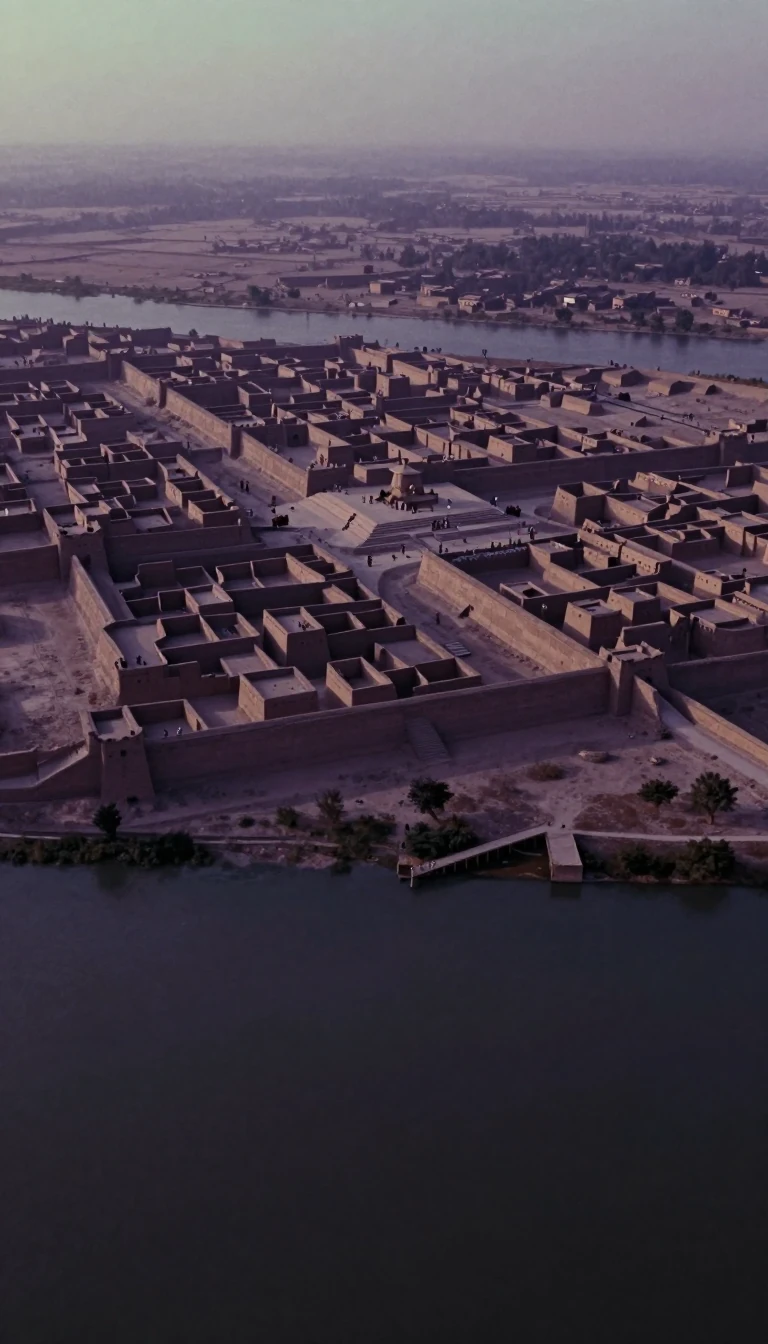 Christianity began as a tiny Jewish sect meeting in private homesBy AD 100, one historian estimates, there were only about 7,000 Christians in a Roman Empire of 60 million people, roughly one in ten thousand. They met in ordinary houses, kept i…
 Our species is at least 300,000 years old, far older than once thoughtFor decades the Omo skulls from Ethiopia, about 195,000 years old, marked the dawn of anatomically modern humans. Then finds from Jebel Irhoud in Morocco pushed the date back to r…
 Electric power is just voltage times current, until alternating current complicates thingsA watt is one joule of energy moved every second, and in a simple circuit you find the power by multiplying voltage by current. That tidy rule hides some oddities: electrons actua…
- The e-cigarette was first patented in 1963, four decades before it caught onHon Lik's 2003 patent is usually cited as the birth of the modern e-cigarette, but an American named Herbert A. Gilbert filed for a smokeless, tobacco-free cigarette in 1963. It p…