 Intellect Plus
Technology today
402 cards. Each one is a 40-second story with a five-minute read behind it. Page 7 of 7.
 How Stanley Kubrick and Arthur C. Clarke redefined the limits of science fiction cinema.Released in 1968, 2001: A Space Odyssey remains a landmark of visual storytelling. By stripping away conventional dialogue and narrative, director Stanley Kubrick and writer Arthu…
 India's 2024 general election saw the world's largest democratic exercise reshape its political landscape.With 642 million voters participating, the 2024 Indian general election was the largest in history. While Narendra Modi secured a third term as prime minister, his Bharatiya Janat…
 How a gritty industrial port transformed into a high-density hub of luxury livingOnce a bustling center for coffee, tea, and shipbuilding, Hoboken has undergone a radical metamorphosis. From its origins as a colonial resort and the birthplace of baseball, this…
 Why nobody can agree which countries count as developingQatar, Singapore and Kuwait rank among the richest places on Earth by almost any economic measure, yet they have been criticised for calling themselves developing countries at the…
 Tesla started as a two-man startup building sports cars in a dealershipTesla's first cars were assembled in 2008 in the service bays of an old Chevrolet dealership in Menlo Park. By January 2009 only 147 had been delivered. Within twelve years the co…
 Google's quantum milestone: 10,000 years, or two and a half days?In 2019 Google and NASA announced that a 54-qubit machine had finished in minutes a calculation that would take classical supercomputers about 10,000 years. IBM promptly countered…
 Online video hosting existed eight years before YouTube, but it could not streamShareYourWorld.com launched in 1997, letting people upload clips and whole films in various formats. Bandwidth was thin and transcoding primitive, so nothing played smoothly in th…
 Five rival New York papers pooled costs to cover a war, creating APSending dispatches from the Mexican-American War was expensive, so in May 1846 five competing New York dailies agreed to split the bill. That thrifty arrangement became the Associ…
 A grieving railroad tycoon built Stanford in memory of his teenage sonWhen Leland Stanford Jr. died of typhoid in 1884 at just 15, his parents, the railroad magnate and senator Leland Stanford and his wife Jane, decided to found a university in his …
 The 1984 California law that birthed a trillion-dollar digital economyLong before Amazon dominated your doorstep, a legislative milestone in California defined the rules of electronic commerce. What began as a specific state act has evolved into a g…
 The digital postman: how a store-and-forward system keeps us connectedBefore instant messaging, there was a system designed for reliability over speed. Email doesn't require you and your recipient to be online at the same time. By using a clever sto…
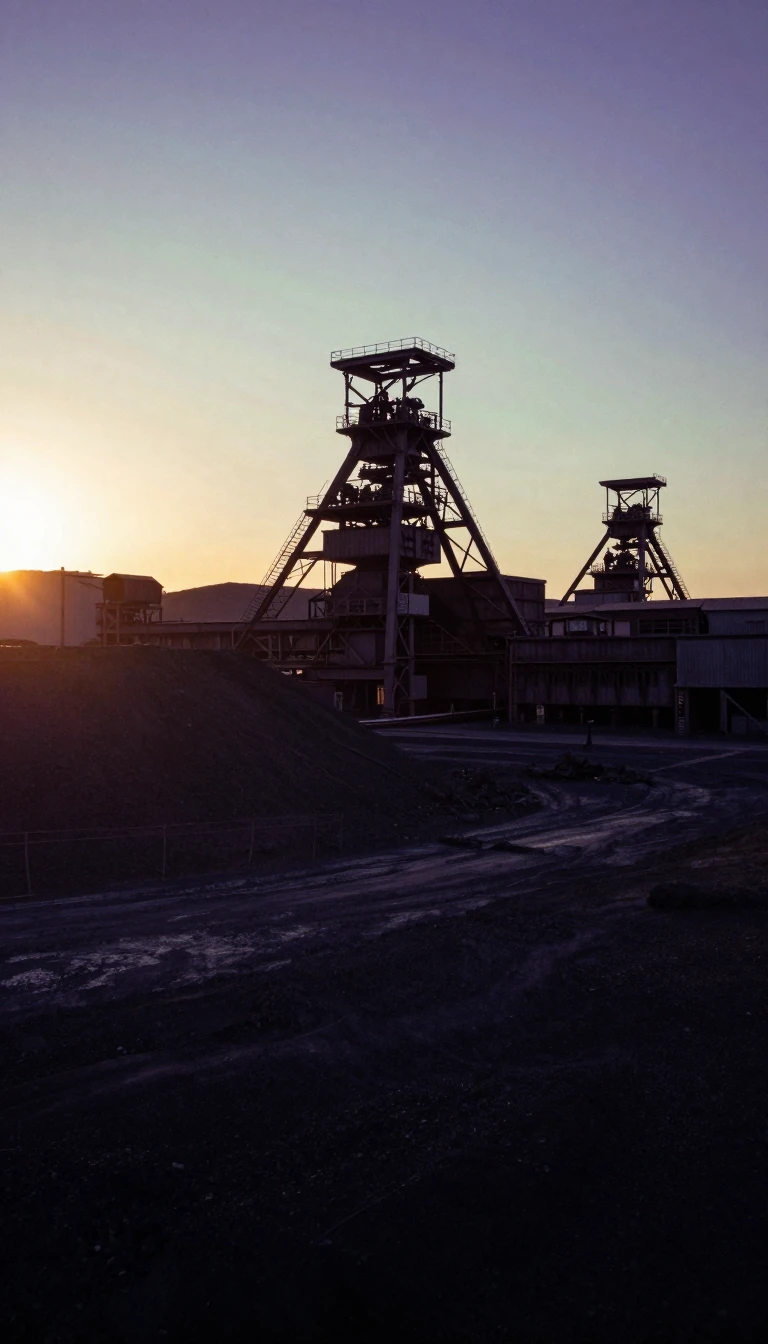 The prehistoric forest that became the world's most powerful fuelMillions of years before the first steam engine, massive tropical wetlands were quietly transforming into the carbon-rich energy that would eventually drive the Industrial Revolut…
 The invisible pulse of progress: understanding the physics of the wattFrom the tiny energy of a hearing aid to the staggering power of the sun, the watt measures the heartbeat of our universe. It is not just a number on a lightbulb; it is the fundam…
 The shifting definition of terror: from revolutionary justice to the weapon of the weakestIs terrorism a modern phenomenon or an ancient impulse? While the term originated during the French Revolution to describe state-led political violence, it has evolved into a comp…
 From smoke signals to the internet: the evolution of remote thoughtLong before the digital age, humans relied on homing pigeons and hilltop beacons to bridge distances. Today, we transmit exabytes of data across the globe instantly. But how did w…
 The pocket-sized supercomputer that replaced your entire gadget collectionIt is more than a phone. From GPS and cameras to heart rate monitors and barometers, the smartphone has swallowed the PDA, the camcorder, and the e-reader. But how did a single sl…
- The ancient paradox of searching for what you do not yet knowTo research is to embark on an intentional search for knowledge. But how can you seek something if you cannot define it? From the 16th-century roots of the word to modern scientif…
 The Great Energy Shift: From 68% Fossil Fuels to a Renewable FutureA decade ago, fossil fuels dominated the global energy landscape. Today, a massive structural transition is underway. As solar and wind costs plummet, the global electricity suppl…
 The surprising administrative origins of modern policingWe often view the police solely as crime fighters, but their historical roots lie in something much broader: the management of a city's economy, health, and very soul. From urban …
 From ancient skull drilling to quantum computing: the epic challenge of the brainFor centuries, we believed the heart was the seat of intelligence, treating the brain as mere cranial stuffing. Today, neuroscience is a multidisciplinary frontier, attempting to …
 How a subtle electric field turns liquid crystals into a digital canvasModern screens don't actually emit light; they act as sophisticated shutters. By applying tiny voltages to a layer of liquid crystals, we can twist or untwist molecules to precise…
- The man who proved atoms are not the smallest building blocksIn 1897, the scientific world believed atoms were the fundamental, indivisible units of matter. J.J. Thomson changed everything by demonstrating that a much smaller, negatively ch…
 How a failed login attempt helped birth the modern internetIn 1969, the first message sent between two network gateways was supposed to be 'LOGIN'. Instead, the system crashed after only two letters. This glitch occurred during the infanc…
 The invisible architecture that powers every click on the webEvery time you tap a link, a complex conversation begins. Behind the seamless interface of your browser lies the Hypertext Transfer Protocol, a sophisticated request-response syst…
 The flawed metric that rules the global economyGross Domestic Product is the world's most influential economic thermometer, yet it is notoriously incomplete. While it tracks the market value of all final goods and services, it…
 Is it enough to do good, or must you do the most good?When faced with a difficult choice, do you focus on your duties or the final outcome? The study of ethics explores these fundamental tensions, offering frameworks to navigate ever…
 The ancient art of steering is the foundation of modern control theoryLong before the digital age, a single metaphor unified biology, engineering, and sociology. By studying how a ship's rudder responds to the sea, scientists discovered the power of…
 Is the term conspiracy theory a tool for dismissal or a historical label?While we often use 'conspiracy theory' to dismiss fringe ideas, the term's history is far more complex. From 19th-century political disputes to debates over CIA influence, underst…
 Computer science is about much more than just the computers we useWhile we often associate the field with hardware and silicon, its true essence lies in the logic of automation. From ancient abacuses to modern artificial intelligence, the discip…
 From punch cards to microprocessors: the evolution of the computer programBefore software was a digital file, it was a physical labor. Early programming involved heavy cables, rotating knobs, and manual switches. Today, we write code in human-readable l…
- The invisible architects translating human logic into machine codeEvery time you run an app, a silent translator has already been at work. Compilers bridge the gap between high-level human thought and the raw ones and zeros of hardware, performi…
 The enduring architecture of the modern computer's brainFrom the massive, hand-wired ENIAC to the tiny chip in your smartphone, the fundamental way a central processing unit operates has remained remarkably stable for decades. Discover…
 How a single microprocessor changed the world of computing foreverIn 1970, calculators were a massive pillar of global computing power. Today, they are nearly invisible. Discover how the Intel 4004 and the shift from mechanical gears to integrat…
 The modern dictator no longer relies solely on the swordWhile we often imagine autocrats ruling through terror, a new era of governance is emerging. Instead of mass violence, many modern regimes are mastering the art of information man…
 The ancient math that became the modern algorithmWe often think of algorithms as modern digital enigmas, but their roots reach back to ancient Mesopotamia. From 2500 BC clay tablets to 9th-century Persian breakthroughs, the conc…
- Before Google, the web was indexed entirely by handToday, automated crawlers map billions of pages in seconds. But in the early 1990s, finding information required manual effort and curated lists. Discover how we moved from human-…
 How a single piece of silicon replaced a world of tangled wiresBefore the microchip, electronic progress was stalled by the sheer complexity of manual wiring. The invention of the integrated circuit changed everything, allowing engineers to p…
 The invisible engineering that makes modern cars lighter and more efficientWhile we often focus on the metal frame, nearly half of a modern car's volume is actually made of plastic. This high-tech substitution isn't just about cost; it is a critical leve…
- The 1958 origin of a term we use every single dayWe often treat 'Information Technology' as a modern buzzword, but the name itself was a deliberate choice made decades ago to describe a new era of computing. Discover how a simpl…
 The misleading myth of the precious and semi-precious distinctionWe often categorize gems into 'precious' and 'semi-precious' based on ancient Greek traditions. But in the modern market, this hierarchy is often an illusion. A common garnet can …
 The ancient liquid that built civilizations and paid the pyramid buildersLong before industrial factories, beer was a vital currency and a ritual necessity. From 13,000-year-old Neolithic residues to the daily rations of Egyptian laborers, this ferment…
 China's compass began as a Han-dynasty divination toolA compass shows cardinal directions, usually via a magnetized needle aligning with Earth's magnetic field. Degrees often run clockwise from north at zero. Among China's Four Great…