Why does Jenny Holzer project anonymous, urgent phrases onto the sides of city buildings?
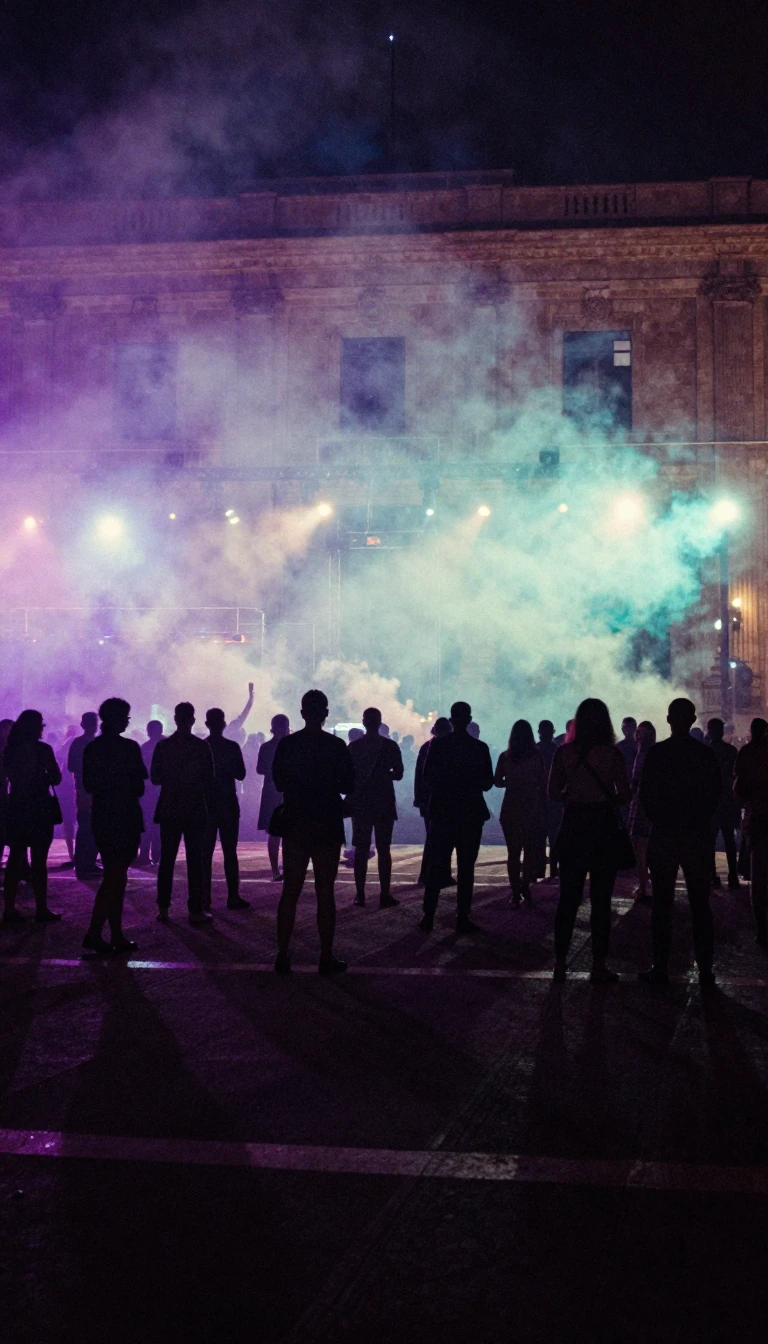
In short: Jenny Holzer transforms public spaces into stages for thought. By flashing provocative, often contradictory slogans across LED signs and massive architectural projections, she forces viewers to confront the overwhelming nature of modern information. Her work turns the city itself into a medium, challenging how we process truth, power, and trauma.
Born in 1950 in Gallipolis, Ohio, Jenny Holzer began her career as an abstract painter before moving to New York City in 1977. Her trajectory shifted dramatically after joining a specialized academic program at the Whitney Museum of American Art. There, her engagement with social and cultural theory led to the creation of her seminal Truisms series (1977–79). These nearly three hundred aphorisms, which included lines like "Abuse of power comes as no surprise," were initially wheat-pasted as anonymous posters across Manhattan to provoke public debate.
Holzer’s practice evolved from these early broadsides to include diverse media such as stone benches, sarcophagi, and the electronic LED signs that became her signature. By the mid-1980s, she began integrating text into urban landscapes through plaques and signs, later expanding into monumental light projections in 1996. Her work often utilizes a tone of anonymous authority, employing contradictory voices to explore themes of war, feminism, and government secrecy. In 2005, she introduced the Redaction paintings, which featured enlarged, silk-screened government documents, further highlighting the instability of meaning in public discourse.
The physical experience of Holzer’s art is intentional. Her LED installations, such as the sixteen-foot signs in Blue Tilt (2004), are designed to overwhelm the body with light and scrolling text. Holzer has noted that this sensory intensity can induce vertigo, reflecting the difficulty of navigating a world saturated with information. Whether through the 1990 Venice Biennale installation that won the Golden Lion Award or her 2024 return to the Guggenheim Museum, Holzer continues to use language to blur the lines between private reflection and public space, ensuring that her audience remains unsettled and engaged.
Opens the Intellect+ feed with this card first. Swipe up for the next one.
Sources
- Summary by Intellect · source: Jenny Holzer | Biography, Art, Truisms, & Facts | Britannica
- Also: Art Institute of Chicago — Blue Tilt · CC0 (data); description CC BY 4.0
- Also: Jenny Holzer
To cite this card, link to https://intellectplus.co.uk/app/art-jenny-holzer.
How we source, check and correct cards: Editorial standards.
General information, not professional advice. Spotted an error? Flag the card or see corrections and complaints.
Intellect Plus is a visual educational discovery platform for exploring fascinating facts and ideas. Brain Food, Not Brain Rot. What is Intellect Plus?
Related
More in Visual artists · More in Art · Latest · A–Z · All topics
