Is mathematics the hidden skeleton of beauty in the world of visual art?
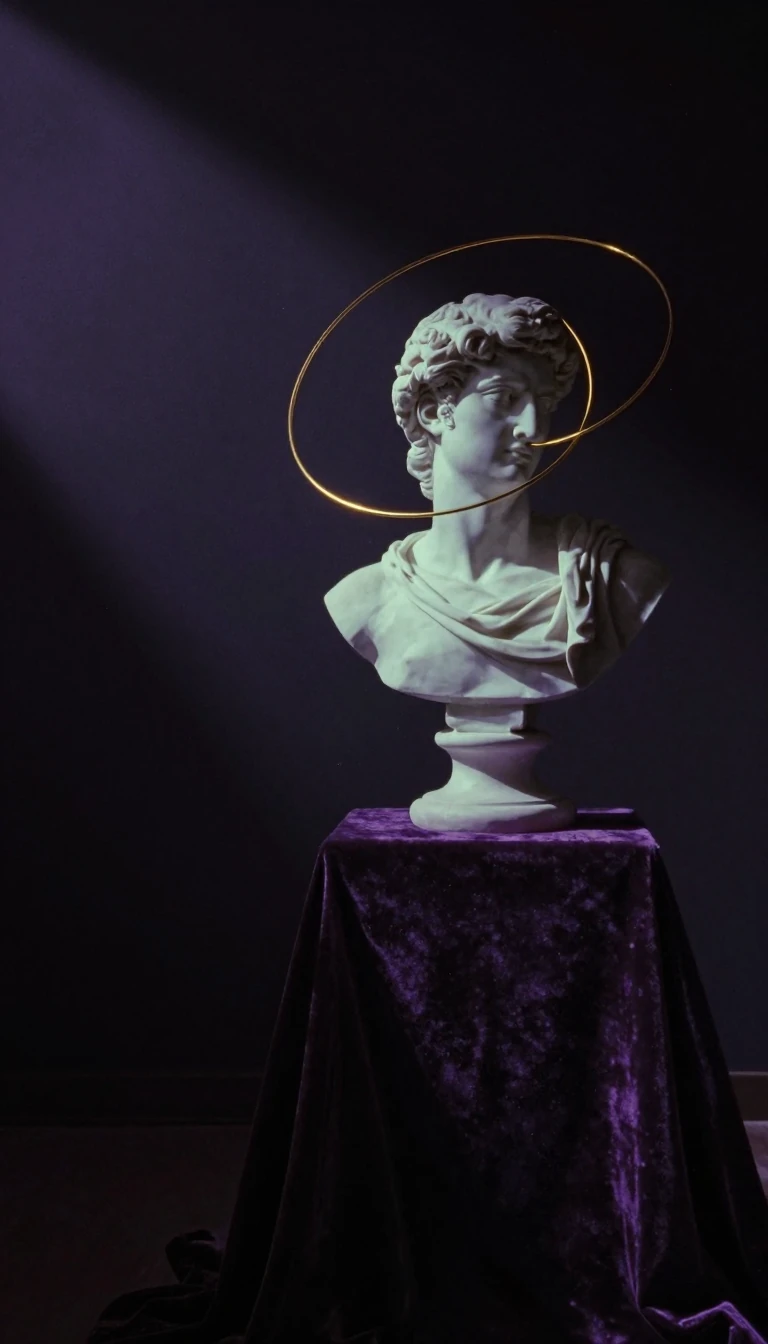
In short: For centuries, artists have treated mathematics not just as a tool for measurement, but as a language for capturing the essence of reality. From the geometric precision of Renaissance masters to the complex symmetries of Islamic tilework, the intersection of these fields reveals a profound, enduring quest for structural harmony.
The relationship between mathematics and art is rooted in the ancient belief that the universe is governed by number. As early as the 4th century BC, the Greek sculptor Polykleitos developed his Canon, a system of proportions designed to capture the ideal human form through continuous geometric progressions. This pursuit of harmony, or symmetria, influenced generations of artists who sought to translate the physical world into mathematical terms. By the Renaissance, this intellectual tradition flourished as painters like Piero della Francesca and Leonardo da Vinci integrated linear perspective and solid geometry into their work, aiming to represent three-dimensional space on a two-dimensional surface.
Beyond mere representation, artists have long utilized mathematical objects to explore abstract concepts. Albrecht Dürer, for instance, famously incorporated polyhedra into his engraving Melencolia I, while Salvador Dalí later used the tesseract—a four-dimensional hypercube—to bridge the divide between spiritual themes and physical forces in his painting Corpus Hypercubus. These works demonstrate how artists employ mathematical tools like recursion, symmetry, and fractals to push the boundaries of visual expression, often reflecting the same self-reflective rigor found in modern mathematics itself.
While some claims regarding the use of the golden ratio in ancient architecture remain contested due to a lack of reliable evidence, the mathematical influence on decorative arts is undeniable. From the intricate girih tilings in Islamic art, which physicists have compared to quasicrystalline Penrose tilings, to the structured layouts of traditional carpets, symmetry serves as a foundational element. Whether through the deliberate application of geometric rules or an intuitive grasp of pattern, the dialogue between the geometer and the artist continues to shape our understanding of both beauty and the nature of the physical world.
Opens the Intellect+ feed with this card first. Swipe up for the next one.
Sources
- Summary by Intellect · source: Mathematics and art
- Also: press.princeton.edu — Mathematics and Art
To cite this card, link to https://intellectplus.co.uk/app/art-mathematics-and-art.
How we source, check and correct cards: Editorial standards.
General information, not professional advice. Spotted an error? Flag the card or see corrections and complaints.
Intellect Plus is a visual educational discovery platform for exploring fascinating facts and ideas. Brain Food, Not Brain Rot. What is Intellect Plus?
Related
More in Arts: General · More in Art · Latest · A–Z · All topics
