How a 23-year-old architect built the most important cathedral in the Holy Roman Empire.
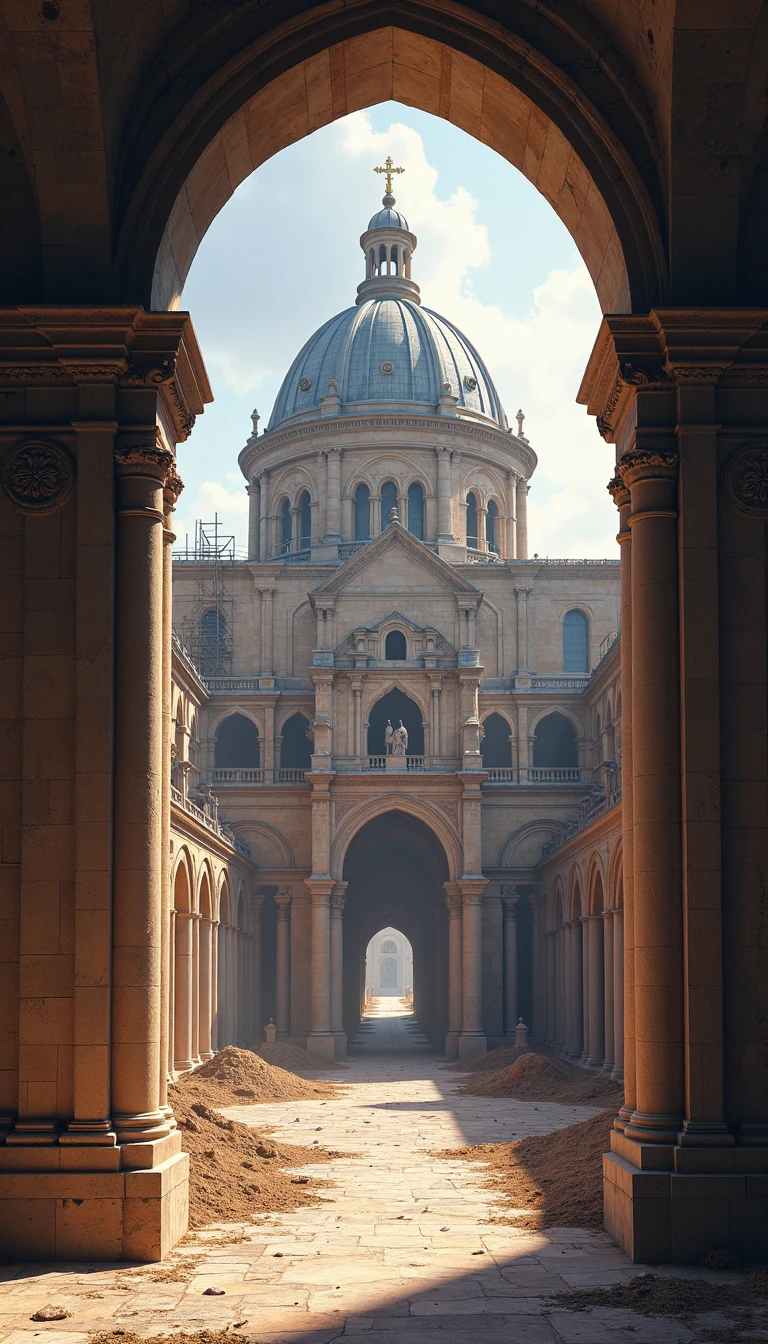
In short: When Charles IV sought to transform Prague into a showcase capital, he entrusted the construction of St. Vitus Cathedral to Peter Parler. Arriving in 1356, the young master builder introduced innovative vaulting techniques that would define the Parler style, influencing Gothic architecture across Europe for centuries to come.
Born in 1333, Peter Parler emerged from a prominent family of master builders in Schwäbisch Gmünd. His early training involved working alongside his father, Heinrich, on the Holy Cross Minster, where he developed a trademark style characterized by continuous balustrades. By his early twenties, Parler had gained experience at major building sites in Cologne and Strasbourg, absorbing advanced Gothic construction methods. This technical expertise, which some scholars suggest may have been influenced by English Gothic practices, prepared him for his most ambitious commissions under the patronage of Holy Roman Emperor Charles IV.
In 1356, at age 23, Parler was appointed to lead the construction of St. Vitus Cathedral in Prague, a project that had stalled following the death of Matthias of Arras. Parler’s approach was transformative; he adapted the original plans while introducing sophisticated net vaults, a structural innovation that became a hallmark of his work. His influence extended beyond the cathedral to the design of the New Town of Prague and the iconic Charles Bridge, the latter of which features a foundation stone laid at a precise, astrologically determined moment in 1357.
The "Parler style" eventually spread across Central Europe, leaving a lasting mark on structures from the Hanseatic League to Scandinavia. His architectural DNA is even visible in the design of Seville Cathedral, where the balustrade layout mirrors his original work at St. Vitus. Despite the destruction of much of his sculptural output during the Hussite wars, Parler’s legacy persists through his surviving buildings and the continued preservation of his craft. He died in 1399, having cemented his reputation as one of the most influential master builders of the Middle Ages.
Today, Parler is remembered not only through his stone monuments but also through modern honors, including an asteroid named in his honor and a biennial prize for cultural heritage preservation. His life reflects the mobility and interconnectedness of medieval craftsmen, whose technical secrets and stylistic innovations traveled across borders, shaping the built environment of the continent for generations.
Opens the Intellect+ feed with this card first. Swipe up for the next one.
Sources
- Summary by Intellect · source: Peter Parler
- Also: www.britannica.com — Petr Parler | Biography, Architecture, & Facts | Britannica
To cite this card, link to https://intellectplus.co.uk/app/art-peter-parler.
How we source, check and correct cards: Editorial standards.
General information, not professional advice. Spotted an error? Flag the card or see corrections and complaints.
Intellect Plus is a visual educational discovery platform for exploring fascinating facts and ideas. Brain Food, Not Brain Rot. What is Intellect Plus?
Related
More in Visual artists · More in Art · Latest · A–Z · All topics
