Aeschylus' The Persians is the oldest surviving play in the history of Western drama.
In short: Written in 472 BC, this ancient Greek tragedy offers a rare perspective: it depicts the Persian defeat at the Battle of Salamis from the viewpoint of the enemy. It remains a powerful, enduring meditation on the hubris of war, influencing writers and directors for over two millennia.
The Persians is the oldest extant work of Greek drama, originally performed at Athens' City Dionysia festival in 472 BC. Aeschylus, who likely fought at the Battle of Salamis just eight years prior, crafted a narrative set in Susa, the Persian capital. The play follows Queen Mother Atossa as she awaits news of her son Xerxes' expedition against Greece. The drama culminates in a graphic messenger report of the Persian naval disaster at Salamis, followed by the arrival of a shattered Xerxes in tattered robes.
A central theme of the play is the condemnation of hubris. The ghost of the former king, Darius, appears to rebuke his son for his arrogance, particularly for building a bridge over the Hellespont to facilitate the invasion. While some scholars argue the play reflects a xenophobic Greek culture celebrating victory, others point to the Aristotelian tradition, which suggests the work invites genuine sympathy for the defeated. This ambiguity has allowed the play to be adapted repeatedly as a commentary on modern conflicts, from the Gulf War to the invasion of Iraq.
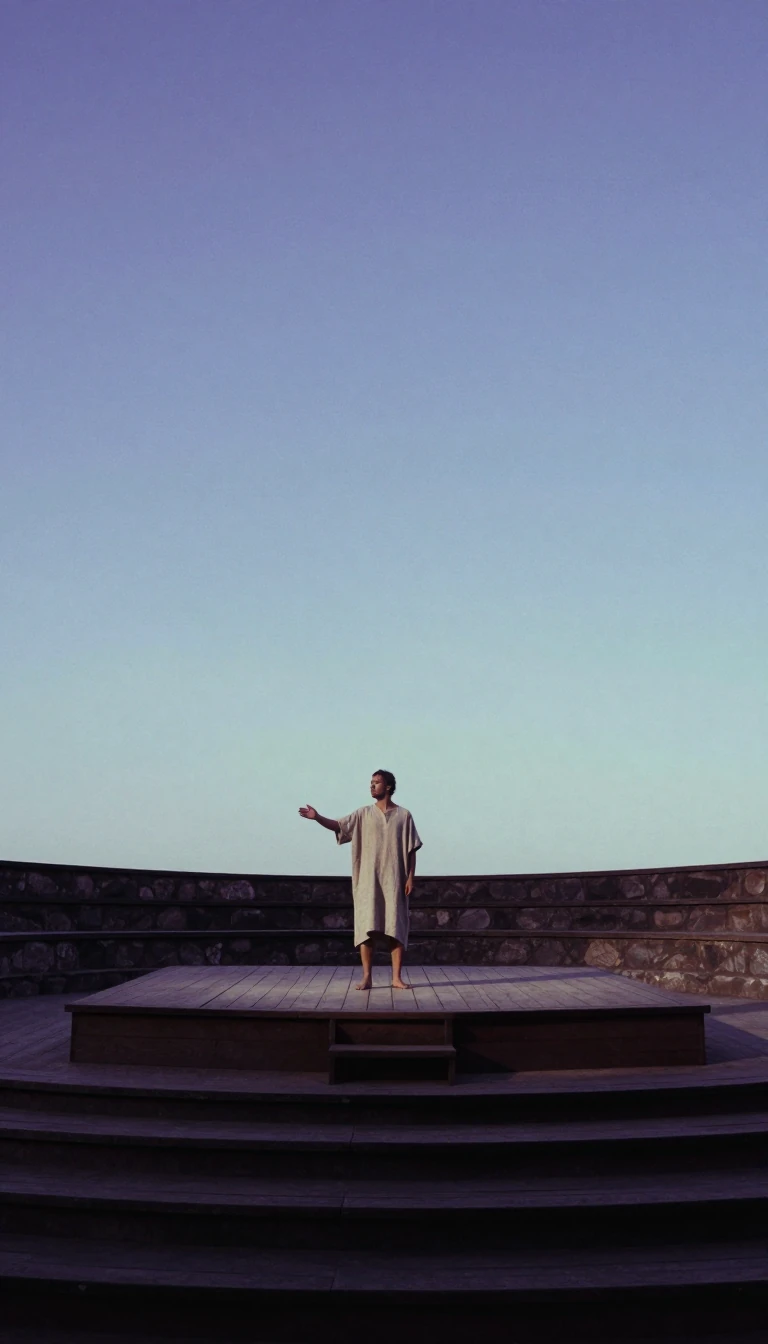
The play's influence extends far beyond its original performance. It served as a model for Percy Bysshe Shelley’s 1821 work Hellas and contains lines that T.S. Eliot echoed in The Waste Land. In the 20th and 21st centuries, directors like Peter Sellars and Kaite O'Reilly have used the text to explore the aftermath of war. Whether through its use in dystopian literature or its 2020 live-streamed performance at the ancient theatre of Epidaurus, The Persians continues to serve as a potent, fragmented reflection on the human cost of military failure.
Opens the Intellect+ feed with this card first. Swipe up for the next one.
Sources
- Summary by Intellect · source: The Persians
To cite this card, link to https://intellectplus.co.uk/app/art-the-persians.
How we source, check and correct cards: Editorial standards.
General information, not professional advice. Spotted an error? Flag the card or see corrections and complaints.
Intellect Plus is a visual educational discovery platform for exploring fascinating facts and ideas. Brain Food, Not Brain Rot. What is Intellect Plus?
Related
More in Literature · More in Art · Latest · A–Z · All topics
