Is the world you see real, or just a shift in your perspective?
In short: The term parallax describes how an object appears to move when you change your vantage point. Slavoj Žižek uses this concept to explore deep gaps in reality, while the 1974 film of the same name uses it to depict a terrifying, untraceable conspiracy of political assassination and paranoia.
In his magnum opus, Slavoj Žižek defines the parallax gap as an irreducible distance between two points that can never be synthesized. This concept spans the ontological, scientific, and political realms. He argues that we face an impossible short circuit where levels of reality simply cannot meet. For instance, in quantum physics, this manifests as wave-particle duality, while in psychoanalysis, it appears as the tension between drive theories and the formation of the unconscious.
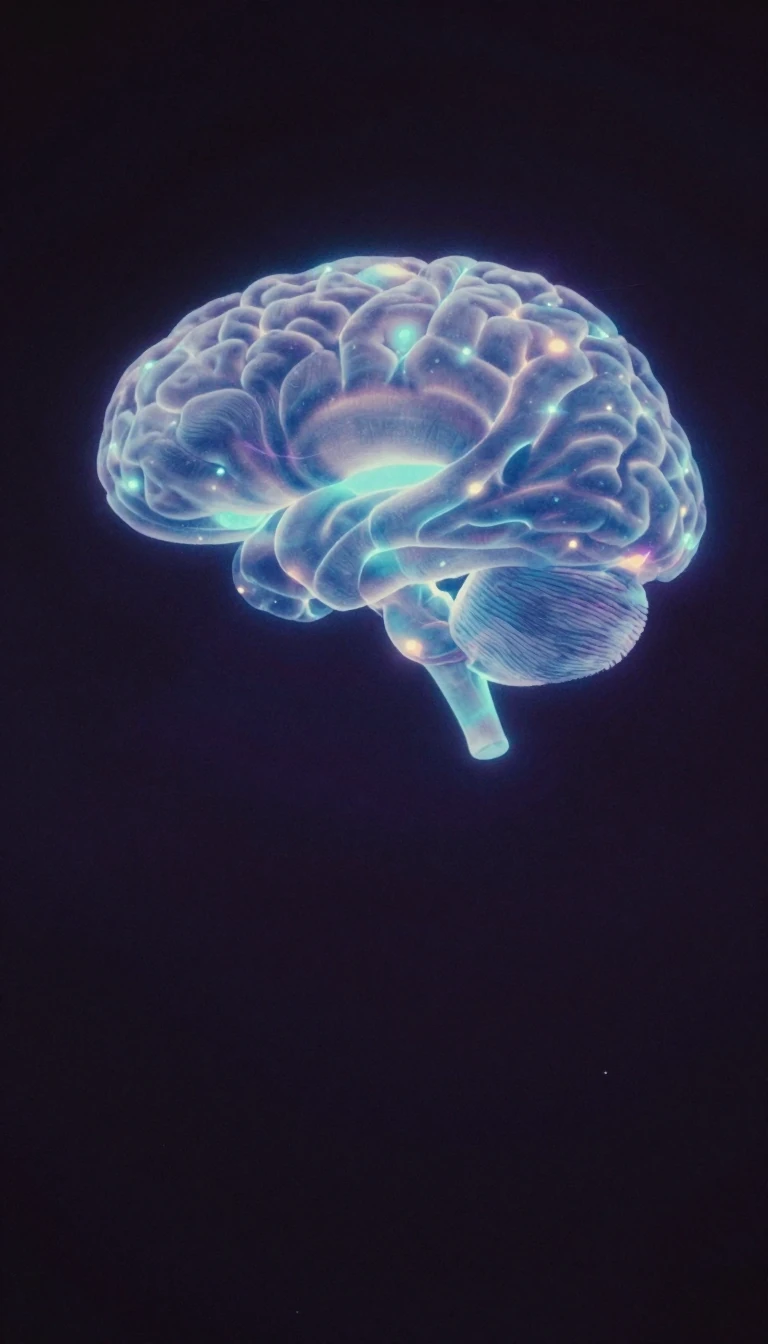
Žižek identifies three primary modes of this phenomenon. The ontological parallax conditions our access to reality itself. The scientific parallax highlights the gap between our lived experience and scientific explanations, which he suggests leads to the unsettling conclusion in modern brain science that there is no central self, only biological matter. Finally, the political parallax represents a social antagonism so profound that no common ground can exist between opposing sides.
The 1974 film The Parallax View, directed by Alan J. Pakula, offers a cinematic parallel to these themes of disorientation and hidden structures. Starring Warren Beatty as reporter Joe Frady, the film follows an investigation into a shadowy organization that recruits psychopaths for political hits. Frady’s journey involves a chilling training montage featuring subliminal images of historical figures and cultural icons, designed to evoke the decay of American values. Much like Žižek’s theoretical framework, the film suggests a world where the truth is obscured by layers of manipulation and where the observer is constantly being watched.
While Žižek’s work provides a systematic exposition of his Lacanian-Hegelian approach, the film serves as a cornerstone of the Pakula Paranoia Trilogy. Both the book and the film grapple with the idea that our perception of reality is fundamentally shaped by the position from which we view it. Whether through the lens of high theory or neo-noir thriller, the parallax view forces us to confront the possibility that what we perceive as a unified reality is actually a fractured, shifting construct.
Opens the Intellect+ feed with this card first. Swipe up for the next one.
Sources
- Summary by Intellect · source: The Parallax View
- Also: The Parallax View
- Also: Wikidata — The Parallax View · CC0
- Also: Wikidata — The Parallax View · CC0
To cite this card, link to https://intellectplus.co.uk/app/entertainment-the-parallax-view.
How we source, check and correct cards: Editorial standards.
General information, not professional advice. Spotted an error? Flag the card or see corrections and complaints.
Intellect Plus is a visual educational discovery platform for exploring fascinating facts and ideas. Brain Food, Not Brain Rot. What is Intellect Plus?
Related
More in Films · More in Entertainment · Latest · A–Z · All topics
