Your brain learns faster by thinking in two languages at once
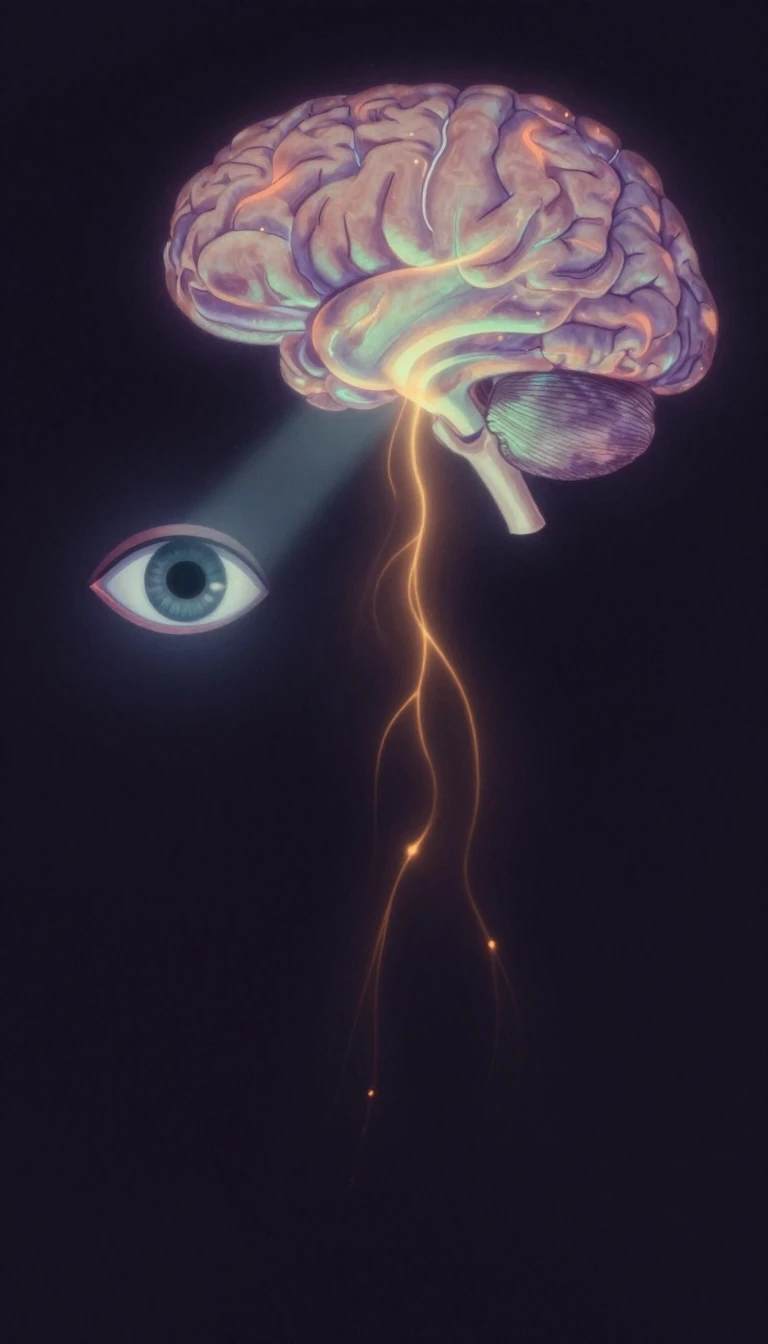
In short: Why do you remember a vivid image of a dog more easily than a dry list of facts? It is because your mind uses two distinct channels for information. By engaging both verbal and visual systems, you can create a redundant mental map that makes memories stick.
First hypothesized by Allan Paivio in the late 1960s, Dual-coding theory suggests that the human mind processes information through two separate channels: verbal and nonverbal. This means that when you learn something, your brain creates two distinct representations. For example, if you learn the word 'dog,' your mind stores the symbolic code (the word itself) and an analogue code (the sensory image of a dog's appearance, sound, and smell). Because these codes are processed independently, having both increases the likelihood of successful recall; if you forget the word, the image may still be accessible, and vice versa.
Research supports this by showing that memory for verbal information is enhanced when paired with a relevant visual. Interestingly, the systems have different strengths. In studies by Paivio, participants were better at recalling images from a rapid sequence than recalling the specific sequential order of words. This suggests that while visual information is powerful for recognition, verbal codes are superior for maintaining sequence. Furthermore, studies on abstract versus concrete words show that people remember concrete words better, likely because they are easier to pair with mental images.
The theory has significant implications for education, interface design, and even cognitive robotics. It aligns with Alan Baddeley's working memory model, which includes a visuospatial sketchpad and a phonological loop. However, the theory is not without critics. Some researchers, like John Anderson and Gordon Bower, propose the 'propositional theory,' arguing that knowledge is stored as underlying meanings (propositions) rather than images. Others suggest a 'common coding theory,' which links perception and motor actions through a shared code. Despite these debates, dual coding remains a foundational framework for improving literacy and learning.
Modern neuroscience is even finding 'coding duality' in neural decision-making. In tasks like motion discrimination, neurons move through two phases: a distributed phase where many cells pool information to reduce uncertainty, and a redundant phase where single cells contain enough information to predict a decision. This suggests that the principle of dual coding—balancing distributed information with concentrated consensus—might be a fundamental feature of how biological systems compute at scale.
Opens the Intellect+ feed with this card first. Swipe up for the next one.
Sources
- Summary by Intellect · source: Dual-coding theory
- Also: Frontiers in neuroscience — Dual Coding Theory Explains Biphasic Collective Computation in Neural Decision-Making. · CC BY
To cite this card, link to https://intellectplus.co.uk/app/health-dual-coding-theory.
How we source, check and correct cards: Editorial standards.
General information, not professional advice. Spotted an error? Flag the card or see corrections and complaints.
Intellect Plus is a visual educational discovery platform for exploring fascinating facts and ideas. Brain Food, Not Brain Rot. What is Intellect Plus?
Related
More in Mind · More in Health · Latest · A–Z · All topics
