Can the brain act as a simulator for future possibilities?
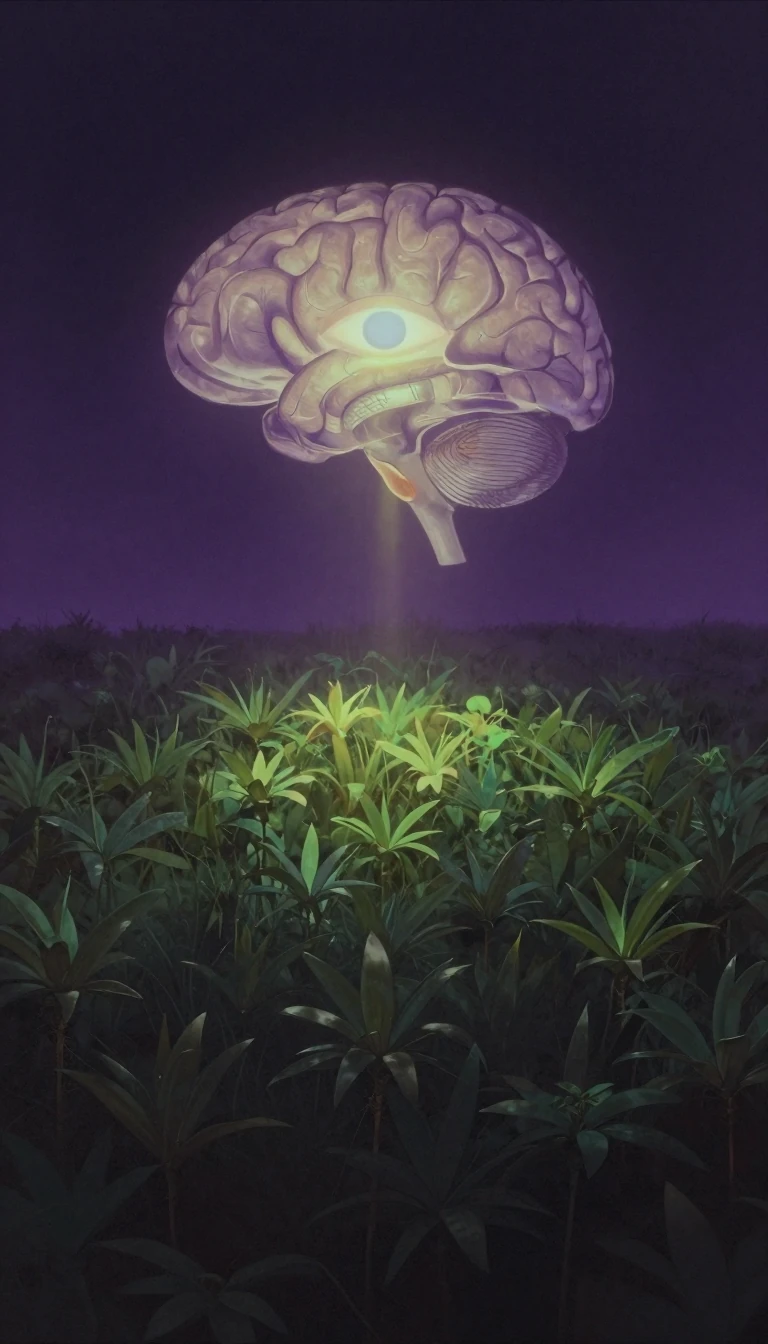
In short: In machine learning, a generative model doesn't just classify data; it creates new, synthetic samples. New research suggests our hippocampus may function similarly, modeling the hidden causes of our senses to simulate hypothetical futures and navigate the world.
In computational science, the distinction between generative and discriminative models is fundamental. A discriminative model focuses on predicting an output directly from an input, essentially learning to distinguish between categories. In contrast, a generative model attempts to understand the underlying process that produced the data. By modeling the joint distribution of inputs and outputs, or how inputs are distributed within a specific class, these models can draw entirely new, synthetic samples that resemble the original observed data. These models are frequently utilized for tasks like density estimation, simulation, and managing partially labeled datasets. In classification, they can even use Bayes' rule to predict labels by combining class priors with conditional probabilities.
This capacity for creation is not limited to silicon. Emerging theories suggest the hippocampus—a brain region vital for memory—operates as a biological generative model. Rather than just recording sensory input, the hippocampus may represent the latent, unobserved causes of that data. By abstracting a low-dimensional 'cognitive map' of the external world, the hippocampus can generate new data samples. This allows the brain to explore 'future hypotheticals,' essentially running internal simulations of what might happen next. This process is facilitated by the hippocampus's position within the deep cortical hierarchy. By doing so, the region can represent the unobserved latent causes of sensory information.
This internal simulation provides an internally generated training signal, which is crucial for adaptive behavior. Understanding this mechanism is more than a theoretical exercise; researchers believe that perturbations to this hippocampal generative process may explain the core symptoms of neuropsychiatric disorders, such as those seen in psychosis. By bridging the gap between perception and memory, the hippocampus serves as a vital engine for higher-order cognition. This perspective offers a unified account of how hippocampal computations support adaptive behavior. It essentially bridges the gap between perception and memory.
Opens the Intellect+ feed with this card first. Swipe up for the next one.
Sources
- Summary by Intellect · source: Generative model
- Also: The hippocampus as a generative model.
To cite this card, link to https://intellectplus.co.uk/app/health-generative-model.
How we source, check and correct cards: Editorial standards.
General information, not professional advice. Spotted an error? Flag the card or see corrections and complaints.
Intellect Plus is a visual educational discovery platform for exploring fascinating facts and ideas. Brain Food, Not Brain Rot. What is Intellect Plus?
Related
More in Memory · More in Health · Latest · A–Z · All topics
