Why does the lung turn to stone, and why is the cause still unknown?
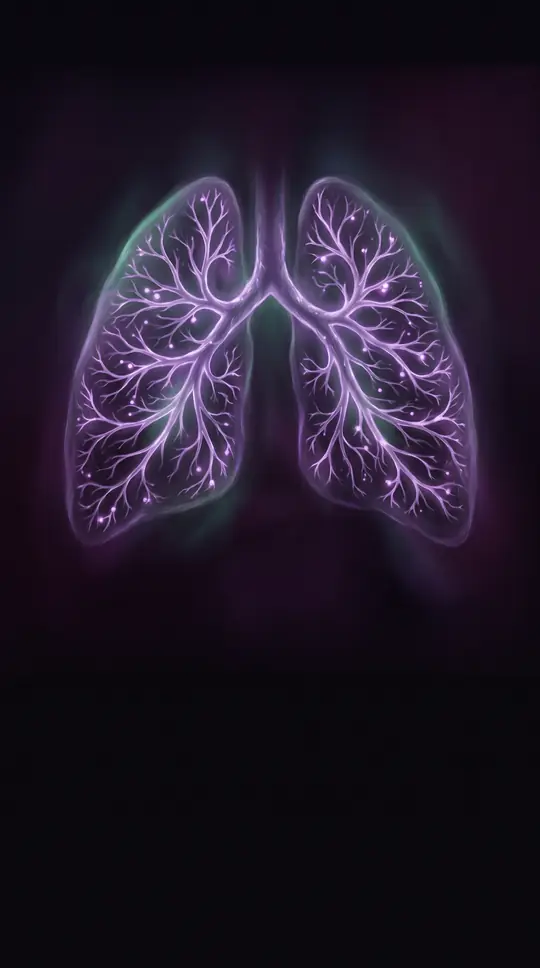
In short: Idiopathic pulmonary fibrosis is a mysterious, progressive condition where lung tissue stiffens and scars, irreversibly destroying respiratory function. While the term idiopathic signals our ignorance of its origin, researchers are uncovering complex mechanisms involving cellular senescence and aberrant wound healing. Understanding this fatal disease is a race against time.
Idiopathic pulmonary fibrosis (IPF) is a rare, chronic lung disease affecting approximately 5 million people globally. It belongs to a broader category of over 200 interstitial lung diseases, yet it stands apart due to its specific, progressive nature. Characterized by the thickening and stiffening of tissue surrounding the air sacs, the condition leads to an irreversible decline in lung function. Patients typically present with a dry cough and shortness of breath, often accompanied by "velcro" crackles audible during inhalation and clubbing of the fingers or toes.
The pathogenesis of IPF was once thought to be driven by inflammation, but current evidence suggests it is an aberrant wound healing process. It is believed that repetitive injury to alveolar epithelial cells triggers a cascade where fibroblasts differentiate into myofibroblasts, secreting excessive collagen. This scarring, or fibrosis, often manifests as a usual interstitial pneumonia (UIP) pattern. While the exact trigger remains elusive, risk factors include cigarette smoking—which doubles the risk—as well as occupational exposure to dusts, viral infections, and genetic predispositions like mutations in the MUC5B gene or telomerase-associated genes.
Diagnosis is a complex, multidisciplinary effort that requires excluding other known causes of interstitial lung disease. Since 2011, international guidelines have emphasized the use of high-resolution computed tomography (HRCT) to identify characteristic UIP patterns, such as honeycombing and reticular opacities. While there is no cure, anti-fibrotic medications like pirfenidone and nintedanib can slow disease progression. With an average life expectancy of about four years post-diagnosis, the field is now exploring advanced diagnostic tools, including AI-driven image analysis and PET imaging targeting αvβ6-integrin, to improve early detection and patient outcomes.
Opens the Intellect+ feed with this card first. Swipe up for the next one.
Sources
- Summary by Intellect · source: Idiopathic pulmonary fibrosis
To cite this card, link to https://intellectplus.co.uk/app/health-idiopathic-pulmonary-fibrosis.
How we source, check and correct cards: Editorial standards.
General information, not professional advice. Spotted an error? Flag the card or see corrections and complaints.
Intellect Plus is a visual educational discovery platform for exploring fascinating facts and ideas. Brain Food, Not Brain Rot. What is Intellect Plus?
Related
More in Health, medicine and disease · More in Health · Latest · A–Z · All topics
