How humanity evolved from mapping wanderer stars to discovering a galaxy of planetary systems
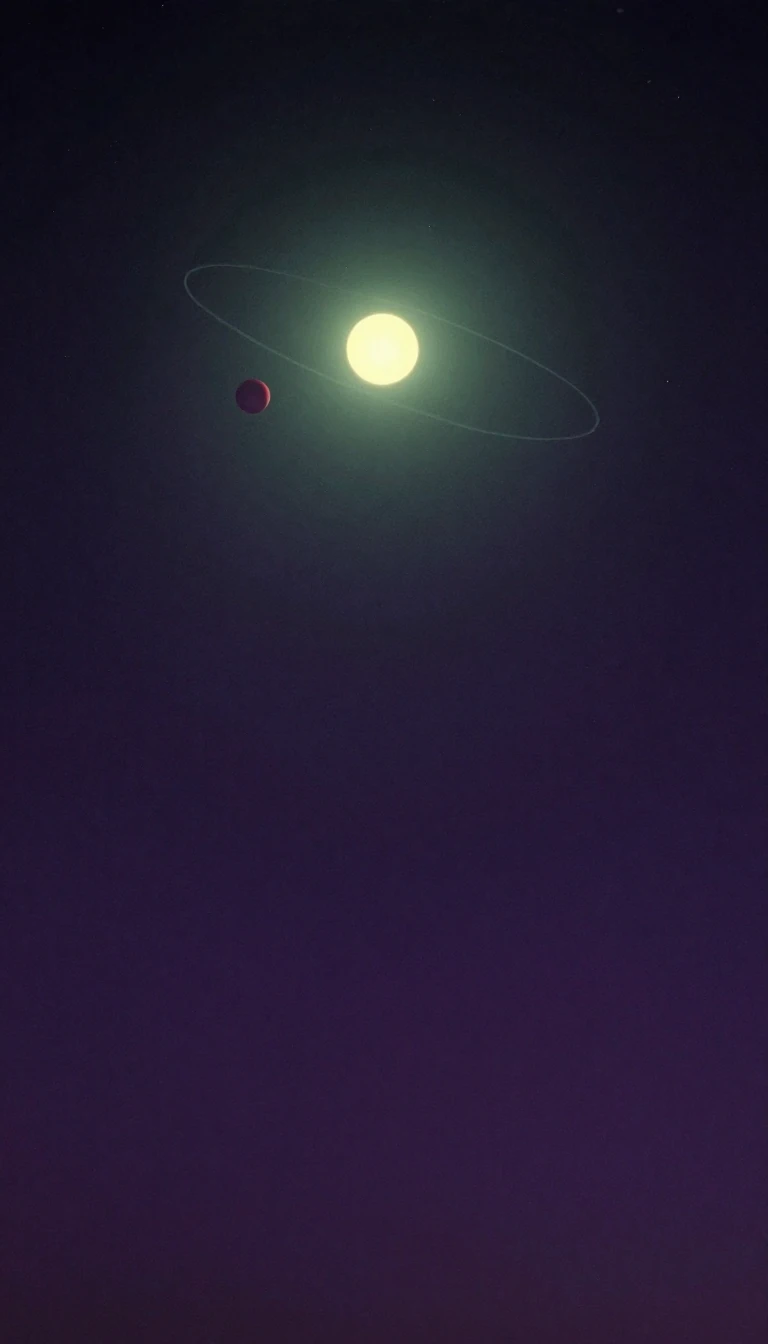
In short: For millennia, humans viewed the Solar System as the entire universe, governed by geocentric models and religious cosmology. Today, we recognize our sun as one of countless stars, part of a vast, complex neighborhood. This shift from ancient observation to modern planetary science reveals a story of profound intellectual transformation.
Ancient astronomers relied on the naked eye to track the Sun, Moon, and five classical planets. These bodies were often called wanderer stars due to their puzzling forward and retrograde motions against the backdrop of fixed stars. Early civilizations, from Mesopotamia to China, developed geocentric models to explain these movements, placing a stationary Earth at the center of the universe. These systems, such as the Ptolemaic model, used complex devices like deferents and epicycles to account for celestial paths, remaining dominant until the 16th century.
The invention of the telescope around 1608 triggered a revolution. Galileo Galilei’s observations of Venus’s phases and Jupiter’s moons dismantled the geocentric consensus, while Johannes Kepler’s laws of planetary motion established that planets orbit the Sun in ellipses. By 1704, the term Solar System had entered the English language. Isaac Newton later provided the physical mechanism for these motions with his law of universal gravitation, unifying the study of terrestrial and astronomical phenomena into classical mechanics.
The 19th century solidified our place in the cosmos. In 1838, Thomas Henderson and Friedrich Bessel measured stellar parallax, proving the vast distance between our system and the stars. Simultaneously, the development of spectroscopy by scientists like Robert Bunsen and Gustav Kirchhoff revealed that the Sun is composed of the same elements as Earth. This discovery, coupled with Father Angelo Secchi’s work, confirmed that the Sun is simply a star, implying that other stars might host their own planetary systems—a hypothesis finally proven in 1992.
Modern exploration has moved beyond Earth-bound observation. Since the 1950s, robotic space probes have acted as our eyes and ears, transforming planetary science into a field of active, empirical study. Today, we know of over 5,000 exoplanets, turning our once-isolated Solar System into one of many planetary systems within the galaxy, serving as a natural laboratory for understanding how Earth arrived at its unique place in the universe.
Opens the Intellect+ feed with this card first. Swipe up for the next one.
Sources
- Summary by Intellect · source: Discovery and exploration of the Solar System
- Also: NASA Science — Solar System: Exploration - NASA Science
To cite this card, link to https://intellectplus.co.uk/app/history-discovery-and-exploration-of-the-solar-system.
How we source, check and correct cards: Editorial standards.
General information, not professional advice. Spotted an error? Flag the card or see corrections and complaints.
Intellect Plus is a visual educational discovery platform for exploring fascinating facts and ideas. Brain Food, Not Brain Rot. What is Intellect Plus?
Related
More in Contemporary (1945-) · More in History · Latest · A–Z · All topics
