How a single 1906 British battleship rendered every other warship on Earth instantly obsolete.
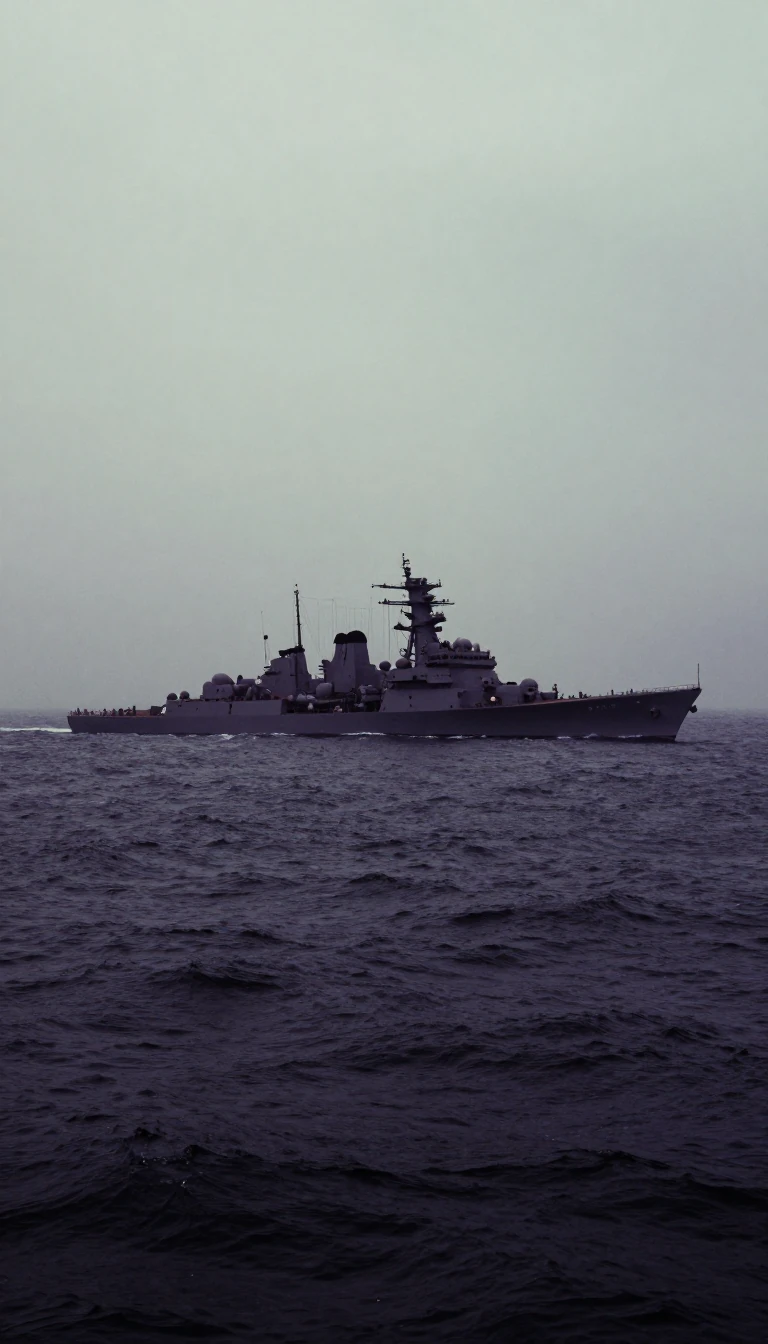
In short: When HMS Dreadnought launched in 1906, it introduced a revolutionary all-big-gun armament and turbine propulsion. This singular vessel was so advanced that it redefined naval warfare, forcing global powers into a frantic arms race and relegating all existing battleships to the status of outdated pre-dreadnoughts overnight.
The dreadnought revolution was driven by a shift in naval theory. Throughout the 1890s, battles were fought at close range, relying on a 'hail of fire' from medium-calibre guns. However, the Russo-Japanese War of 1904–1905 and the 1904 Battle of the Yellow Sea proved that future engagements would occur at long distances. At these ranges, only heavy guns remained effective, and spotting shell splashes to adjust fire became easier with a uniform battery of heavy-calibre weapons.
HMS Dreadnought, launched in 1906, displaced 18,000 tons and measured 526 feet in length. Its design prioritized firepower and speed, utilizing steam turbines and an all-big-gun configuration. While the Imperial Japanese Navy and the US Navy had also begun exploring all-big-gun concepts by 1904 and 1905, the British vessel’s completion set a new global standard. The ship became a potent symbol of national power, triggering intense naval competition between Britain and Germany that lasted until World War I.
The era of the dreadnought was short-lived but transformative. Within five years, newer 'super-dreadnoughts' like HMS Orion—which mounted 10 13.5-inch guns—outclassed the original design. These ships dominated the seas for 35 years, though they saw limited direct fleet-on-fleet combat, most notably at the 1916 Battle of Jutland. Following World War I, the Five-Power Naval Limitation Treaty of 1922 led to the scrapping of many original dreadnoughts, yet the technological shift they initiated remained the foundation of naval architecture for decades.
While the term 'dreadnought' eventually faded as its features became standard for all battleships, the race to build them consumed vast national resources. The transition highlighted a broader evolution in naval strategy, moving away from the short-range tactics of the 19th century toward the long-range, high-precision warfare that would define the 20th century.
Opens the Intellect+ feed with this card first. Swipe up for the next one.
Sources
- Summary by Intellect · source: Dreadnought | Description & Facts | Britannica
- Also: Dreadnought
To cite this card, link to https://intellectplus.co.uk/app/history-dreadnought.
How we source, check and correct cards: Editorial standards.
General information, not professional advice. Spotted an error? Flag the card or see corrections and complaints.
Intellect Plus is a visual educational discovery platform for exploring fascinating facts and ideas. Brain Food, Not Brain Rot. What is Intellect Plus?
Related
More in Modern · More in History · Latest · A–Z · All topics
