To double a volcano's height, you need sixteen times the power
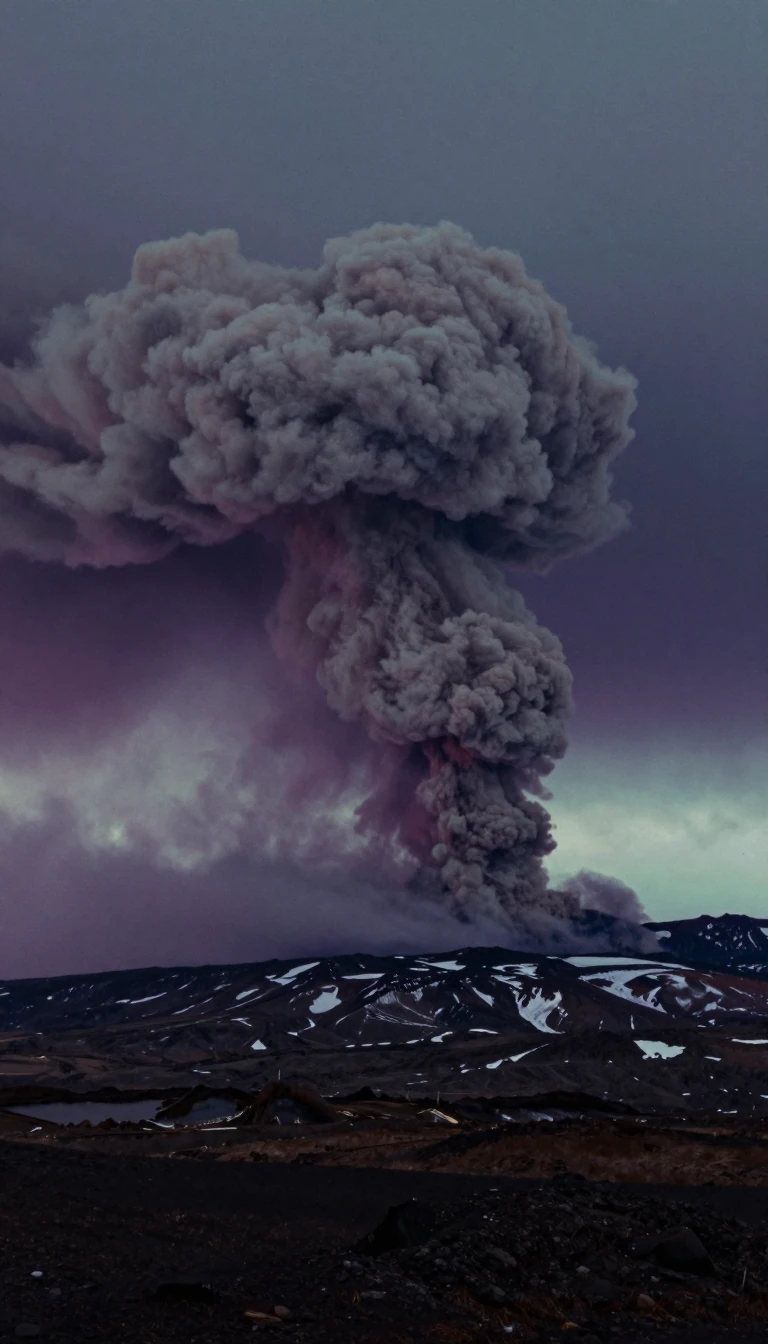
In short: Volcanic eruption columns are not just clouds of ash; they are massive thermodynamic engines. The physics governing their height is so sensitive that a small increase in vertical reach requires a staggering leap in the amount of material ejected. Understanding this balance reveals how a single eruption can reshape the global climate.
An eruption column forms when volatile materials in rising magma disrupt into ash and tephra, which are then propelled upward by expanding gases—primarily steam. This process begins in the 'gas thrust region,' where pressure drops rapidly as magma nears the surface, forcing material out at speeds of several hundred metres per second. This is followed by the 'convective thrust region,' where the air becomes turbulent and heated, expanding to lift the solid and liquid materials kilometers into the sky.
As the column ascends, it eventually reaches a 'neutral buoyancy region' where the density of the hot rising air matches the surrounding cold air. At this point, convection stops, and the material spreads sideways into an 'umbrella region.' The final height is determined by the remaining upward momentum. Theoretically, a column can reach 55 km, but in practice, they typically range from 2 to 45 km.
Since column height relates to the fourth root of the mass eruption rate, it serves as a clear indicator of intensity; thus, a twofold increase in height necessitates 16 times more material being expelled every second. The stakes of these dynamics are global. Columns exceeding 20–40 km can penetrate the stratosphere, where aerosols are not washed away by rain. In 1991, the Mount Pinatubo eruption caused a global temperature drop of about 0.5 °C. Conversely, if a column becomes too dense to be supported by convection—perhaps due to a sudden increase in magma density—it can suffer a 'column collapse.' This causes the material to fall as a pyroclastic flow, traveling down slopes at speeds of over 100–200 km/h, creating one of the most lethal volcanic hazards known to humanity.
Opens the Intellect+ feed with this card first. Swipe up for the next one.
Sources
- Summary by Intellect · source: Eruption column
To cite this card, link to https://intellectplus.co.uk/app/history-eruption-column.
How we source, check and correct cards: Editorial standards.
General information, not professional advice. Spotted an error? Flag the card or see corrections and complaints.
Intellect Plus is a visual educational discovery platform for exploring fascinating facts and ideas. Brain Food, Not Brain Rot. What is Intellect Plus?
Related
More in Volcanoes · More in History · Latest · A–Z · All topics
