The ancient art of curing ham relies on nothing but salt and cold air.
In short: Prosciutto is an uncooked, dry-cured ham that transforms a pig's hind leg into a delicacy through time and climate. While modern industrial versions may use additives, the most prized varieties rely exclusively on sea salt and precise environmental control to achieve their signature texture and profound, sweet perfume.
The etymology of prosciutto traces back to the Latin for sucking out moisture, reflecting the fundamental mechanism of its creation: the extraction of juices to preserve meat. This practice began in pre-Roman times in the Friuli-Venezia Giulia region, where archaeological evidence of pig farming dates back to the 11th and 8th centuries BC. By 221 BC, contact with the Roman Empire helped formalize the process, as Romans recognized that the region's specific hilly piedmont climate—characterized by low humidity and steady ventilation—was ideal for curing.
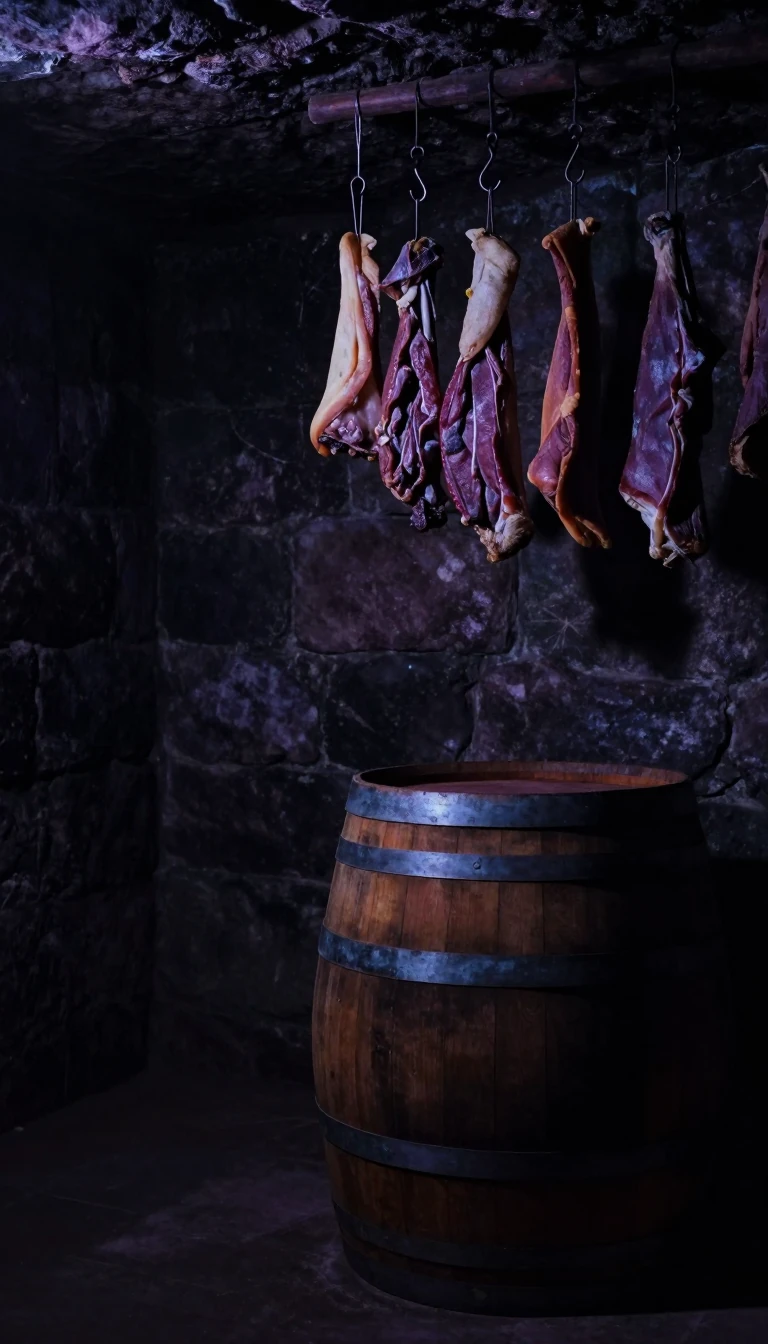
Making authentic prosciutto is a patient, subtle business. For protected varieties like Prosciutto di Parma, the process begins with a salt master applying damp sea salt to the leg, followed by a weeks-long refrigeration period. The ham is then hung in humidity-controlled cellars for months, with the exterior eventually treated with a mixture of lard and salt to prevent over-drying. The entire cycle can last anywhere from nine months to three years. At the end, experts use a horse bone needle to test the internal fragrance, ensuring the quality meets the standards required for the Ducal Crown brand.
While the term prosciutto simply means ham in Italian, the product is defined by its lack of smoke, distinguishing it from products like speck. In the European Union, Protected Designation of Origin (PDO) status ensures that premium hams like Prosciutto di Parma and Prosciutto di San Daniele contain no nitrites or nitrates, relying solely on salt. Conversely, unprotected products may use chemical additives to achieve a rosy color. This distinction highlights a broader tradition where geography dictates the final profile; for instance, Prosciutto di Parma often features a nutty note from the whey in the pigs' diet, while San Daniele is known for being darker and sweeter.
Opens the Intellect+ feed with this card first. Swipe up for the next one.
Sources
- Summary by Intellect · source: Prosciutto
To cite this card, link to https://intellectplus.co.uk/app/history-prosciutto.
How we source, check and correct cards: Editorial standards.
General information, not professional advice. Spotted an error? Flag the card or see corrections and complaints.
Intellect Plus is a visual educational discovery platform for exploring fascinating facts and ideas. Brain Food, Not Brain Rot. What is Intellect Plus?
Related
More in History by subject matter · More in History · Latest · A–Z · All topics
