How a teenage piano prodigy played an entire Bach masterpiece to an empty hall
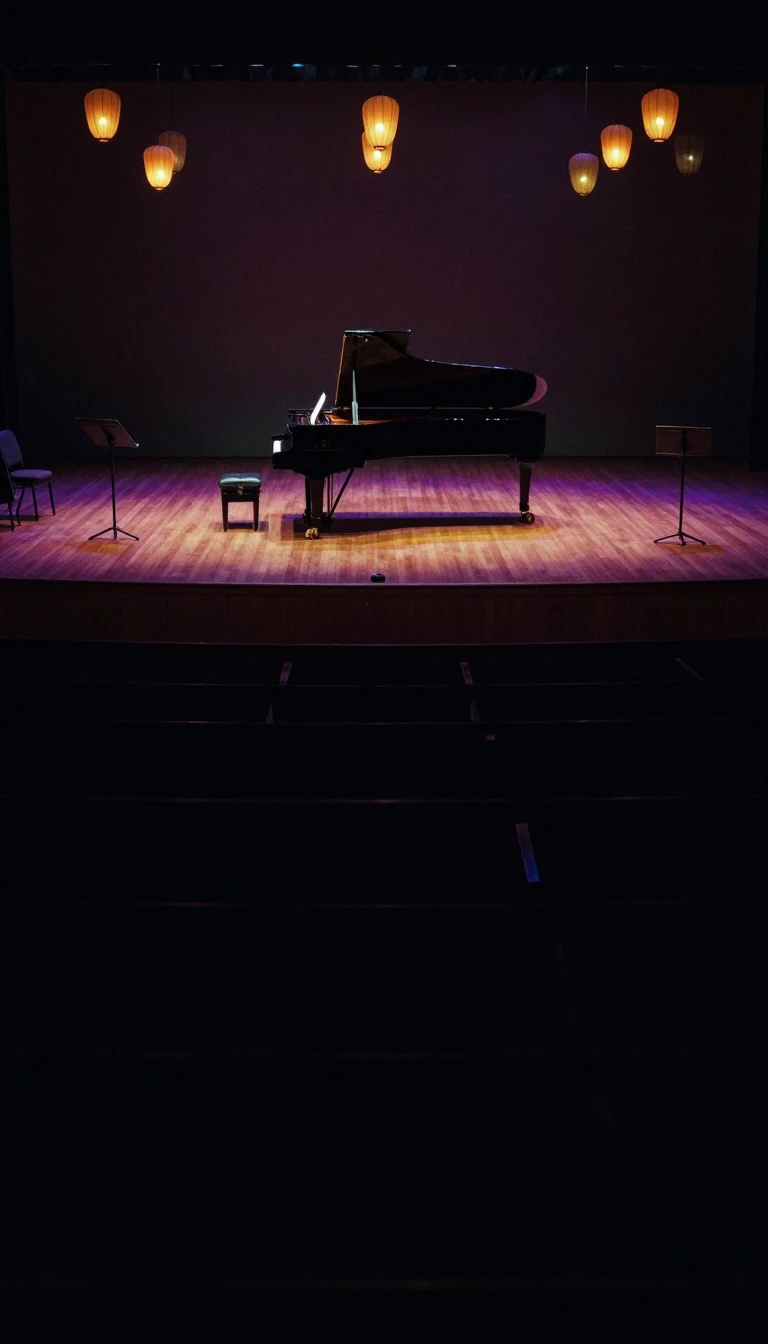
In short: Rudolf Serkin was a titan of the piano, celebrated as one of the 20th century's greatest Beethoven interpreters. Yet, his legendary career began with a youthful, impulsive prank. After a Berlin debut, he took a joke literally, performing the entire Goldberg Variations to a nearly deserted auditorium late at night.
Born in 1903 in Cheb, Bohemia, Rudolf Serkin was a child prodigy who began reading music before he could read words. By age nine, he was in Vienna studying piano with Richard Robert and composition with Joseph Marx. His formal training culminated in studies with Arnold Schoenberg between 1918 and 1920, during which he became an active participant in the Society for the Private Performance of Music.
Serkin’s professional life was deeply intertwined with the German violinist Adolf Busch. In 1921, at age 17, Serkin made his Berlin debut as a soloist in the Brandenburg Concerto No. 5. Following the concert, Busch jokingly suggested he play the Goldberg Variations as an encore. Serkin complied, only to find that by the time he finished, the audience had dwindled to just four people: Busch, Artur Schnabel, Alfred Einstein, and himself. This commitment to the music, regardless of the audience, became a hallmark of his career.
Following the rise of the Nazi regime in 1933, Serkin left Berlin for Switzerland, eventually emigrating to the United States in 1939. He became a fixture of American musical life, teaching at the Curtis Institute of Music in Philadelphia and serving as its director from 1968 to 1976. Alongside Busch, he founded the Marlboro Music School and Festival in 1951 to foster chamber music. Known for his technical precision and poetic coloring, Serkin remained a formidable force in classical music until illness forced his retirement in 1989. He died in 1991 at his farm in Guilford, Vermont, leaving behind a legacy that included the Presidential Medal of Freedom and a profound influence on generations of pianists.
While Serkin is best remembered for his interpretations of Beethoven, his repertoire was vast, spanning Bach, Mozart, Schubert, and Brahms. He was also a champion of Max Reger, becoming the first American-based pianist to record Reger's Piano Concerto, Op. 114, in 1959. His life was defined by a blend of rigorous academic training and a deeply personal, idealistic approach to performance that earned him the respect of both critics and his fellow musicians.
Opens the Intellect+ feed with this card first. Swipe up for the next one.
Sources
- Summary by Intellect · source: Rudolf Serkin
- Also: Rudolf Serkin | Classical Music, Chamber Music, Maestro | Britannica
To cite this card, link to https://intellectplus.co.uk/app/music-rudolf-serkin.
How we source, check and correct cards: Editorial standards.
General information, not professional advice. Spotted an error? Flag the card or see corrections and complaints.
Intellect Plus is a visual educational discovery platform for exploring fascinating facts and ideas. Brain Food, Not Brain Rot. What is Intellect Plus?
Related
More in Musicians and composers · More in Music · Latest · A–Z · All topics
