How do you warn a civilization that doesn't exist yet?
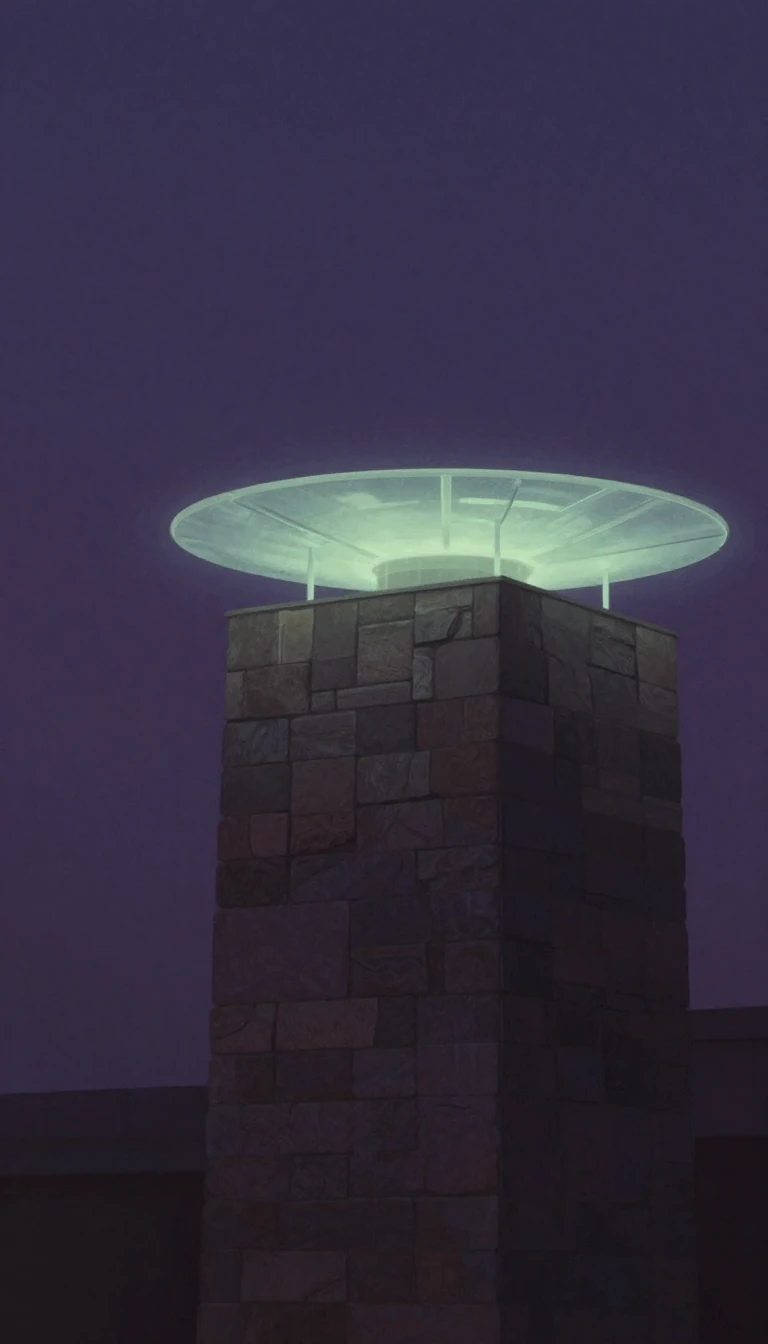
In short: Nuclear waste remains dangerous for over 10,000 years—far outlasting any current language or government. To prevent future humans from accidentally uncovering these sites, scientists have turned to 'nuclear semiotics,' designing messages and physical landscapes intended to communicate dread across millennia without using a single word.
The challenge of nuclear waste communication is rooted in the sheer scale of time. Because modern languages are unlikely to survive 10,000 years, researchers at the Waste Isolation Pilot Plant and other institutions have explored 'nuclear semiotics.' This field seeks to design signs that transcend linguistic decay. One proposed strategy involves four levels of complexity: rudimentary signals (man-made objects), cautionary warnings (danger), basic information (the who, what, and why), and complex records like maps and diagrams.
Physical architecture is often considered more reliable than text. Sandia National Laboratories suggested 'hostile architecture' to evoke immediate alarm. Concepts include massive spikes protruding from the ground, earth mounds shaped like lightning bolts visible from the air, or even an 'Information Center' designed to produce a dissonant, mournful whistling sound when wind passes through it. The goal is to create a sense of 'shunned land'—a place that looks poisoned, destroyed, or inherently repulsive to any biological entity.
More radical theories suggest social or biological engineering to preserve the warning. Linguist Thomas Sebeok proposed an 'atomic priesthood,' a self-perpetuating council similar to the Catholic Church, tasked with maintaining myths and rituals about off-limits zones. Others have imagined 'Information Plants'—biological organisms with DNA coded with mathematical data that would grow near waste sites. However, critics like Stanisław Lem noted that even these biological markers might be impossible for future humans to decode.
The core tension in nuclear semiotics is between clarity and permanence. While we can translate current warnings into every UN language, the risk of linguistic drift remains high. Whether through 'hostile' spikes or a dedicated priesthood, the objective is to ensure that even if our culture vanishes, the warning—that this place is dangerous and should be shunned—remains unmistakable.
Opens the Intellect+ feed with this card first. Swipe up for the next one.
Sources
- Summary by Intellect · source: Long-term nuclear waste warning messages
To cite this card, link to https://intellectplus.co.uk/app/places-long-term-nuclear-waste-warning-messages.
How we source, check and correct cards: Editorial standards.
General information, not professional advice. Spotted an error? Flag the card or see corrections and complaints.
Intellect Plus is a visual educational discovery platform for exploring fascinating facts and ideas. Brain Food, Not Brain Rot. What is Intellect Plus?
Related
More in Famous landmarks · More in Countries & Cities · Latest · A–Z · All topics
