Navi Mumbai: How a planned twin city became India's massive urban success story
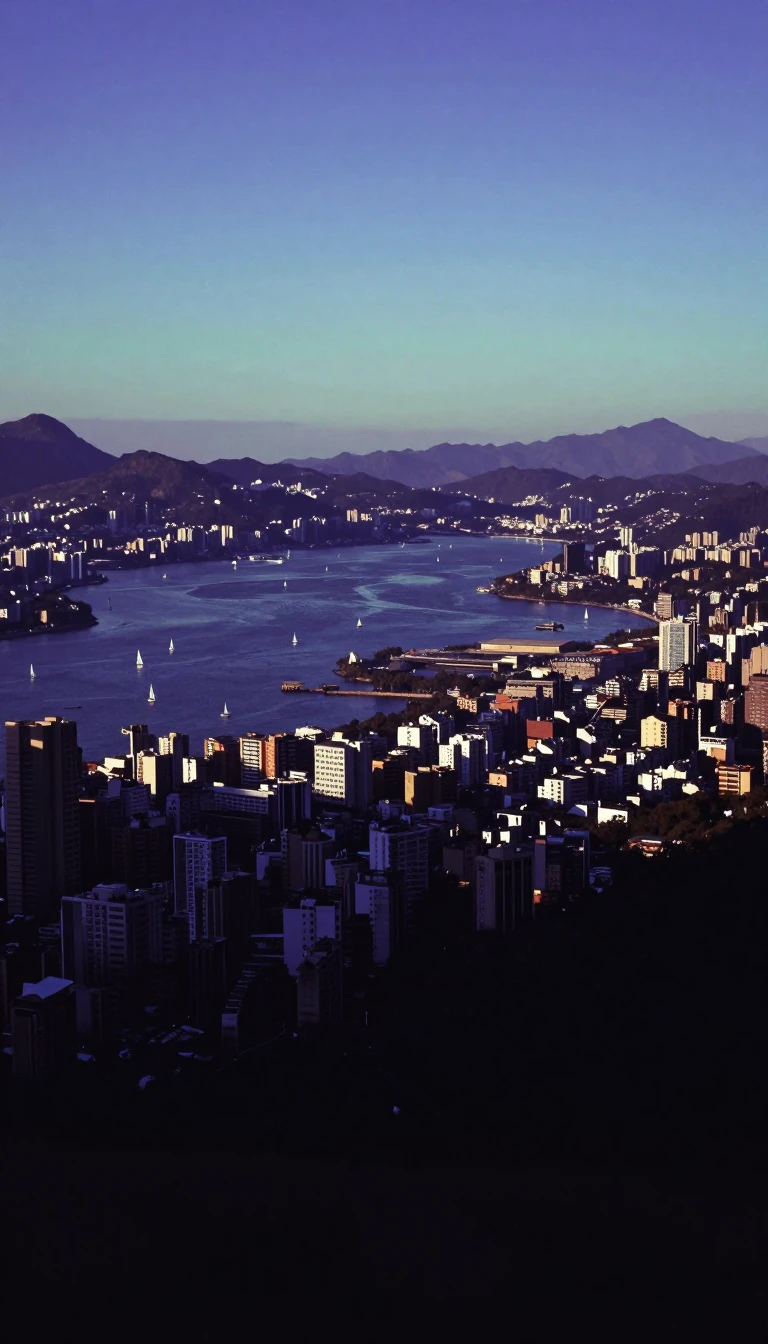
In short: Conceived in the 1970s to relieve Mumbai’s crushing overcrowding, Navi Mumbai was designed as a deliberate, modern alternative. Today, it stands as one of the world's largest planned cities, evolving from a government-led housing experiment into a major economic hub, a medical tourism destination, and a model for urban sanitation.
The origins of Navi Mumbai trace back to the late 1960s, when the Maharashtra government recognized that Mumbai’s population explosion—which doubled to nearly six million between 1951 and 1971—was creating unsustainable pressure on infrastructure. In 1971, the City and Industrial Development Corporation (CIDCO) was established to execute a master plan for a twin city across the harbour. Architects like Charles Correa and Shirish Patel envisioned a series of nodes, each designed to be self-contained, to accommodate a projected 2.1 million residents.
Development was phased, moving from the initial northern nodes like Vashi and Belapur to the southern regions of Ulwe and Dronagiri. The city’s growth accelerated after 1990, spurred by the commissioning of a wholesale agricultural market in Turbhe and the expansion of the Mumbai Suburban Railway. By 1991, the Navi Mumbai Municipal Corporation (NMMC) was formed to manage the city's civic functions. Today, the city is recognized for its cleanliness, consistently ranking among India's top cities in the Swachh Survekshan sanitation survey.
Beyond housing, Navi Mumbai has become a critical economic engine. It hosts the Jawaharlal Nehru Port, which handles over 56% of India's container traffic, and is rapidly expanding its medical infrastructure. With the 2025 opening of the Navi Mumbai International Airport, the city is integrating multimodal transport—connecting metro, rail, and road networks—to cement its status as an international gateway. While the city faces challenges, including the presence of slums and informal settlements that house a significant portion of its population, it remains a landmark achievement in Indian urban planning.
Opens the Intellect+ feed with this card first. Swipe up for the next one.
Sources
- Summary by Intellect · source: Navi Mumbai
- Also: Wikidata — Navi Mumbai · CC0
- Also: Wikidata — Navi Mumbai Municipal Corporation · CC0
To cite this card, link to https://intellectplus.co.uk/app/places-navi-mumbai.
How we source, check and correct cards: Editorial standards.
General information, not professional advice. Spotted an error? Flag the card or see corrections and complaints.
Intellect Plus is a visual educational discovery platform for exploring fascinating facts and ideas. Brain Food, Not Brain Rot. What is Intellect Plus?
Related
More in Major world cities · More in Countries & Cities · Latest · A–Z · All topics
