How a tiny, steep-approach airport became the gateway to London's high-stakes financial district.
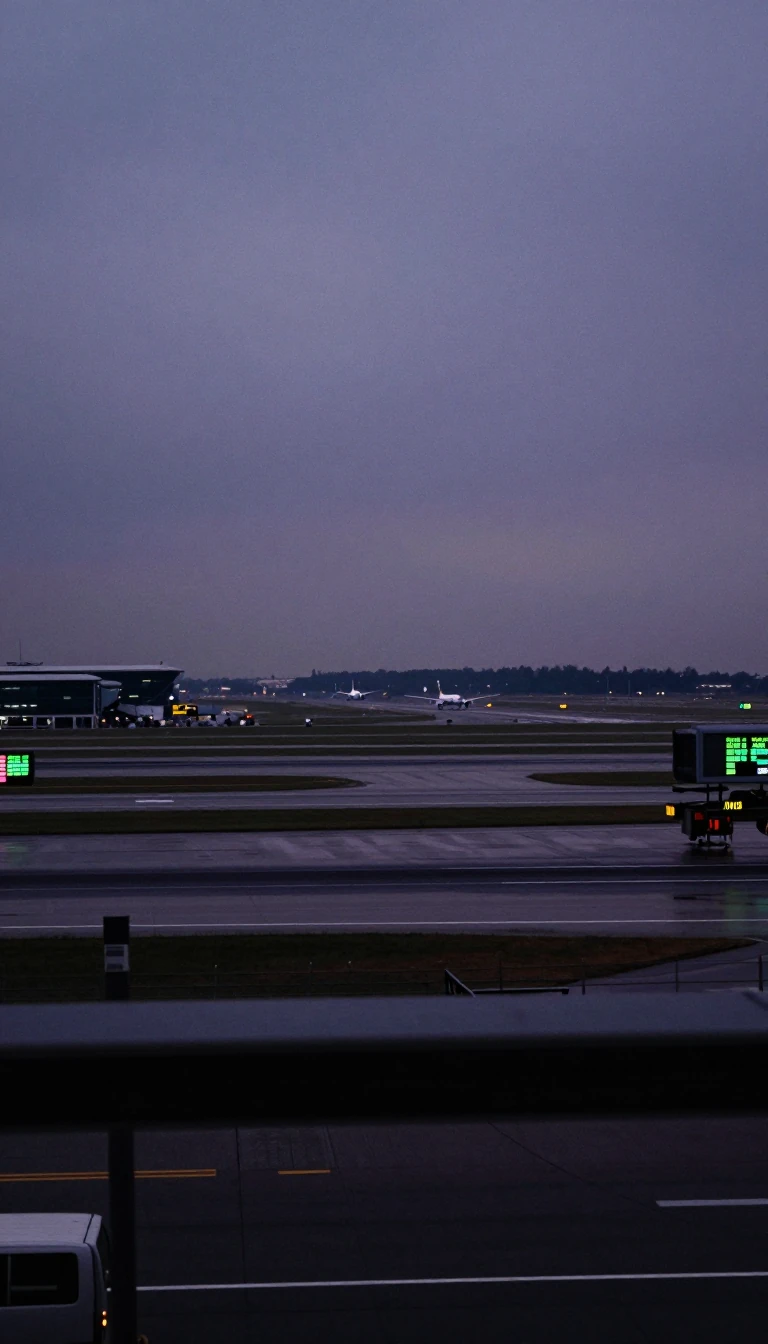
In short: Tucked into the Royal Docks, London City Airport defies standard aviation norms. With a runway barely over 1,500 meters and a uniquely steep 5.5-degree glide path, it serves as a specialized, high-efficiency transit point for business travelers, operating under strict noise controls and remote air traffic management.
Conceived in 1981 by Reg Ward of the London Docklands Development Corporation, the airport was designed to anchor the regeneration of East London. Construction began in 1986, and the first commercial flights took off in October 1987. From its inception, the facility was constrained by its location between the Royal Albert and King George V docks, forcing engineers to build on piles over water and adopt unconventional operational procedures.
The airport’s defining feature is its steep 5.5-degree approach, necessitated by noise abatement requirements for the surrounding urban area. This steep angle, combined with a short runway, limits the types of aircraft allowed to land. Only specific multi-engine, fixed-wing models—such as the Embraer E195-E2 and Airbus A220—are certified for these conditions. Because the site lacks space for taxiways, operations were historically hampered by the need for aircraft to backtrack on the runway, a bottleneck only partially mitigated by the 2020 completion of a parallel taxiway.
Ownership has shifted frequently, moving from the developer Mowlem to Irish businessman Dermot Desmond, and later to various international infrastructure consortia. By 2025, Macquarie Asset Management held a significant stake. Despite its small footprint, the airport has seen substantial investment, including a £344 million expansion approved in 2016 and the 2021 transition to a remote air traffic control tower located 80 miles away in Hampshire. While it remains a vital link for the City of London and Canary Wharf, the airport faces ongoing tension with local residents and environmental groups over noise, pollution, and proposed capacity increases.
Opens the Intellect+ feed with this card first. Swipe up for the next one.
Sources
- Summary by Intellect · source: London City Airport
To cite this card, link to https://intellectplus.co.uk/app/society-london-city-airport.
How we source, check and correct cards: Editorial standards.
General information, not professional advice. Spotted an error? Flag the card or see corrections and complaints.
Intellect Plus is a visual educational discovery platform for exploring fascinating facts and ideas. Brain Food, Not Brain Rot. What is Intellect Plus?
Related
More in UK & Ireland: life · More in Society · Latest · A–Z · All topics
