The province that gave birth to the Prussian state
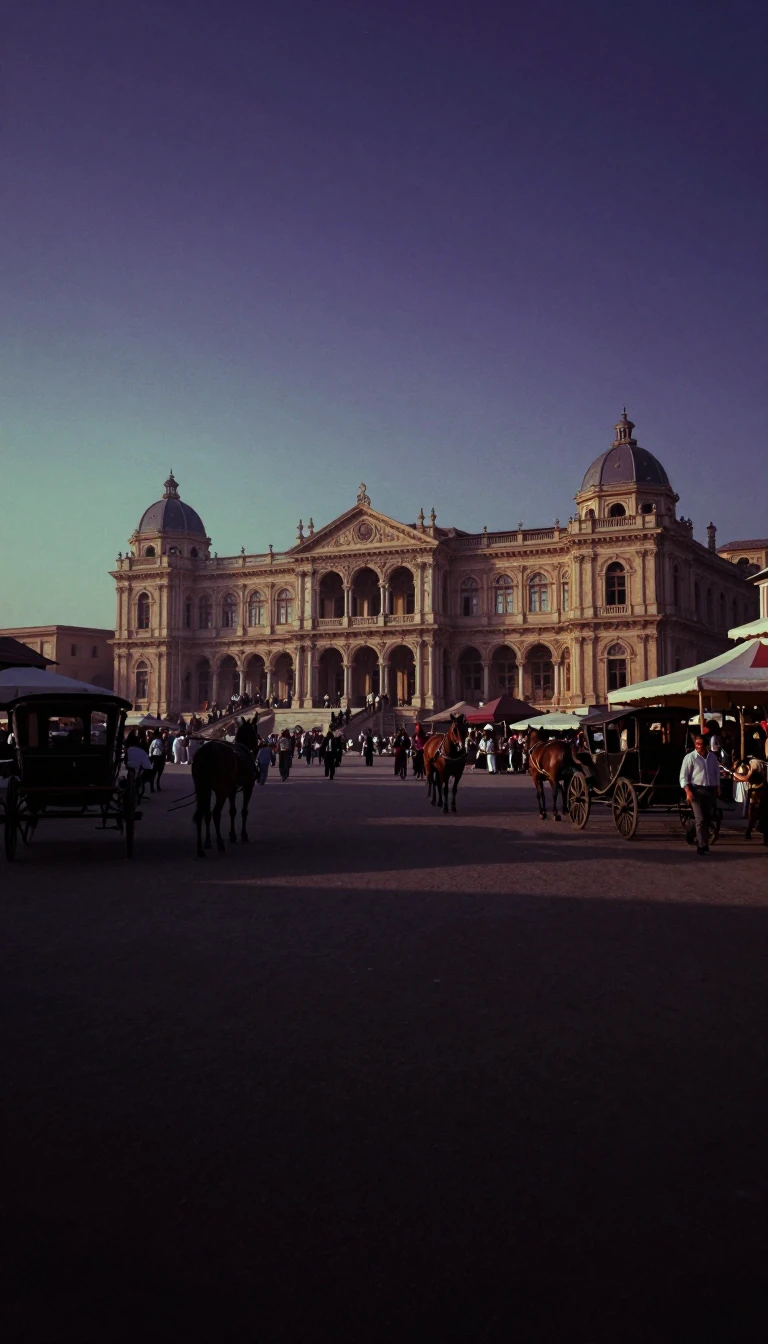
In short: Brandenburg was the geographic and political heart of Prussia, evolving from a medieval margraviate into a powerhouse of European influence. While it served as a royal residence and an industrial hub, its history is defined by a constant tension between its vast rural estates and its rapidly expanding urban centers.
The origins of Brandenburg are rooted in the medieval expansion of the Margraviate, established in 1157 by Albert the Bear. This territory became the core of the Brandenburg–Prussian state, a process accelerated by the House of Hohenzollern in 1415. Under the 'Great Elector' Frederick William, the region secured full sovereignty, eventually allowing his son to assume the crown of 'King in Prussia' in 1701. This evolution turned a regional territory into a central pillar of the Holy Roman Empire's power dynamics, rivaling the House of Habsburg.
The province's geography was defined by its position on the North German Plain, stretching from the Elbe to the Oder rivers. It was a land of stark contrasts: the rural outer regions were dominated by large-scale land holdings of the Junker nobility, who maintained traditional power even after serfdom was abolished in 1807. In contrast, the city of Berlin—located in the province's center—transformed during the Industrial Revolution from the 1830s into a major metropolis. This tension between the agrarian, resource-poor countryside and the industrializing urban core was a recurring theme in 19th-century literature and politics.
The administrative history of Brandenburg reflects the shifting nature of German governance. From 1815 to 1947, it functioned as a Prussian province, with its capital alternating between Potsdam, Berlin, and Charlottenburg. The capital's boundaries grew via the 1920 Greater Berlin Act, yet this expansion caused the province to forfeit two-thirds of its tax revenue and 50% of its residents. Following 1945, the area transformed significantly, ceding the Neumark to Poland and functioning as an East German state until it became a federal state again in 1990.
The province also served as a site of profound historical trauma and military significance. During the Nazi era, it hosted concentration camps like Sachsenhausen and Ravensbrück. In the final days of World War II, it was the theater for some of the most brutal battles of the war, including the defense of the Seelow Heights and the final Battle of Berlin. Today, it stands as a federal state that balances this complex legacy of imperial power, industrial growth, and wartime devastation.
Opens the Intellect+ feed with this card first. Swipe up for the next one.
Sources
- Summary by Intellect · source: Province of Brandenburg
To cite this card, link to https://intellectplus.co.uk/app/society-province-of-brandenburg.
How we source, check and correct cards: Editorial standards.
General information, not professional advice. Spotted an error? Flag the card or see corrections and complaints.
Intellect Plus is a visual educational discovery platform for exploring fascinating facts and ideas. Brain Food, Not Brain Rot. What is Intellect Plus?
Related
More in Post-classical · More in Society · Latest · A–Z · All topics
