Why the arcade industry defined the technological limits of gaming for three decades
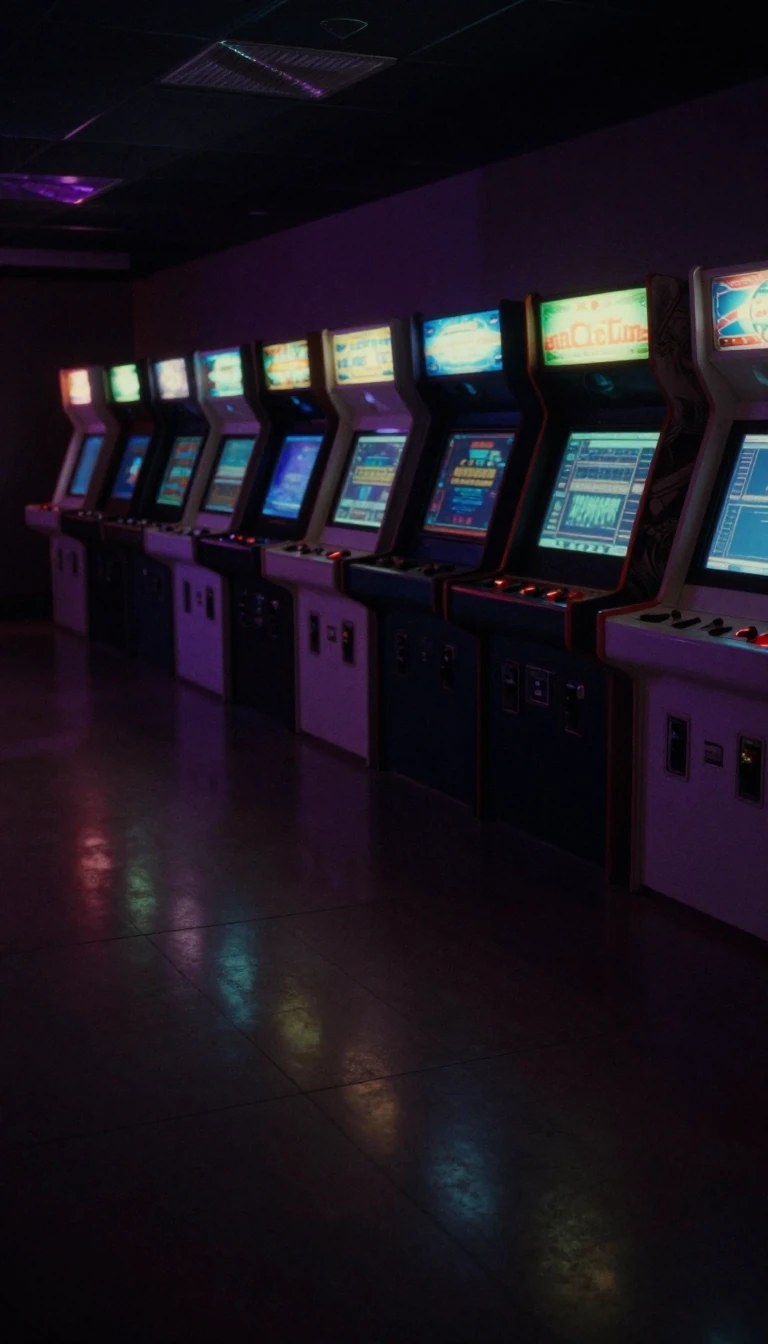
In short: Before home consoles dominated our living rooms, arcades were the primary engine of gaming innovation. From the early 1970s until the mid-1990s, these coin-operated cabinets pushed the boundaries of graphics, sound, and specialized hardware, creating a unique cultural phenomenon that prioritized immediate, addictive gameplay over the complex strategy of modern home titles.
The arcade video game industry emerged from the intersection of mid-20th-century electro-mechanical amusement machines and the rapid evolution of computer technology. While early prototypes like Galaxy Game and Computer Space in 1971 utilized mainframe computers, the industry quickly pivoted to discrete logic chips and eventually programmable microprocessors. This transition allowed for the 'Golden Age' of the late 1970s and early 1980s, anchored by blockbusters like Space Invaders and Pac-Man. By 1981, the US arcade industry was valued at US$8 billion, cementing its place as the most technologically advanced segment of the broader video game market.
Arcades thrived on a specific design philosophy: 'easy to learn, difficult to master.' Because players were essentially renting the experience per life or per token, games were engineered with rapidly increasing difficulty and intuitive controls. This environment fostered a technological arms race, particularly in the 1990s, as companies like Sega and Namco competed to implement 'true' 3D polygon graphics and sophisticated motion-simulator cabinets. These machines featured specialized accessories—such as force-feedback steering, light guns, and hydraulic cockpits—that were far too expensive or bulky for home use, ensuring that arcades offered experiences that consoles could not replicate.
The decline of the Western arcade market began in the late 1990s as home consoles like the Sony PlayStation and Microsoft Xbox achieved comparable graphical fidelity at a fraction of the cost. While the industry shifted toward niche entertainment and prize-redemption models in the United States, it remained robust in Japan, China, and South Korea. Today, the legacy of the arcade persists through emulators like MAME, modern recreations by companies like Arcade1Up, and the continued influence of the 'arcade-style' design—frantic, action-oriented gameplay—which remains a staple of the global gaming landscape.
Opens the Intellect+ feed with this card first. Swipe up for the next one.
Sources
- Summary by Intellect · source: Arcade video game
- Also: Wikidata — arcade video game · CC0
To cite this card, link to https://intellectplus.co.uk/app/sport-arcade-video-game.
How we source, check and correct cards: Editorial standards.
General information, not professional advice. Spotted an error? Flag the card or see corrections and complaints.
Intellect Plus is a visual educational discovery platform for exploring fascinating facts and ideas. Brain Food, Not Brain Rot. What is Intellect Plus?
Related
More in Games · More in Sport & Games · Latest · A–Z · All topics
