Bouldering is the art of solving short, intense climbing puzzles without ropes or harnesses.
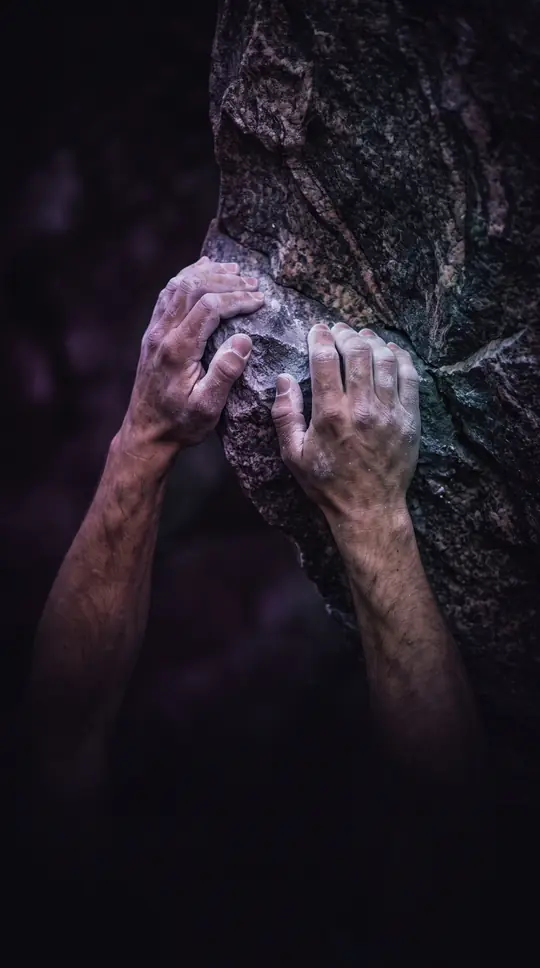
In short: Stripped of ropes and harnesses, bouldering focuses on pure power and technical precision. Climbers tackle short, intense sequences of moves called problems, often using only shoes and chalk. It is a dynamic, high-stakes discipline where the goal is to master the rock or wall through strength, balance, and strategic movement.
Originating as a training method for mountaineers to practice specific moves safely, bouldering evolved into a distinct discipline during the 20th century. John Gill, often called the father of modern bouldering, revolutionized the sport in the late 1950s by integrating gymnastics, promoting dynamic movement, and introducing chalk to keep hands dry. His 1969 article, The Art of Bouldering, helped codify the sport's modern identity.
Bouldering problems are typically under six meters tall, relying on crash pads rather than ropes for safety. The difficulty of these problems is measured using the V-scale, which originated in the United States, or the Fontainebleau scale from France. While the V-scale is open-ended—ranging from beginner VB or V0 grades up to V17—these ratings remain subjective and controversial, as individual body characteristics like height and arm length significantly influence how a climber experiences a specific route.
The sport demands high levels of power, often forcing climbers to support their weight through upper body strength on steep, overhanging surfaces. Despite the physical intensity, technique remains paramount; proficient climbers prioritize footwork and body positioning to maintain balance. While indoor gyms have standardized the experience with color-coded holds and consistent matting, outdoor bouldering presents unique challenges, including environmental impacts on vegetation and the necessity of managing landing zones to prevent common injuries like ankle sprains or pulley strains.
Highball bouldering represents an extreme sub-discipline, where climbers tackle tall, imposing lines that push the boundaries of ropeless safety. Notable milestones include John Gill’s 1961 ascent of The Thimble and modern feats like Daniel Woods’ 2015 climb of The Process. Today, the sport has gained global visibility through competitions and digital media, culminating in its inclusion as an Olympic sport, recognized for its youth appeal and impact on gender equality.
Opens the Intellect+ feed with this card first. Swipe up for the next one.
Sources
- Summary by Intellect · source: Bouldering
- Also: Wikidata — bouldering · CC0
To cite this card, link to https://intellectplus.co.uk/app/sport-bouldering.
How we source, check and correct cards: Editorial standards.
General information, not professional advice. Spotted an error? Flag the card or see corrections and complaints.
Intellect Plus is a visual educational discovery platform for exploring fascinating facts and ideas. Brain Food, Not Brain Rot. What is Intellect Plus?
Related
More in Sports · More in Sport & Games · Latest · A–Z · All topics
