Despite the name, Chinese checkers is a German invention with no roots in China.
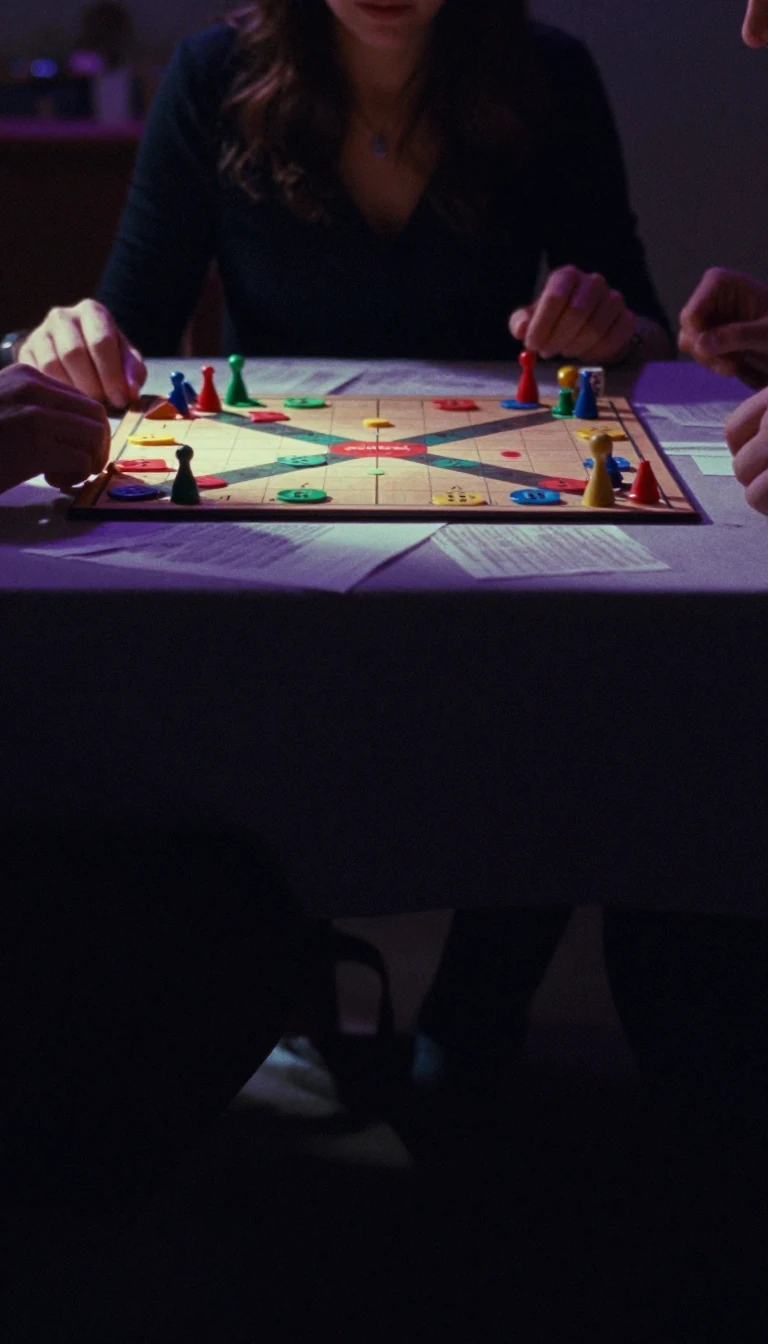
In short: This classic strategy game, known in Germany as Sternhalma, was born in 1892 as a variation of the American game Halma. The name Chinese checkers was merely a 1928 marketing invention by the Pressman company, which originally branded the game as Hop Ching checkers to sound exotic to American consumers.
The game is played on a hexagram-shaped board, a design that distinguishes it from the square board used in its predecessor, Halma. The name Sternhalma itself reflects this, with 'Stern' being the German word for star. While it is now a global staple, its mechanics are rooted in simple, elegant movement: players race their pieces from one corner of the star to the opposite 'home' corner. Movement is restricted to either a single step into an adjacent space or a series of jumps over other pieces, whether they belong to the player or an opponent.
Strategic depth arises from the fact that there is no capturing in standard play. Because pieces remain on the board after being jumped, players can use their opponents' pieces to build 'ladders' or 'chains' that accelerate their own progress. This creates a tension between advancing one's own pieces and strategically placing them to hinder an opponent's path. In high-level play, the game is so precise that matches are rarely decided by more than a few moves, and players must carefully manage the timing of emptying their starting corner and filling their home destination.
The game's flexibility is evident in its many variations. While the standard version uses 10 pieces per player, larger boards or fewer players can accommodate 15 or even 21 pieces. Variants like 'Fast-paced' or 'Super' Chinese Checkers, popular in France, introduce more complex jumping rules, such as catapulting over distant pieces. Other versions, like the Japanese 'diamond game' or the capture-focused variant that resembles Leap Frog, demonstrate how the core mechanic of jumping can be adapted into entirely different strategic experiences. Whether played as an individual race or in teams, the game remains a masterclass in spatial planning and opportunistic movement.
Opens the Intellect+ feed with this card first. Swipe up for the next one.
Sources
- Summary by Intellect · source: Chinese checkers
- Also: Wikidata — Chinese checkers · CC0
- Also: Wikidata — Chinese Checkers · CC0
To cite this card, link to https://intellectplus.co.uk/app/sport-chinese-checkers.
How we source, check and correct cards: Editorial standards.
General information, not professional advice. Spotted an error? Flag the card or see corrections and complaints.
Intellect Plus is a visual educational discovery platform for exploring fascinating facts and ideas. Brain Food, Not Brain Rot. What is Intellect Plus?
Related
More in Games · More in Sport & Games · Latest · A–Z · All topics
