The evolution of football formations from all-out attack to tactical geometry
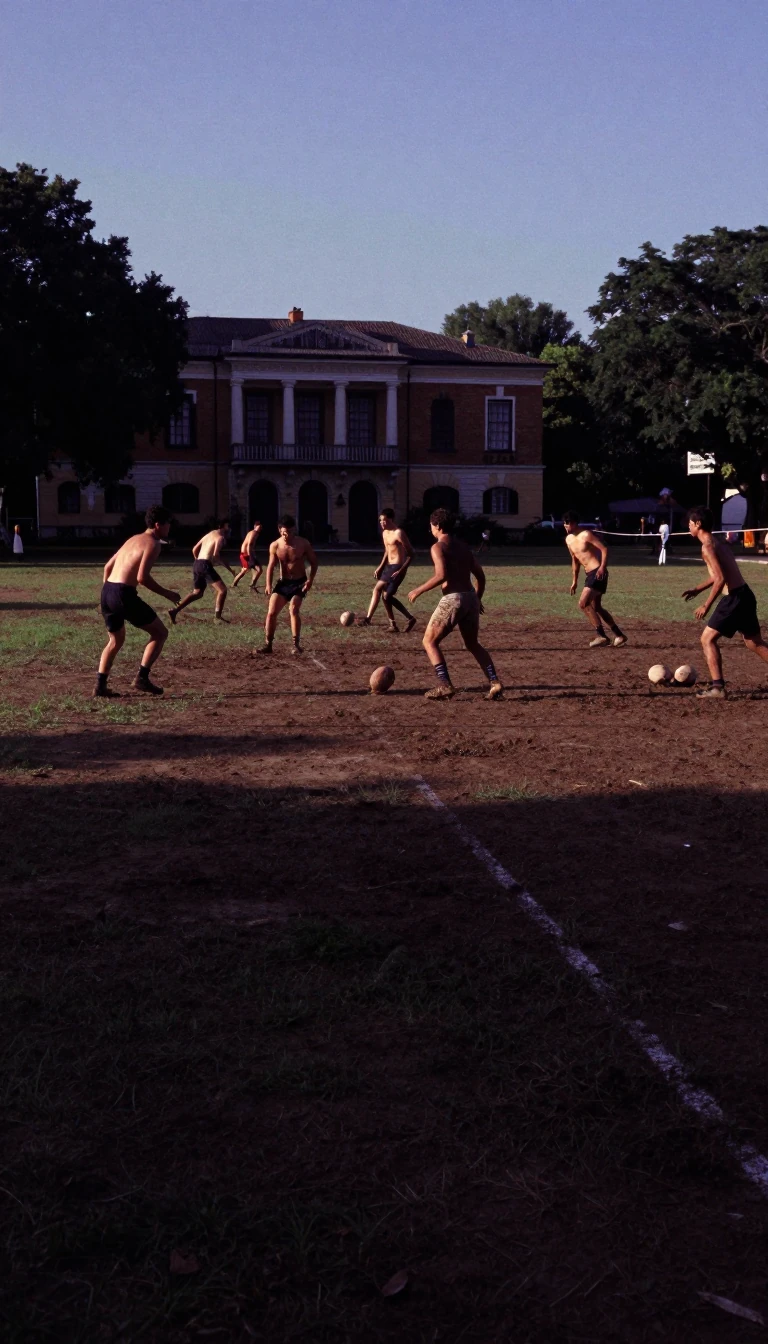
In short: In the 19th century, football was a chaotic sprint of individual dribbling. Today, it is a sophisticated game of spatial geometry. From the 'Pyramid' to the 'WM' and the 'diagonal system,' the way players position themselves on the pitch reveals a century-long chess match between offensive flair and defensive structure.
Early football was defined by an almost singular focus on attack. In the 19th century, defensive play was virtually non-existent, with line-ups reflecting this all-attacking nature. A landmark example occurred in the first international match in 1872, where England fielded a 1–1–8 or 1–2–7 formation. The English style prioritized individual dribbling, with players attempting to move the ball forward as far as possible before kicking it to a teammate to chase. In contrast, Scotland introduced a revolutionary passing system, organizing players into pairs to move the ball systematically.
The first long-term successful formation, the 2–3–5—known as the 'Pyramid'—emerged in the 1880s and became the global standard by the 1890s. This system provided the first true balance between attack and defense, utilizing a trio of 'half-backs' as the first line of defense. This era also saw the rise of the 'Danubian school' in the 1920s, which emphasized short passing and movement, and Vittorio Pozzo's 'Metodo' in the 1930s. Pozzo's system (a 2–3–2–3) pulled two forwards back to support the midfield, a tactic that helped Italy win back-to-back World Cups in 1934 and 1938.
Tactical innovation often followed rule changes. In 1925, a change in the offside law reduced the number of defenders required between the attacker and the goal-line from three to two. Arsenal manager Herbert Chapman responded by creating the 'WM' formation in the mid-1920s, introducing a dedicated center-back to counter the new rule. This sparked a lineage of complex geometries: the Hungarian 'WW' formation, which turned the forward line into a playmaker-led midfield, and the '4–2–4' formation. The latter, first described using numbers in the 1950s, was developed independently by Flávio Costa in Brazil and Béla Guttman in Hungary to combine robust defense with a powerful attack.
Opens the Intellect+ feed with this card first. Swipe up for the next one.
Sources
- Summary by Intellect · source: Formation (association football)
To cite this card, link to https://intellectplus.co.uk/app/sport-formation-association-football.
How we source, check and correct cards: Editorial standards.
General information, not professional advice. Spotted an error? Flag the card or see corrections and complaints.
Intellect Plus is a visual educational discovery platform for exploring fascinating facts and ideas. Brain Food, Not Brain Rot. What is Intellect Plus?
Related
More in Sports and recreation · More in Sport & Games · Latest · A–Z · All topics
