Why the best strategy in Othello is often to capture as little as possible.
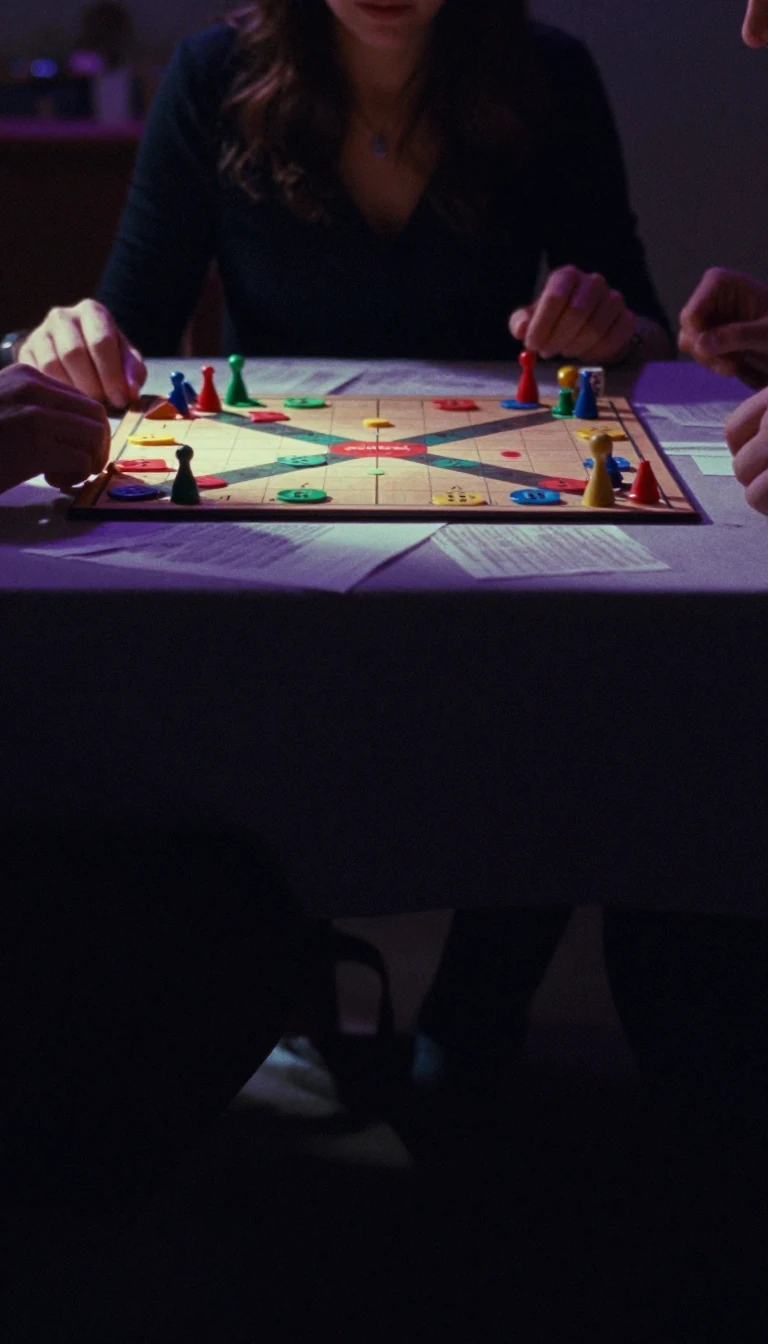
In short: Othello is an abstract strategy game where you flip your opponent's pieces to match your own color. While the goal is to finish with the most disks, the most effective way to play is often counterintuitive: you must limit your opponent's future moves by flipping as few pieces as possible.
Invented in 1883, Reversi was a popular Victorian-era game before being rebranded as Othello. The modern version, patented in Japan in 1971 by Goro Hasegawa, transformed the game into a global commercial success. With over 40 million sets sold across 100 countries, the game has generated more than $600 million in sales. Its name and aesthetic are inspired by Shakespeare’s Othello, with the green board representing a battlefield and the black and white pieces reflecting the central conflict of the play.
The game is played on an 8×8 grid where players take turns placing disks. A move is valid only if it captures at least one opponent's piece by flanking it between two of your own. When the board is full, the player with the most disks of their color wins. Because players cannot look back at previous board states, the game demands intense focus. This difficulty is compounded by the pieces' interchangeability, which makes strategic evaluation harder than in games like chess, where pieces have unique identities.
Mathematically, Othello is a complex beast. Analysts estimate the game has a tree complexity of approximately 10^58, and determining the winning move on an n×n board is PSPACE-complete. While 4×4 and 6×6 boards have been solved in favor of the second player, a 2023 proof confirmed that an 8×8 board results in a draw under perfect play. Despite this, human players continue to be challenged by the game's depth, as evidenced by the 1997 defeat of world champion Takeshi Murakami by the computer program Logistello, which won six games to zero.
To manage competitive play, the World Othello Championship, which began in 1977, uses sophisticated tie-breakers like the Brightwell Quotient. This system, developed by British champion Graham Brightwell, accounts for a player's performance relative to their opponents' scores. Whether played as a casual pastime or a high-stakes tournament, Othello remains a masterclass in spatial strategy, where the most powerful move is often the one that restricts your opponent the most.
Opens the Intellect+ feed with this card first. Swipe up for the next one.
Sources
- Summary by Intellect · source: Reversi
- Also: Wikidata — Reversi · CC0
- Also: Wikidata — Reversi · CC0
To cite this card, link to https://intellectplus.co.uk/app/sport-reversi.
How we source, check and correct cards: Editorial standards.
General information, not professional advice. Spotted an error? Flag the card or see corrections and complaints.
Intellect Plus is a visual educational discovery platform for exploring fascinating facts and ideas. Brain Food, Not Brain Rot. What is Intellect Plus?
Related
More in Games · More in Sport & Games · Latest · A–Z · All topics
