Why the ancient Greeks believed the universe began as an indefinite, boundless void
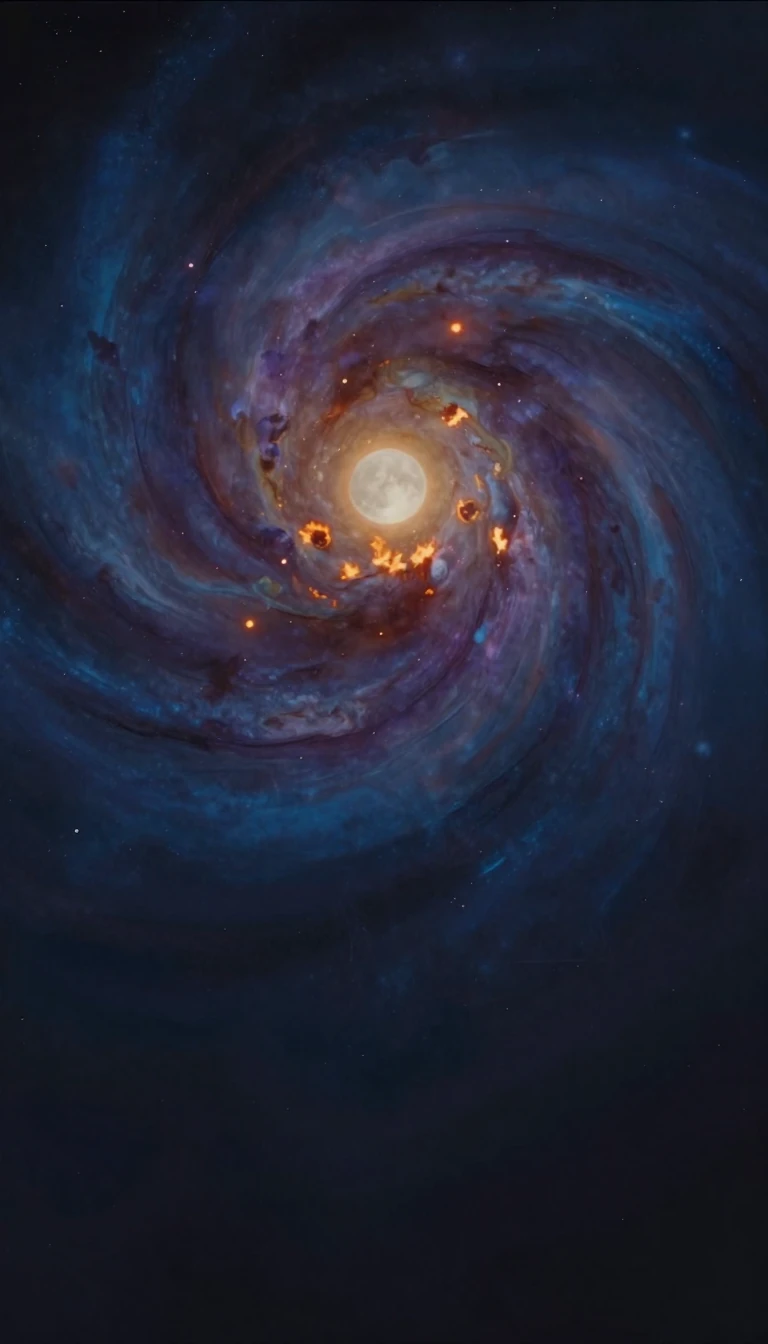
In short: Before modern physics, Anaximander proposed that the cosmos did not emerge from a single element like water, but from the apeiron. This infinite, indeterminate substance acted as the primal source of all reality, a revolutionary shift toward rational thought that moved beyond the mythological explanations of his time.
In the 6th century BC, the philosopher Anaximander challenged the prevailing view held by his teacher, Thales, who argued that water was the fundamental origin of all things. Anaximander posited instead that the universe originated from the apeiron—a term meaning 'unlimited,' 'infinite,' or 'indefinite.' Unlike specific elements, the apeiron possessed no distinguishable qualities, making it a highly abstract principle capable of generating the diversity of the perceived world without itself being subject to decay or old age.
The mechanism of creation, according to Anaximander, involved eternal, likely rotary, motion within this boundless source. This motion triggered the emergence of opposing forces, such as hot and cold or wet and dry. These opposites began to struggle against one another, eventually forming the cosmos. Everything that exists is derived from this primal source and, according to necessity, must eventually return to it, ensuring a cycle of generation and destruction that encompasses infinite worlds.
This transition toward the apeiron marked a significant evolution in Greek thought, moving from the mythical cosmogonies of figures like Hesiod—who viewed the beginning as a void or 'Chaos'—toward a more systematic, naturalistic explanation. While Anaximander’s work retained traces of traditional religious language, his focus on an abstract, eternal principle laid the groundwork for early laws of nature. By identifying an arche that was neither finite nor limited to a specific element, he provided a rational framework that could account for the mutual changes and interactions of the physical world.
Opens the Intellect+ feed with this card first. Swipe up for the next one.
Sources
- Summary by Intellect · source: Apeiron | Greek philosophy | Britannica
- Also: Apeiron
To cite this card, link to https://intellectplus.co.uk/app/technology-apeiron.
How we source, check and correct cards: Editorial standards.
General information, not professional advice. Spotted an error? Flag the card or see corrections and complaints.
Intellect Plus is a visual educational discovery platform for exploring fascinating facts and ideas. Brain Food, Not Brain Rot. What is Intellect Plus?
Related
More in Inventions · More in Technology · Latest · A–Z · All topics
