Did a master instrument maker intentionally mislead the scientific community about his famous scale?
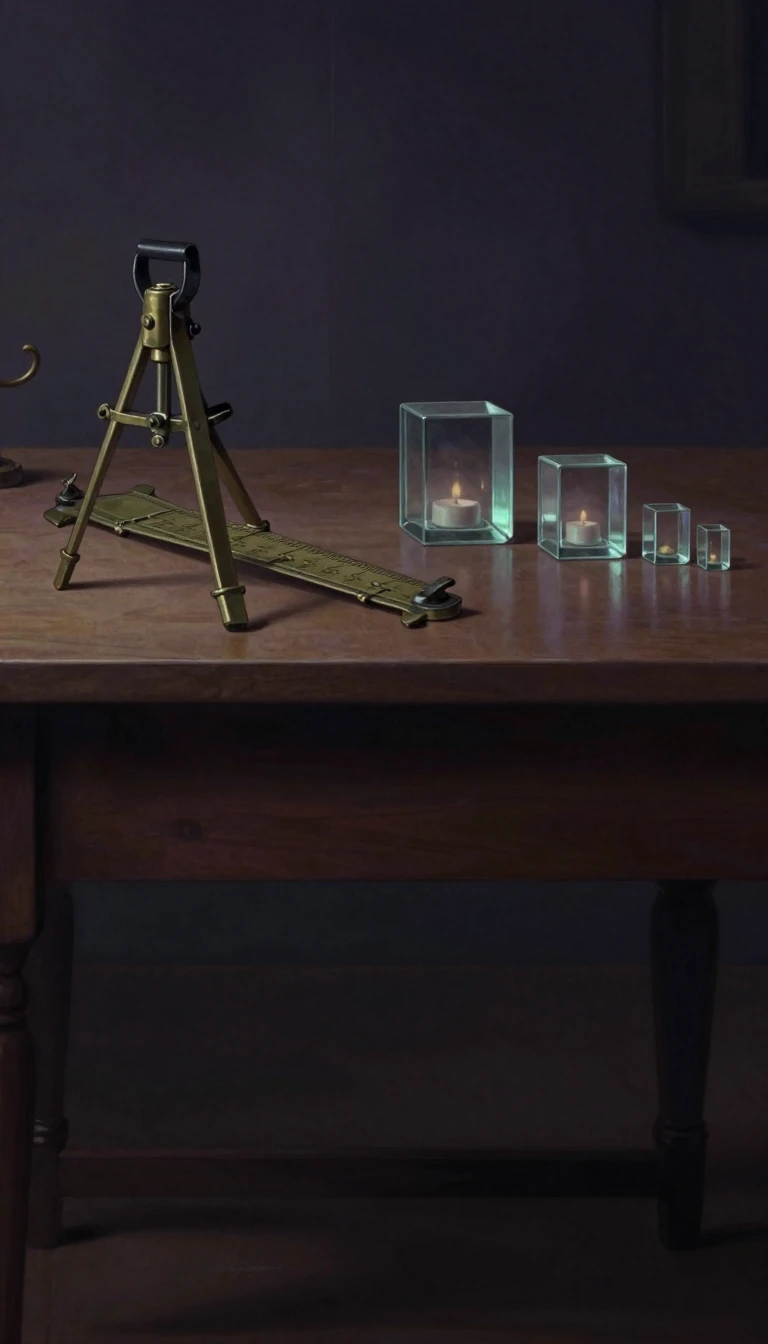
In short: Daniel Gabriel Fahrenheit revolutionized temperature measurement with his accurate mercury-in-glass thermometers. Yet, historians suggest his published explanation of his eponymous scale may have been a deliberate obfuscation. By concealing his true methods, he protected his trade secrets while his invention became the global standard for over two centuries.
Born in 1686 in Danzig, Daniel Gabriel Fahrenheit was a merchant-turned-inventor who spent much of his life in the Dutch Republic. After his parents died in 1701, he abandoned a merchant apprenticeship to travel through Europe. By 1708, he met astronomer Ole Rømer in Copenhagen, whose own temperature scale heavily influenced Fahrenheit’s early work. Fahrenheit eventually perfected mercury-in-glass thermometers, which were vastly superior to the spirit-filled devices of the era.
In 1724, Fahrenheit was elected a Fellow of the Royal Society and published papers detailing his calibration process. He claimed his scale was based on three fixed points: a salt-ice mixture at 0°F, water freezing at 30°F, and human body temperature at 90°F. However, 20th-century research into his private correspondence with Herman Boerhaave suggests these claims were likely misleading. Scholars like W. E. Knowles Middleton argue that Fahrenheit, as a competitive instrument maker, had a natural tendency to obscure his manufacturing techniques to maintain a commercial edge.
The Fahrenheit scale underwent later refinements, most notably shifting the freezing-to-boiling interval to exactly 180 degrees—a highly composite number. This adjustment shifted the human body temperature reading from his original 96°F to the modern 98.6°F. While the Celsius scale has since replaced Fahrenheit in most of the world, the United States continues to use the system that originated from these secretive, early 18th-century experiments.
Despite his scientific contributions, Fahrenheit died in 1736 in relative poverty. He was buried as a destitute person in The Hague, just days after finalizing his will. His legacy remains a complex mix of genuine technical brilliance and a deliberate, calculated mystery that kept his contemporaries guessing about the true origins of his temperature measurements.
Opens the Intellect+ feed with this card first. Swipe up for the next one.
Sources
- Summary by Intellect · source: Daniel Gabriel Fahrenheit
To cite this card, link to https://intellectplus.co.uk/app/technology-daniel-gabriel-fahrenheit.
How we source, check and correct cards: Editorial standards.
General information, not professional advice. Spotted an error? Flag the card or see corrections and complaints.
Intellect Plus is a visual educational discovery platform for exploring fascinating facts and ideas. Brain Food, Not Brain Rot. What is Intellect Plus?
Related
More in Inventors · More in Technology · Latest · A–Z · All topics
