Why the Delaunay triangulation is the gold standard for connecting scattered points in space
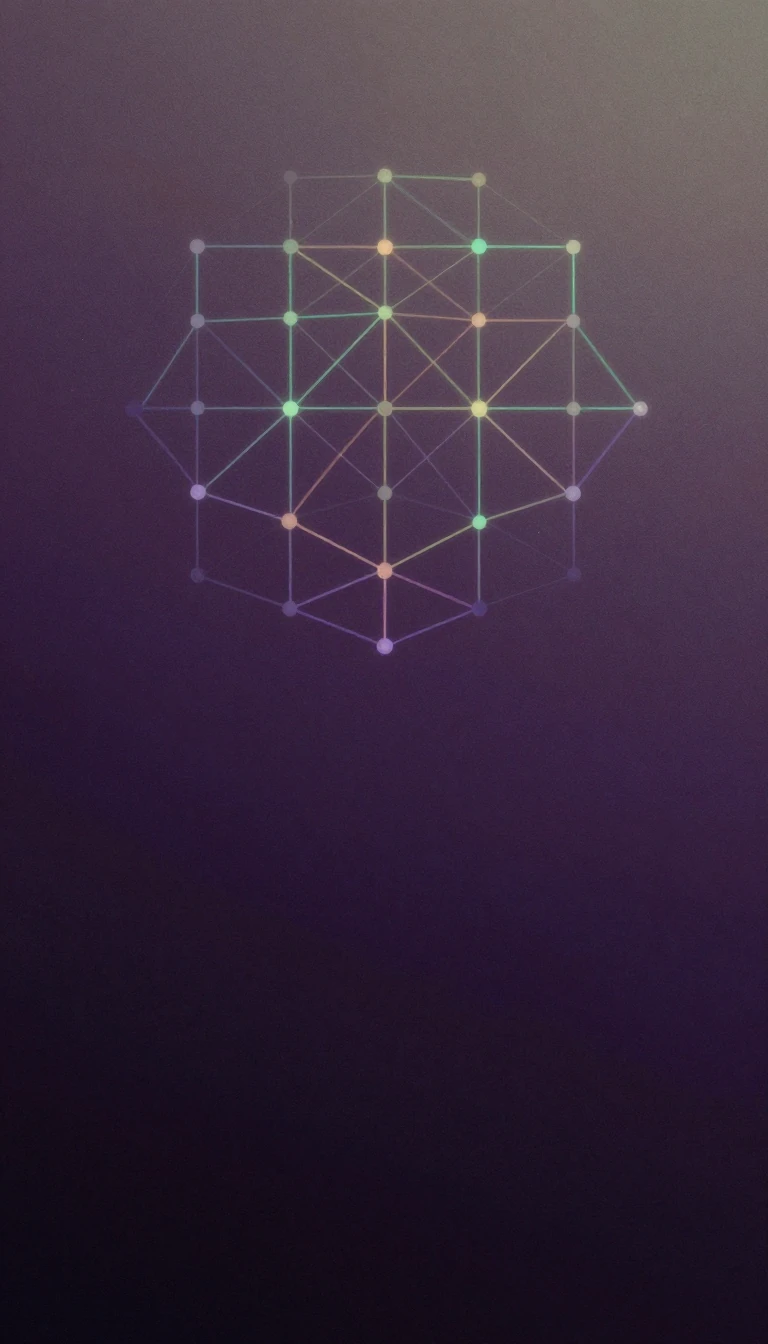
In short: Delaunay triangulation is a geometric method that connects a set of points into a network of triangles. By ensuring that no point lies inside the circumcircle of any triangle, it maximizes the smallest angles, effectively avoiding thin, sliver-like shapes and creating a robust, high-quality mesh for complex spatial data.
Named after Boris Delaunay, who began his work on the concept in 1934, this method serves as a fundamental tool in computational geometry. Its primary strength lies in its ability to produce well-shaped triangles. By requiring that every triangle's circumcircle remains empty of other points, the algorithm naturally avoids the creation of extremely narrow, elongated triangles that can cause numerical instability in simulations or modeling.
The structure is deeply connected to the Voronoi diagram, acting as its dual graph. In two dimensions, every edge in a Delaunay triangulation corresponds to a boundary between adjacent regions in a Voronoi diagram. If two triangles share a common edge, their respective circumcenters are linked by an edge in the Voronoi tessellation. This duality allows researchers to move between these two representations to solve problems in fields ranging from mesh generation to spatial analysis.
Computing these triangulations efficiently is a major area of study. While a naive approach might take quadratic time, modern algorithms—such as incremental construction or divide-and-conquer methods—can achieve O(n log n) performance. Techniques like the 'flip' algorithm allow for local adjustments: if two triangles sharing an edge fail the Delaunay condition, swapping that edge for the opposite diagonal creates a valid configuration. While these methods are highly effective in two dimensions, they become significantly more complex in higher dimensions, where the number of possible triangulations and the computational cost can grow exponentially.
Beyond simple connectivity, the Delaunay triangulation acts as a geometric spanner. In a 2D plane, the shortest path between two points traveling only along the edges of the triangulation is at most 1.998 times the straight-line Euclidean distance. This property, combined with its ability to adapt to point distributions, makes it an essential framework for understanding how points in space relate to their neighbors.
Opens the Intellect+ feed with this card first. Swipe up for the next one.
Sources
- Summary by Intellect · source: Delaunay triangulation
To cite this card, link to https://intellectplus.co.uk/app/technology-delaunay-triangulation.
How we source, check and correct cards: Editorial standards.
General information, not professional advice. Spotted an error? Flag the card or see corrections and complaints.
Intellect Plus is a visual educational discovery platform for exploring fascinating facts and ideas. Brain Food, Not Brain Rot. What is Intellect Plus?
Related
More in Inventions · More in Technology · Latest · A–Z · All topics
