Donald Glaser invented the bubble chamber, then pivoted to revolutionize the field of biotechnology.
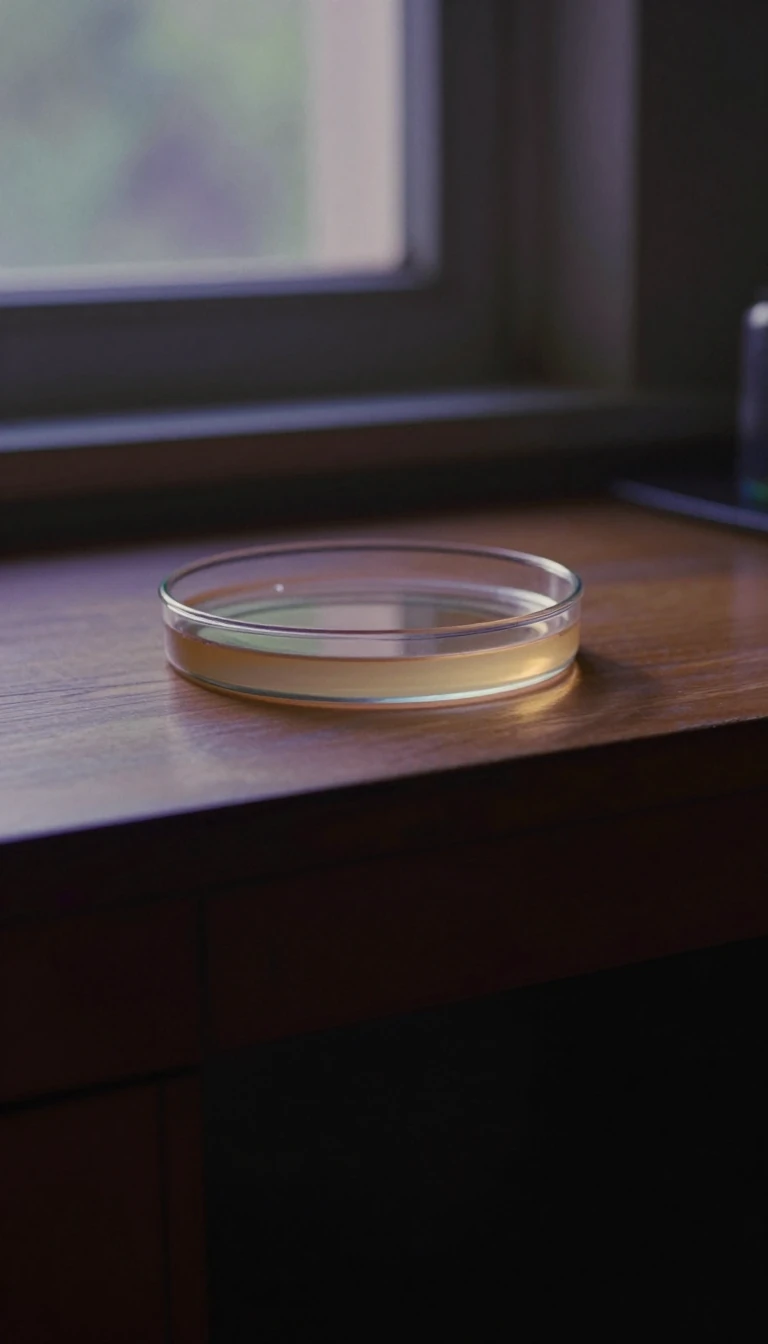
In short: Donald Glaser won the 1960 Nobel Prize in Physics for inventing the bubble chamber, a device that revolutionized particle physics. Yet, at the height of his fame, he walked away from physics entirely to pursue molecular biology, eventually co-founding the world's first biotechnology company to solve real-world problems.
Born in 1926, Donald Glaser was a polymath whose career spanned physics, biology, and neurobiology. While studying cosmic rays at Caltech, he realized that existing cloud chambers were too slow and cluttered with metal plates to effectively track elementary particles. His solution was the bubble chamber, which used superheated liquid to capture the paths of particles as visible trails of bubbles. Though a persistent myth suggests he was inspired by beer bubbles, Glaser clarified that while he used beer in early prototypes, it was not the source of his inspiration.
The bubble chamber’s success at high-energy accelerators earned Glaser the 1960 Nobel Prize in Physics. However, the victory brought a shift in his perspective. As physics experiments grew in scale and administrative burden, Glaser felt disconnected from the hands-on science he loved. Recalling his early interest in molecular genetics, he pivoted to biology. He applied his engineering expertise to automate laboratory tasks, such as counting cell colonies, and eventually co-founded Cetus Corporation in 1971. This venture, which focused on genetic engineering and microbial strain improvement, is widely recognized as the first biotechnology company.
Glaser’s intellectual curiosity did not stop at biotechnology. As molecular biology became increasingly biochemical, he shifted his focus once more, this time toward the mechanics of human vision. He spent his later years at UC Berkeley applying computational modeling to understand how the brain processes visual information. Throughout his life, Glaser remained a tinkerer, using his unique ability to design custom equipment to push the boundaries of whatever field he entered, whether he was tracking subatomic particles or studying the fundamental basis of life itself.
His legacy is defined by his restless transition between disciplines. From his early work in the 1940s to his final research in neurobiology, Glaser demonstrated that the skills of a physicist—design, automation, and a drive to observe the unobservable—could be applied to solve the most complex biological challenges of the twentieth century.
Opens the Intellect+ feed with this card first. Swipe up for the next one.
Sources
- Summary by Intellect · source: Donald Glaser
To cite this card, link to https://intellectplus.co.uk/app/technology-donald-glaser.
How we source, check and correct cards: Editorial standards.
General information, not professional advice. Spotted an error? Flag the card or see corrections and complaints.
Intellect Plus is a visual educational discovery platform for exploring fascinating facts and ideas. Brain Food, Not Brain Rot. What is Intellect Plus?
Related
More in Inventors · More in Technology · Latest · A–Z · All topics
