Why your electrical circuits store energy instead of just wasting it as heat
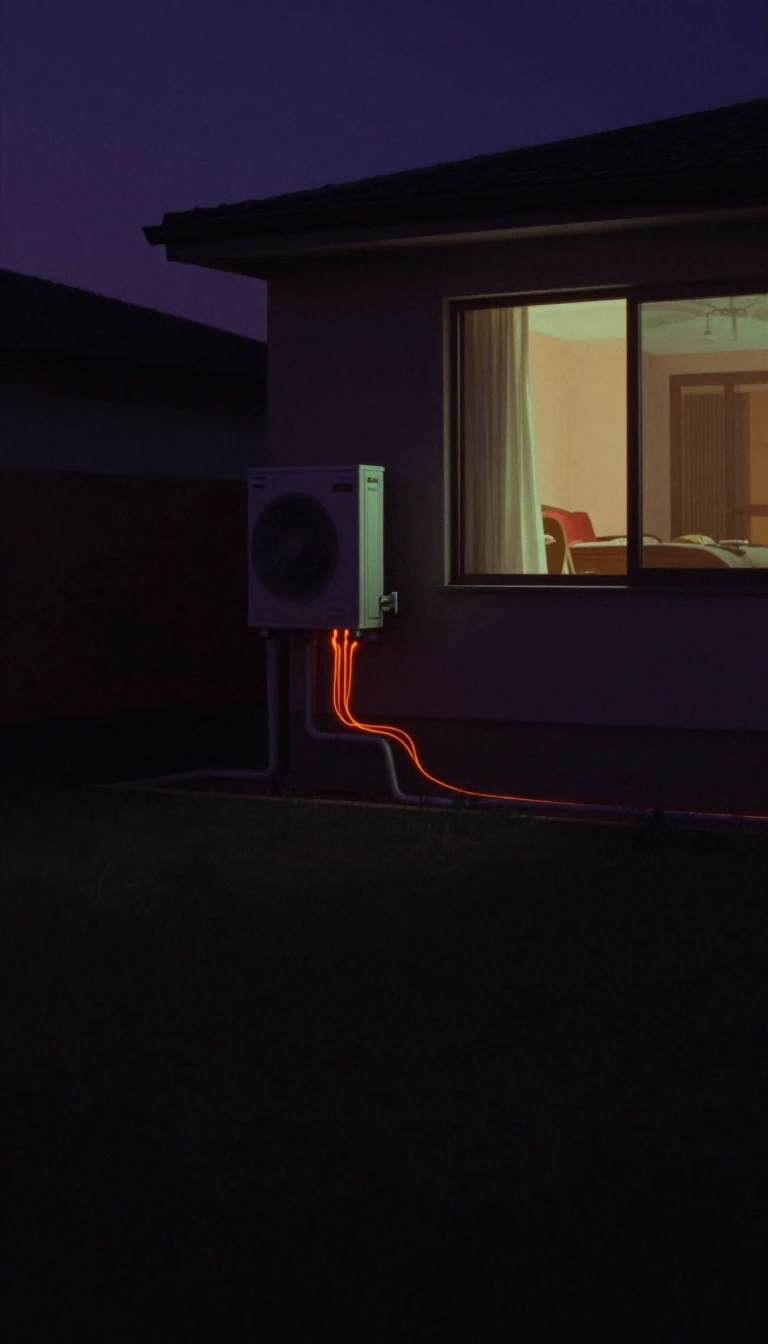
In short: Reactance is the hidden partner to resistance in alternating current circuits. Unlike resistors, which dissipate energy as heat, reactive components like capacitors and inductors store energy, returning it to the circuit a quarter-cycle later. This fundamental difference allows engineers to manipulate phase shifts and manage power flow in modern grids.
In electrical engineering, reactance represents the opposition to alternating current caused by inductance and capacitance. While resistance converts electrical energy into heat, reactance temporarily stores it. This distinction is vital for understanding how circuits behave under alternating current, where components shift the phase of the current relative to the voltage. Inductive reactance, which increases with frequency, arises from the magnetic fields generated by changing currents, while capacitive reactance, which decreases as frequency rises, stems from the accumulation of charge across an insulator.
The concept was formally introduced by French engineer Édouard Hospitalier in May 1893 and adopted by the American Institute of Electrical Engineers in 1894. Mathematically, reactance is measured in ohms and acts as the imaginary component of impedance. Because reactances can be negative, they can effectively cancel each other out, a property that power providers exploit to minimize transmission losses. By strategically placing capacitors in power systems, operators can correct phase imbalances, ensuring that transmission lines do not overheat from unnecessary current flow.
The physical mechanisms are distinct: inductors rely on Faraday’s law, where a changing magnetic flux induces a counter-electromotive force that opposes current changes. Conversely, capacitors act as temporary storage for charge; when driven by an AC supply, they accumulate charge until the potential difference reverses, returning the energy to the source. These behaviors are frequency-dependent, meaning that the same component will offer different levels of opposition depending on the speed of the signal. This frequency sensitivity is why inductors appear as short circuits to steady direct current, while capacitors behave as open circuits, blocking current flow entirely once they reach a balanced state.
Opens the Intellect+ feed with this card first. Swipe up for the next one.
Sources
- Summary by Intellect · source: Electrical reactance
To cite this card, link to https://intellectplus.co.uk/app/technology-electrical-reactance.
How we source, check and correct cards: Editorial standards.
General information, not professional advice. Spotted an error? Flag the card or see corrections and complaints.
Intellect Plus is a visual educational discovery platform for exploring fascinating facts and ideas. Brain Food, Not Brain Rot. What is Intellect Plus?
Related
More in Technology today · More in Technology · Latest · A–Z · All topics
