How scholars reconstructed a lost language family without a single written record
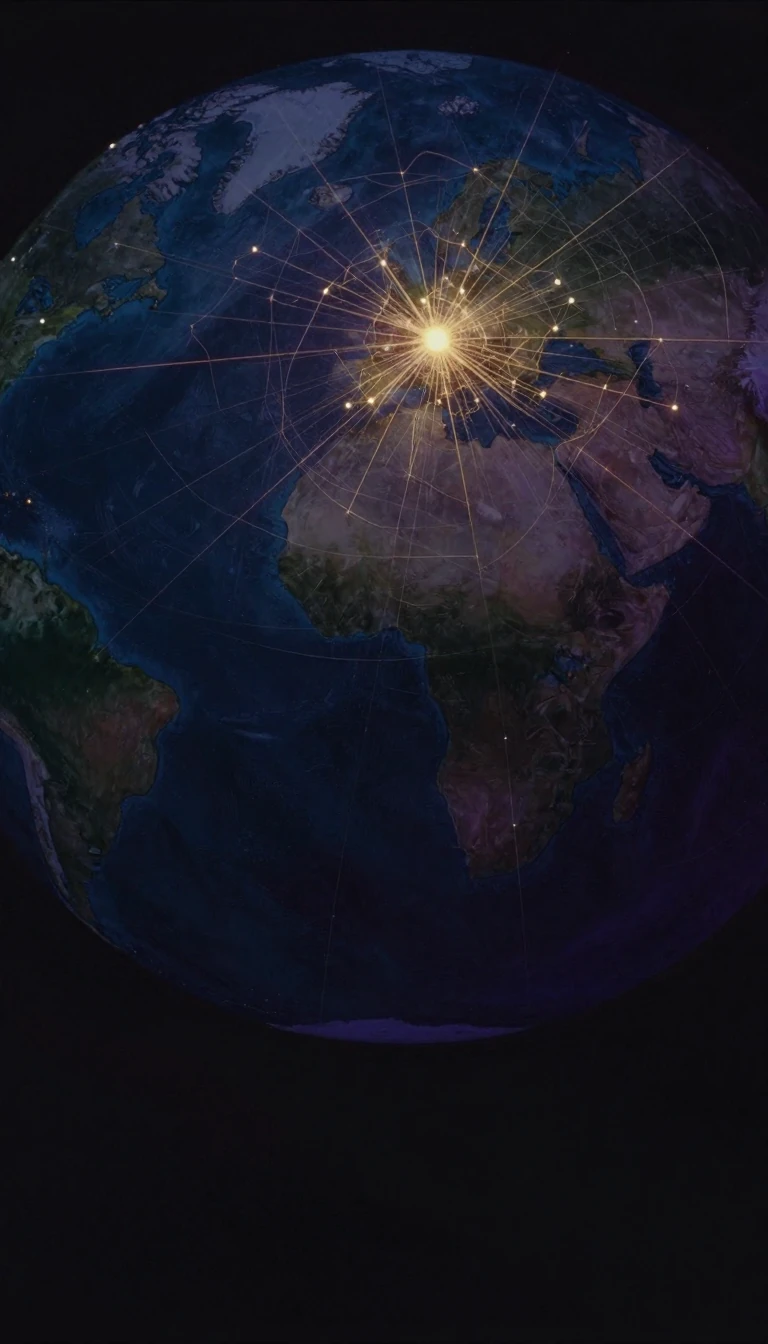
In short: For centuries, linguists suspected that languages as diverse as Sanskrit and English shared a common ancestor. By systematically stripping away loanwords and analyzing grammatical irregularities, they reconstructed Proto-Indo-European—a language that left no texts behind. Today, this interdisciplinary field combines linguistics, archaeology, and genetics to map the origins of human culture.
The quest to uncover a shared linguistic ancestry began long before the term Indo-European was coined by Sir Thomas Young in 1813. Early scholars, including Marcus Zuerius van Boxhorn in 1647 and Johann Elichmann in 1640, recognized that European and Indo-Iranian languages shared a common source. For decades, however, progress was hampered by the prevailing belief that all human tongues descended from Hebrew, a view challenged by Joseph Scaliger in the early 17th century and later by Gottfried Leibniz, who proposed a common origin for European languages in 1710.
The field matured in the 19th century as researchers like Franz Bopp and August Schleicher formalized the comparative method. By the 1860s, Schleicher had even composed a reconstructed fable in the hypothetical Proto-Indo-European (PIE) language. This era culminated in the monumental work of Karl Brugmann, whose five-volume outline published between 1886 and 1893 defined the classical phase of the discipline. Ferdinand de Saussure’s later proposal of the 'consonantal schwa'—a concept that eventually became the laryngeal theory—marked the transition into contemporary studies.
Modern Indo-Europeanists now integrate findings from Anatolian and Tocharian branches, which were unknown to 19th-century pioneers. Since the 1960s, the field has increasingly relied on the Kurgan hypothesis to link linguistic evolution with archaeological and genetic data. While scholars like J.P. Mallory and Marija Gimbutas have expanded the scope to include the reconstruction of ancient mythology and society, these cultural speculations remain distinct from the core of comparative linguistics. Today, the focus has shifted toward refining the relative chronology of PIE, attempting to distinguish between early, middle, and late dialects of this ancient, reconstructed tongue.
Opens the Intellect+ feed with this card first. Swipe up for the next one.
Sources
- Summary by Intellect · source: Indo-European studies
To cite this card, link to https://intellectplus.co.uk/app/technology-indo-european-studies.
How we source, check and correct cards: Editorial standards.
General information, not professional advice. Spotted an error? Flag the card or see corrections and complaints.
Intellect Plus is a visual educational discovery platform for exploring fascinating facts and ideas. Brain Food, Not Brain Rot. What is Intellect Plus?
Related
More in Inventions · More in Technology · Latest · A–Z · All topics
