The Iowa-class battleships were designed to hunt fast capital ships across the Pacific Ocean.
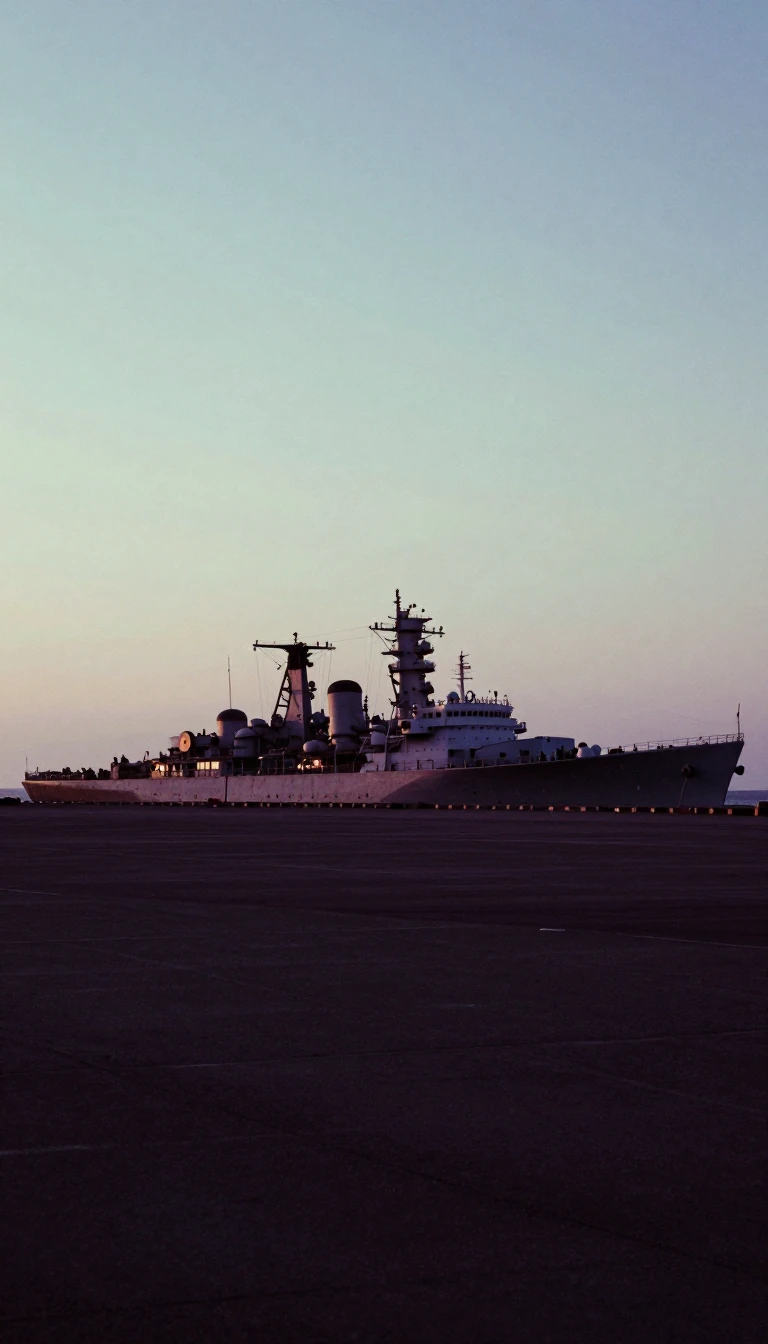
In short: Born from the U.S. Navy's War Plan Orange, these six fast battleships were built to outrun and outgun Japanese adversaries. Though they arrived late in the Second World War, they became the final battleships commissioned by the U.S. Navy, serving through the Cold War and the 1991 Gulf War.
The Iowa-class battleships were conceived in the late 1930s to address a specific tactical vulnerability: the U.S. Navy's existing battle line was too slow to intercept high-speed Japanese cruisers and capital ships. Planners feared that if the U.S. fleet advanced into the Central Pacific, Japanese forces could exploit this speed gap to threaten supply lines. The design process, directed by Admiral Thomas C. Hart, sought a vessel capable of exceeding 30 knots while adhering to the Second London Naval Treaty's 45,000-long-ton displacement limit. This requirement forced engineers to balance heavy armor and powerful 16-inch guns against the strict width limitations of the Panama Canal.
The development of the ships was marked by significant bureaucratic friction. A major design crisis occurred in 1938 when the Bureau of Ordnance and the Bureau of Construction and Repair independently worked on incompatible turret and barbette specifications. This error threatened to derail the project until designers created the Mark 7 naval gun, which was sufficiently compact to fit within the smaller barbettes. These guns, housed in three-gun turrets, could fire 2,700-pound armor-piercing shells at targets over 23 nautical miles away. The ships also featured a secondary battery of twenty 5-inch/38 caliber dual-purpose guns, which proved highly effective against both surface and aerial threats.
Throughout their service life, the four completed ships—Iowa, New Jersey, Missouri, and Wisconsin—underwent constant modernization. By the 1950s, they were equipped with W23 nuclear artillery shells, making them the only U.S. Navy vessels to carry such ordnance for their main guns. Although they were decommissioned in the early 1990s following the Cold War, their legacy as the pinnacle of battleship technology remains. Today, all four vessels have been preserved as museum ships, serving as a tangible record of a naval era defined by heavy steel and long-range gunnery.
Opens the Intellect+ feed with this card first. Swipe up for the next one.
Sources
- Summary by Intellect · source: Iowa-class battleship
To cite this card, link to https://intellectplus.co.uk/app/technology-iowa-class-battleship.
How we source, check and correct cards: Editorial standards.
General information, not professional advice. Spotted an error? Flag the card or see corrections and complaints.
Intellect Plus is a visual educational discovery platform for exploring fascinating facts and ideas. Brain Food, Not Brain Rot. What is Intellect Plus?
Related
More in Military technology · More in Technology · Latest · A–Z · All topics
