The deaf, self-taught recluse who mapped the path to the stars
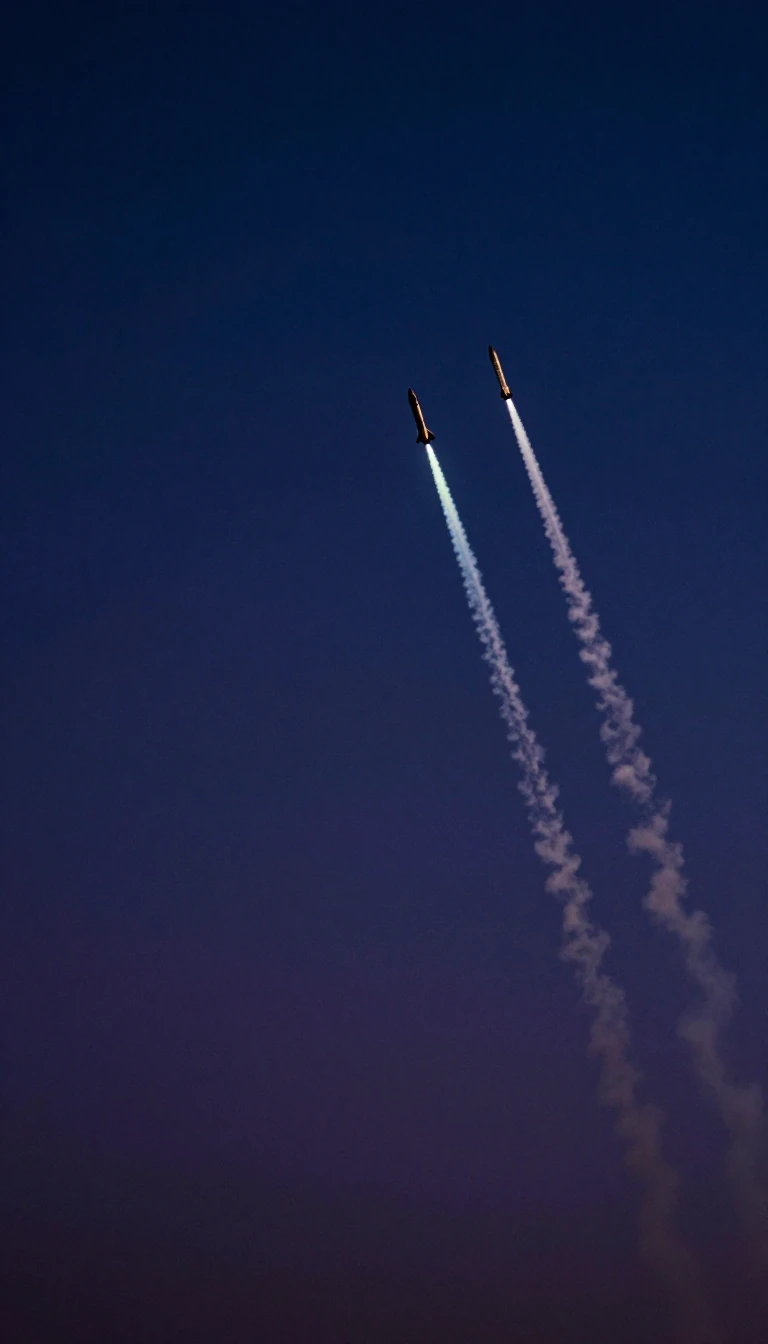
In short: Konstantin Tsiolkovsky, a Russian schoolteacher who lost his hearing as a child, spent his life in a remote log house dreaming of space. Despite being ignored by the scientific establishment for decades, he derived the fundamental mathematics of rocket propulsion and envisioned the technologies that would eventually carry humanity into orbit.
Born in 1857, Tsiolkovsky was largely self-educated after his hearing loss prevented him from attending standard schools. Living in Kaluga, he worked as a teacher while pursuing obsessive, solitary research into aerodynamics and space travel. His early work was often met with indifference or rejection by the Russian scientific community, forcing him to fund his own experiments, including the construction of Russia's first wind tunnel in 1897.
His most significant contribution, the rocket equation, established the mathematical relationship between a rocket's mass, exhaust velocity, and final speed. In his 1903 treatise on space exploration, he proposed using liquid oxygen and hydrogen as fuel—a combination that would later become standard for space flight. He also conceptualized essential features of modern spacecraft, such as multistage boosters, steering thrusters, and airlocks, long before the technology existed to build them.
Tsiolkovsky’s vision extended beyond mere engineering. Influenced by the philosophy of Russian cosmism, he believed that humanity’s destiny was to colonize the galaxy, famously declaring that while Earth is the cradle of mankind, one cannot remain in a cradle indefinitely. Though he lived as a recluse and faced personal tragedies, his theoretical groundwork eventually inspired the architects of the Soviet space program, including Sergei Korolev and Valentin Glushko, as well as Western pioneers like Wernher von Braun.
By the end of his life in 1935, Tsiolkovsky had been embraced by the Soviet state, which recognized the value of his visionary work. His legacy remains foundational to astronautics; he is credited with conceiving the space elevator and anticipating the Fermi paradox. Today, he is remembered not just as a scientist, but as the man who turned the impossible dream of interplanetary travel into a rigorous, calculated discipline.
Opens the Intellect+ feed with this card first. Swipe up for the next one.
Sources
- Summary by Intellect · source: Konstantin Tsiolkovsky
To cite this card, link to https://intellectplus.co.uk/app/technology-konstantin-tsiolkovsky.
How we source, check and correct cards: Editorial standards.
General information, not professional advice. Spotted an error? Flag the card or see corrections and complaints.
Intellect Plus is a visual educational discovery platform for exploring fascinating facts and ideas. Brain Food, Not Brain Rot. What is Intellect Plus?
Related
More in Inventors · More in Technology · Latest · A–Z · All topics
