Why your laser rangefinder might struggle to measure the distance to a nearby bush
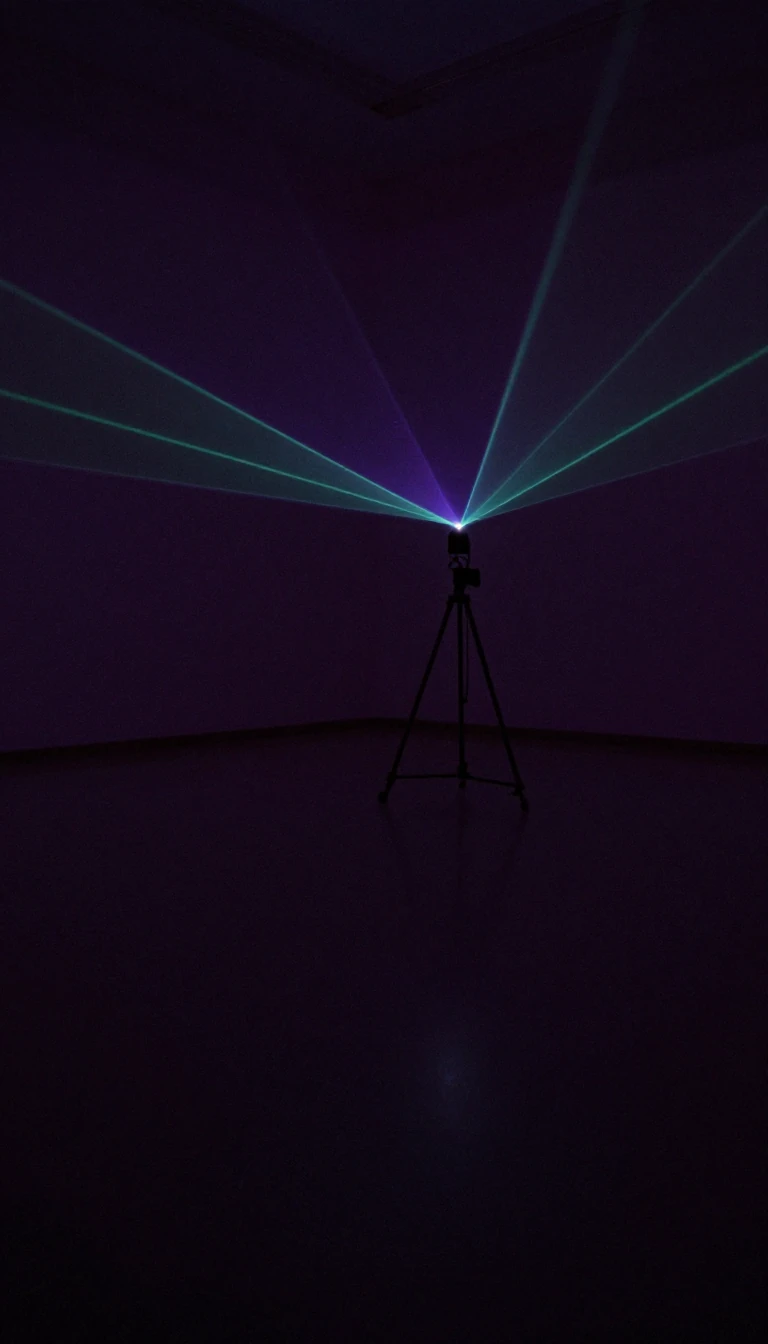
In short: Laser rangefinders are marvels of precision, calculating distance by timing how long a light pulse takes to bounce off a target. Yet, this technology is surprisingly vulnerable to environmental interference. From heat-induced mirages to simple leaves, various factors can trick these devices into reporting inaccurate or misleading distance measurements.
At its core, the most common rangefinding method relies on the time-of-flight principle. By firing a narrow laser beam and measuring the duration it takes for the pulse to return, the device calculates distance based on the constant speed of light. While highly effective, this technique is not infallible. Atmospheric conditions play a significant role in performance; humidity, dust, and snow can scatter the signal, while temperature gradients near hot surfaces can bend the light, potentially causing a target to vanish into a mirage at distances exceeding 360 meters.
Precision is further complicated by the physical nature of the beam itself. Even a narrow laser will eventually diverge over long distances, and atmospheric turbulence—caused by heat bubbles and wind—can distort the path. Furthermore, the device may struggle with complex environments. If a laser strikes a branch or leaf before reaching the intended target, it provides an early, incorrect reading. To combat this, specialized forestry models utilize anti-leaf filters and reflectors to ensure the beam only returns from the desired point.
The technology has evolved significantly since the 1965 debut of the Barr & Stroud LF1, the first commercial system. Today, applications range from consumer-grade tools for golf and construction to sophisticated military hardware. While civilian devices are generally eye-safe class 1 or 2 lasers, military-grade units can reach targets up to 40 kilometers away and may cost hundreds of thousands of dollars. Whether integrated into a tank's fire control system or used to calculate the volume of a room, these tools remain essential for modern distance measurement.
Beyond simple distance, advanced units can incorporate Doppler techniques to track object speed or use multiple frequencies to solve complex phase-shift equations. Despite their utility, they are not universal solutions. In high-precision scenarios requiring sub-millimeter accuracy, engineers often turn to triangulation or interferometry instead. As technology advances, the challenge remains balancing portability and cost with the need to overcome the inherent physical limitations of light propagation through an unpredictable atmosphere.
Opens the Intellect+ feed with this card first. Swipe up for the next one.
Sources
- Summary by Intellect · source: Laser rangefinder
To cite this card, link to https://intellectplus.co.uk/app/technology-laser-rangefinder.
How we source, check and correct cards: Editorial standards.
General information, not professional advice. Spotted an error? Flag the card or see corrections and complaints.
Intellect Plus is a visual educational discovery platform for exploring fascinating facts and ideas. Brain Food, Not Brain Rot. What is Intellect Plus?
Related
More in Machinery and tools · More in Technology · Latest · A–Z · All topics
