How a shoemaker's apprentice became the architect of the modern electric age
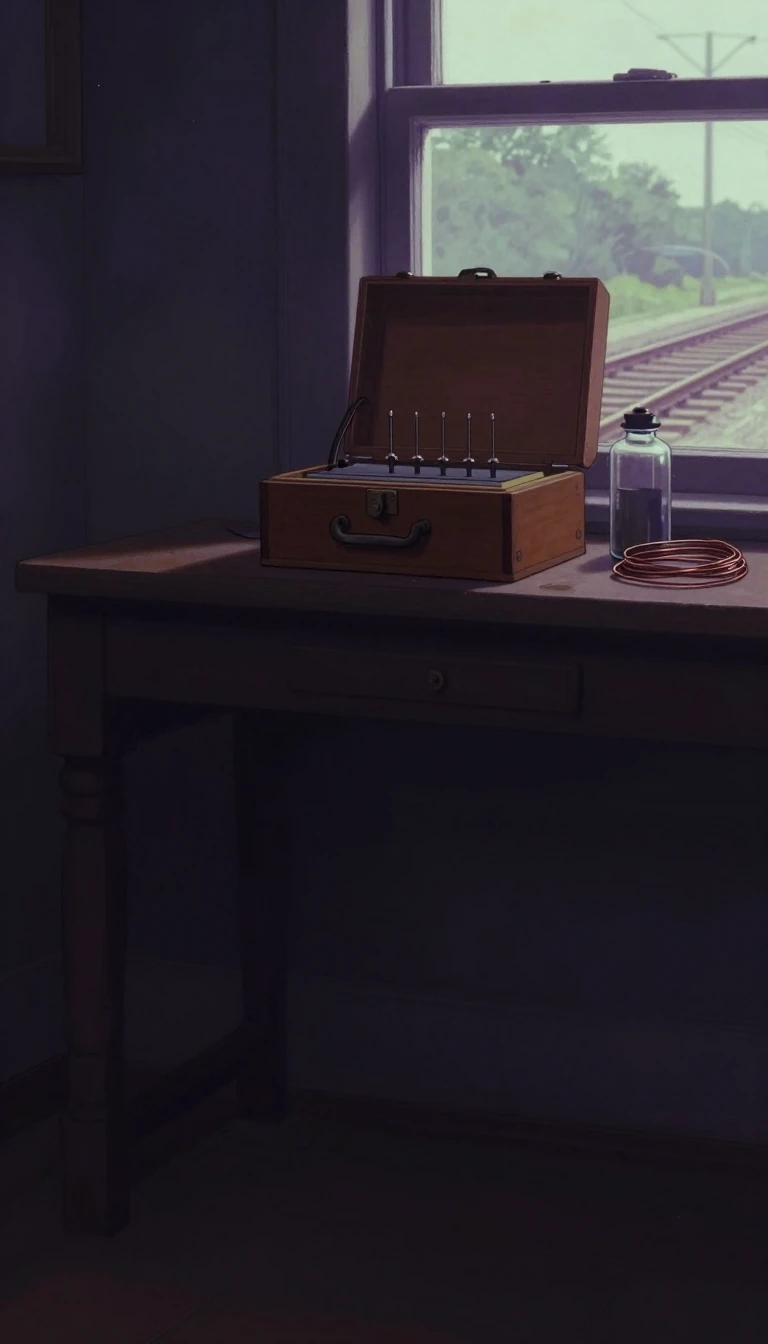
In short: William Sturgeon rose from humble beginnings as a shoemaker to become a pioneering electrical engineer. By teaching himself physics while serving in the army, he unlocked the potential of electromagnetism, creating the first practical electric motor and electromagnet, forever changing how we harness power in the nineteenth century.
Born in 1783, William Sturgeon followed an unconventional path into the scientific elite. After an apprenticeship as a shoemaker, he joined the army in 1802, where he dedicated his spare time to self-study in mathematics and physics. His intellectual rigor eventually led him to a lecturing position at the East India Company's Military Seminary in 1824, marking the beginning of a prolific career in electrical research.
Sturgeon's most significant breakthrough arrived in 1825 when he exhibited his first electromagnet. By wrapping wire around a seven-ounce piece of iron and passing a current from a single battery through it, he demonstrated the ability to lift nine pounds, a feat that proved the immense potential of electromagnetic force. By 1832, while working at the Adelaide Gallery of Practical Science in London, he furthered this progress by demonstrating the first DC electric motor to incorporate a commutator, a vital component for continuous rotation.
Beyond his inventions, Sturgeon was a dedicated communicator of scientific progress. He founded the Annals of Electricity, Magnetism and Chemistry in 1836 and later helped establish the London Electrical Society in 1837 alongside associates John Peter Gassiot and Charles Vincent Walker. His later years were spent in Manchester, where he fostered a circle of scientific inquiry that included James Prescott Joule. Despite his significant contributions, his later publishing ventures, such as the short-lived Annals of Philosophical Discovery, struggled to gain traction. When he died in 1850, his legacy was cemented on his grave slab in Prestwich, where he is simply remembered as The Electrician.
Sturgeon's work represents a critical bridge between theoretical discovery and practical application. His ability to translate complex electromagnetic principles into functional machinery provided the foundation for the technological advancements that followed. By documenting his findings and fostering collaborative scientific communities, he ensured that his innovations were not merely isolated experiments but the starting points for a new era of engineering.
Opens the Intellect+ feed with this card first. Swipe up for the next one.
Sources
- Summary by Intellect · source: William Sturgeon
To cite this card, link to https://intellectplus.co.uk/app/technology-william-sturgeon.
How we source, check and correct cards: Editorial standards.
General information, not professional advice. Spotted an error? Flag the card or see corrections and complaints.
Intellect Plus is a visual educational discovery platform for exploring fascinating facts and ideas. Brain Food, Not Brain Rot. What is Intellect Plus?
Related
More in Inventors · More in Technology · Latest · A–Z · All topics
