The Roman Emperor who fought a king he never actually met
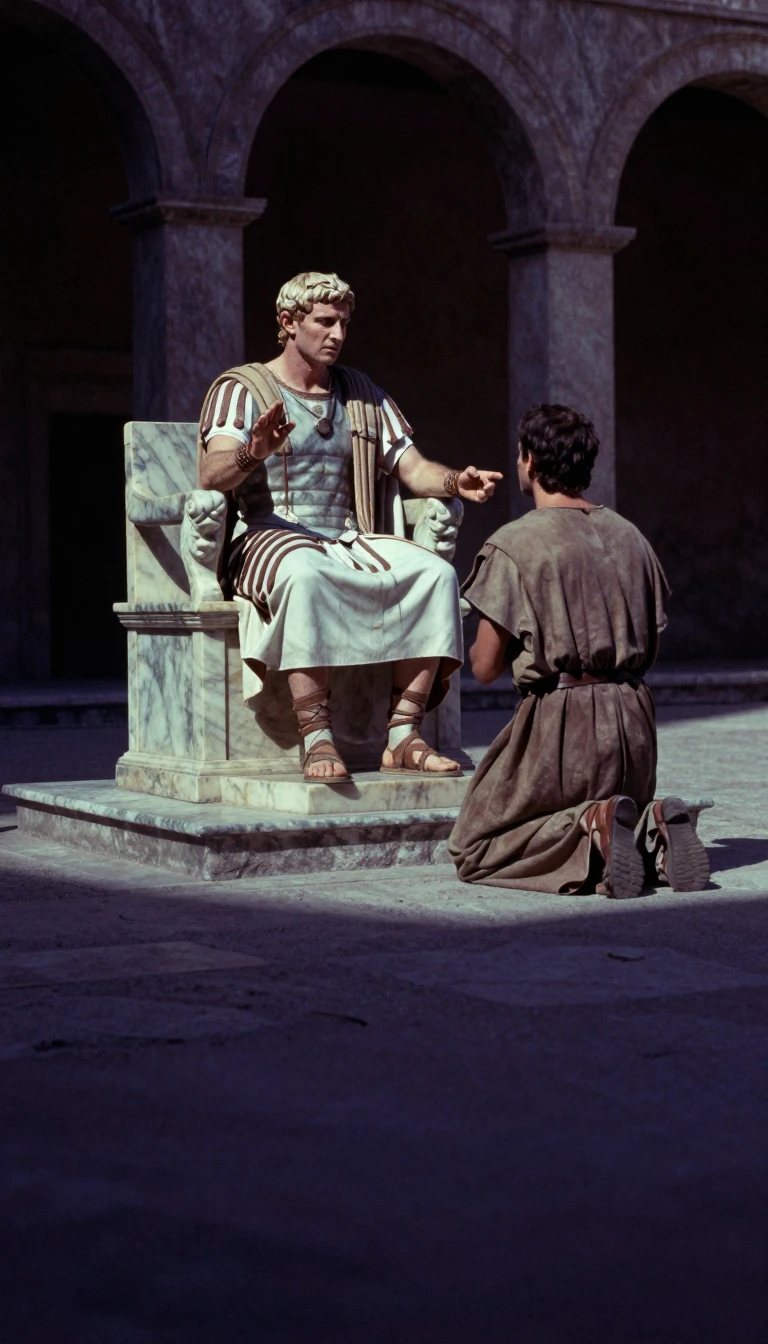
In short: In the 300s AD, the Roman Empire commissioned a massive triumphal arch to celebrate a victory over the Persian Empire. But the central sculpture depicts a dramatic, personal duel between Emperor Galerius and the Persian King Narses—a fight that never actually happened in reality.
The Arch of Galerius, located in Thessaloniki, was constructed between 298 and 299 AD. It served as a monumental gateway to an imperial precinct linked to the emperor's palace. The structure was designed to emphasize Galerius's power and celebrate the Roman victory over the Sassanid Empire, specifically the capture of their capital, Ctesiphon, in 298 AD. It was officially dedicated in 303 AD. The arch is famous for its sculptural marble panels, which utilize 'artistic license' to create a narrative of dominance. One prominent panel depicts Galerius in personal combat with the Sassanid Shah Narses. In reality, the two rulers never met on the battlefield. Instead, the sculpture portrays the Caesar attacking the king with a lance while an eagle bearing a victory wreath approaches.
The imagery is intentionally hyperbolic: Galerius is shown securely on a rearing horse, while Narses appears nearly unhorsed as terrified soldiers cower beneath the horse's hooves. Nearby stands the Rotunda of Galerius, a massive circular structure built around 306 AD. Originally intended as a mausoleum for the emperor, it underwent a complex metamorphosis over nearly two millennia. It served as a Christian basilica, a Muslim mosque (complete with a preserved minaret), and eventually returned to being a Greek Orthodox church. This architectural evolution reflects the shifting religious and political tides of the Eastern Roman Empire, transitioning from pagan imperial glorification to Christian symbolism, such as mosaics featuring acanthus leaves to represent enduring life.
The arch's identity was actually lost for centuries. Because it lacked a direct name, 19th-century locals speculated it belonged to Alexander the Great or Philip II of Macedon. It wasn't until 1890 that scholar Karl Frederik Kinch identified it as belonging to Galerius based on the specific victory scenes depicted.
Opens the Intellect+ feed with this card first. Swipe up for the next one.
Sources
- Summary by Intellect · source: Arch of Galerius and Rotunda
To cite this card, link to https://intellectplus.co.uk/app/wars-arch-of-galerius-and-rotunda.
How we source, check and correct cards: Editorial standards.
General information, not professional advice. Spotted an error? Flag the card or see corrections and complaints.
Intellect Plus is a visual educational discovery platform for exploring fascinating facts and ideas. Brain Food, Not Brain Rot. What is Intellect Plus?
Related
More in Ancient & biblical wars · More in Wars & Conflicts · Latest · A–Z · All topics
