From ancient war elephants to modern tanks, the quest for mobile protection never ends.
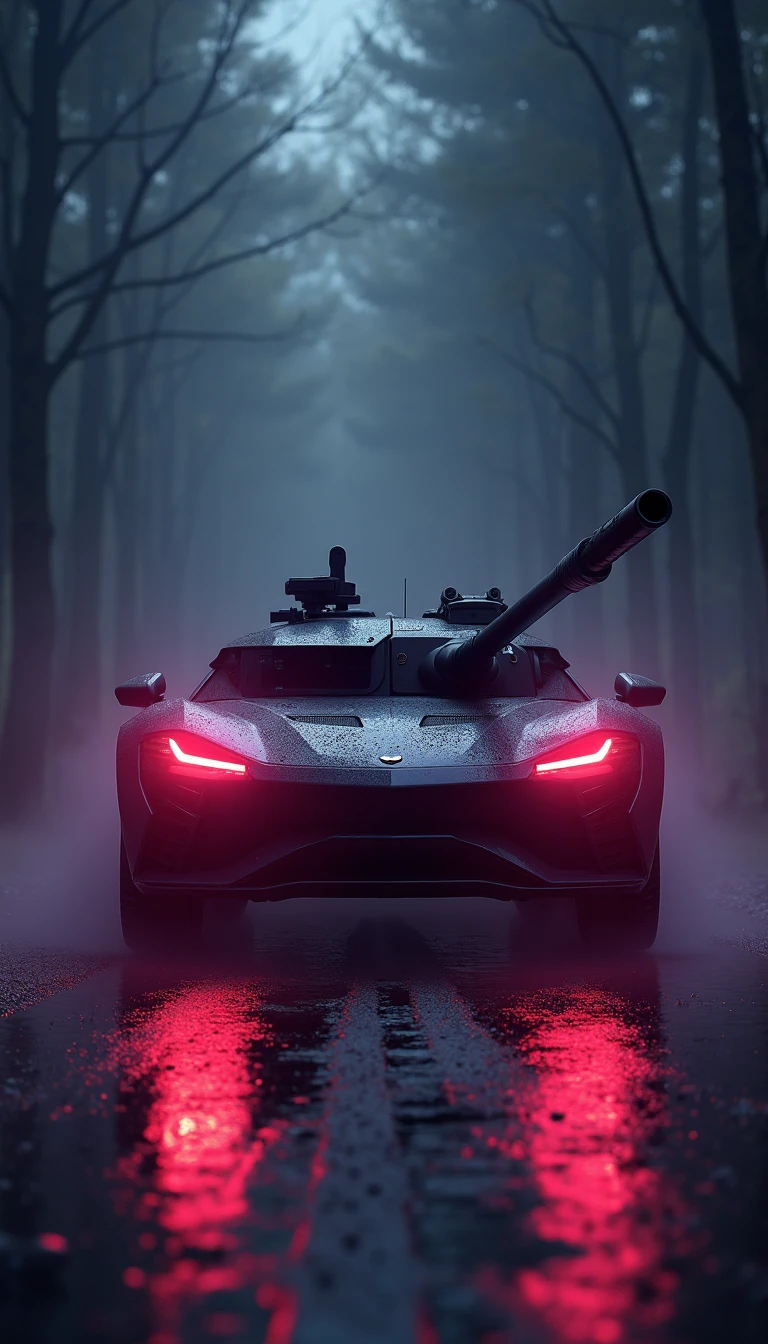
In short: For millennia, strategists have sought to balance mobility, firepower, and protection. While the concept of a protected fighting unit dates back to antiquity, the armoured fighting vehicle only became reality with the 20th-century internal combustion engine. Today, these machines define land warfare, constantly evolving to survive in a high-tech environment.
The dream of a mobile, invulnerable fortress has haunted military planners for centuries. Long before the internal combustion engine, commanders experimented with war elephants and armored siege engines like the helepolis, a massive tower used by Greek forces in 305 BC. Leonardo da Vinci famously sketched a conical, hand-cranked armored wagon in the 15th century, though modern replicas suggest it would have struggled to move even short distances. By 1420, Hussite forces in Bohemia were already using horse-drawn war wagons as mobile forts, protecting crews with firing slits and heavy cannons.
The modern era began with the motor car. In 1898, F. R. Simms built the Motor Scout, the first petrol-powered armed vehicle, followed by his 1899 Motor War Car, which featured 6 mm of Vickers armour and two turrets. However, it was the stalemate of World War I that forced a revolution. In 1916, the British deployed the first tanks—caterpillar-tracked machines capable of crossing the muddy, pocked terrain of the Somme. These vehicles realized the vision H. G. Wells had posited in his 1903 story, 'The Land Ironclads,' effectively ending the era of static trench warfare.
Today, the design of an armoured fighting vehicle is a constant trade-off. Heavier armour protects against anti-tank missiles but limits mobility, increases fuel consumption, and restricts where a vehicle can travel. Engineers now favor composite materials over steel to improve protection without adding weight. Furthermore, the rise of satellites and drones has shifted the focus of survivability; in 21st-century combat, an AFV's ability to minimize its signature window is often more critical than the thickness of its hull. As technology advances, armies continue to refine these machines, balancing the ancient need for protection with the modern requirement for speed and stealth.
Opens the Intellect+ feed with this card first. Swipe up for the next one.
Sources
- Summary by Intellect · source: Armoured fighting vehicle
To cite this card, link to https://intellectplus.co.uk/app/wars-armoured-fighting-vehicle.
How we source, check and correct cards: Editorial standards.
General information, not professional advice. Spotted an error? Flag the card or see corrections and complaints.
Intellect Plus is a visual educational discovery platform for exploring fascinating facts and ideas. Brain Food, Not Brain Rot. What is Intellect Plus?
Related
More in War and military · More in Wars & Conflicts · Latest · A–Z · All topics
