 Intellect Plus
Neuroscience
54 cards. Each one is a 40-second story with a five-minute read behind it.
 Higher brain functions: what do they really do?This animation explores how the brain controls complex behaviors, with quizzes to test your understanding. Learn about the neural basis of memory, decision-making, and consciousne…
 The architectural blueprint of your thoughts: 6 layers of the cortexTo understand how the brain processes reality, you must look at its physical structure. This video breaks down the six distinct layers of the mammalian neocortex and explains how …
 2021: A Paradigm Shift in Our Understanding of the Human BrainFrom photosynthesis-powered brains to breakthroughs in neurodegeneration, 2021 marked a pivotal year for biological science. This summary explores the major discoveries that are f…
- The biological machinery behind why your brain feels constant dreadWhat happens when everyday stress morphs into a persistent neurological state? This video explores the neuroscience of anxiety, moving beyond surface-level symptoms to examine how…
 The Neuroscience of Why Your Daily Routine Feels AutomaticMost of your daily actions are governed by habits rather than conscious choice. This video explores the neurological science behind how these behaviors form and offers strategies …
 Why low serotonin levels don't tell the whole story of depressionThis video explores why the popular idea that depression is simply a chemical imbalance of serotonin is incomplete, examining more complex neurological and biological drivers.
 The electrical spark that powers every thought and movementUnderstand the fundamental unit of neural communication. This video breaks down how neurons generate, transmit, and reset electrical signals to coordinate everything your body doe…
 The ADHD brain struggles to switch off its internal monologueWhy is focusing so difficult for some? It may be a literal wiring issue where the brain's 'autopilot' fails to disengage. Neuroscience reveals that ADHD involves a complex breakdo…
 The biological architecture that powers every thought and movementThis video provides a comprehensive anatomical tour of the neuron, the fundamental building block of the nervous system. It explains how these cells transmit signals to coordinate…
 Mapping the complex web of connections within the macaque brainResearchers mapping the macaque cerebral cortex identified 1,615 interareal pathways using retrograde tracer injections in 29 specific brain areas. The study revealed that one-thi…
 Primate brain structures provide a blueprint for understanding human speech perceptionResearchers who study the neural foundations of language found that human speech processing relies on brain structures shared with nonhuman primates. By examining the auditory cor…
 The next leap in human cognition may be externalFrom the evolution of the neocortex to the rise of cloud computing, Ray Kurzweil explores how our biological hardware is preparing for a digital upgrade. This video examines the t…
 Your brain constructs emotions rather than reacting to themWe often believe emotions are involuntary reactions to the world, but research suggests otherwise. This talk explores how your brain actively constructs your internal experience, …
 Moving from suppressing symptoms to inoculating the brain against traumaMost antidepressants are designed to manage depression once it has already taken hold. But a new frontier in psychopharmacology aims to do something radical: prevent mental illnes…
 Can a monthly cash gift reshape an infant's developing brain?Poverty is often viewed as a static hurdle, but new research suggests it physically shapes the architecture of a child's mind. By providing direct financial support to low-income …
 Are teenagers naturally reckless or just biologically wired for risk?Explore the science behind adolescent decision-making. This video examines Kashfia Rahman's experiment on how high school students respond to risk and how these experiences shape …
- Your brain is constantly deciding what matters in a sea of noiseAmishi Jha explores the mechanics of attention, explaining how our brains filter constant information to decide what is important. This video breaks down why internal and external…
 The menopause transition is a profound neurological event, not just a reproductive oneWhile often discussed as a reproductive milestone, menopause is actually a dynamic neurological transition. As hormone levels decline, the brain undergoes significant structural a…
 How light-activated neurons might unlock new treatments for mental healthNeuroscientist Kay M. Tye explores how specific neural pathways generate complex emotional states like anxiety and depression, and how light-based technology could transform psych…
- Why your brain needs sleep to practice new tasks and consolidate memoriesA good night’s sleep does more than just rest your body. It is a vital process for your mind, helping to unleash creative powers, boost immune health, and even allow your brain to…
 Why your most brilliant ideas arrive when you are doing nothing at allEver had a breakthrough while washing dishes or folding laundry? This video explores why letting your body go on autopilot allows your brain to solve complex problems and form new…
 Can we rewrite the past to heal the present?For decades, the idea of erasing painful memories felt like science fiction. But new neurological research suggests we might actually be able to edit the emotional impact of traum…
 A broken neural cable may be the root of criminal behaviorWhy do some people suddenly turn to violence after a head injury? Research suggests the answer lies in a specific white matter pathway. When this biological "cable" is severed, th…
- Could a micro-device in your gut treat chronic disease?Medical hacker Khalil Ramadi is developing an electronic pill designed to treat conditions ranging from obesity to Alzheimer's. This noninvasive therapy uses targeted electrical s…
- Could a simple walk be the most transformative thing you do for your brain?Neuroscientists suggest that physical activity does more than just strengthen your muscles. Beyond the body, movement acts as a powerful tool for cognitive fitness, potentially in…
- Can your adult brain grow new neurons to improve memory and mood?While we don't produce as many new nerve cells as children do, neuroscientist Sandrine Thuret explains how adults can still encourage neurogenesis to boost memory formation and he…
- Why playing an instrument is the ultimate full-body brain workoutListening to music engages various brain regions, but playing an instrument triggers an even more intense reaction. This video explores the neurological fireworks that occur when …
 Can you consciously rewire your brain to stop loving someone?After watching a talk on the neurobiology of romance, writer Dessa attempted a radical experiment: working with a neuroscientist to systematically
 Elon Musk discusses his Twitter bid and how his brain functionsIn this unedited conversation with TED head Chris Anderson, Elon Musk explores his bid to purchase Twitter, reflects on his career's biggest regret, and discusses his vision for t…
 Why do millions of people watch videos of people folding towels?A quiet digital revolution is underway as millions turn to specific sounds to find peace. Whether it is whispering or tapping, this phenomenon—known as ASMR—is more than just a st…
 Scientists are growing miniature human brain circuits in laboratory dishesThe human brain is notoriously difficult to study because it is tucked away inside our skulls. To bypass this, researchers are now using stem cells to grow "assembloids"—self-orga…
 Why play is the essential superfood for a developing brainPlay is often dismissed as mere distraction, but it is actually a vital architect of the human mind. From simple peekaboo to complex strategy games, purposeful play builds the neu…
 Can light and sound waves help delay the onset of Alzheimer's?Neuroscientist Li-Huei Tsai explores a non-invasive approach to treating Alzheimer's by using light and sound therapy to artificially stimulate gamma brain waves.
 The race to stop a fatal, unpredictable genetic mutationBiomedical researcher Sonia Vallabh shares her personal journey after discovering she carries a genetic mutation for a rare and fatal prion disease. This video explores her missio…
- The neurobiology of heartbreak: why emotional pain feels physically realWhy does a broken heart feel like a physical ache? Neuroscientist Yoram Yovell explores the shared biological pathways between emotional loss and physical suffering, revealing how…
 Imbalanced neural signals in mice may drive social and cognitive deficitsResearchers used new optogenetic tools to tip the balance of excitation and inhibition in the medial prefrontal cortex of freely moving mice. Raising excitation relative to inhibi…
 Cerebellum contains mirror-image maps of the human brain's functional networksResearchers who analyzed resting-state MRI data from 1,000 subjects found that the human cerebellum is organized into complex, orderly maps. The study revealed that most of the ce…
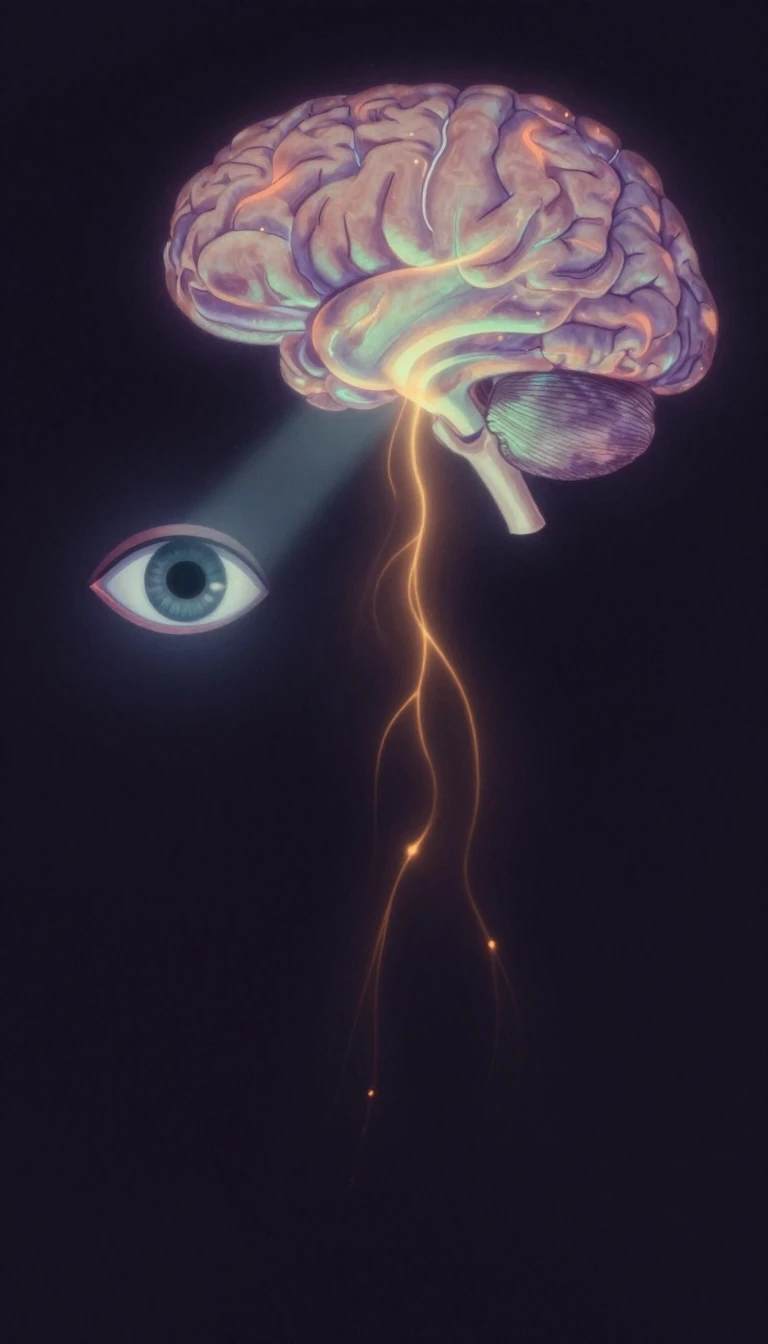 Brain waves may act as a gatekeeper for focusing on specific informationResearchers exploring brain activity found that alpha-band oscillations—the most dominant rhythms in the human brain—play a dual role in how we process information. While these wa…
- In mice, inflammation splits brain support cells into distinct subtypesResearchers triggered an acute inflammatory response in mice and tracked how brain cells called astrocytes reacted. By sequencing the genetic activity of about 80,000 individual a…
- Astrocytic gene networks link cell shape to cognitive function and disease riskResearchers studying the mouse central nervous system found that astrocytes, a complex type of glial cell, possess distinct molecular profiles across different brain regions. This…
 Brain networks for chronic pain involve different regions than those for acute painA meta-analysis of neuroimaging and neuroelectrical studies found that the brain networks used to process acute pain differ from those engaged during chronic pain. Specifically, r…
- Gut microbes may communicate with the brain to shape mood and behaviourA review of animal studies highlights an emerging 'microbiota-gut-brain axis', in which gut bacteria appear to send signals to the brain via neural, hormonal and immune pathways. …
 Soluble amyloid-β and tau may jointly drive Alzheimer's before plaques formA review of Alzheimer's disease biology describes evidence that dissolved, free-floating forms of amyloid-β and tau damage neurons together, independently of the dense plaques and…
- Microglia act as vigilant sensors and responders within the central nervous systemResearchers reviewing the physiology of microglia found that these resident immune cells act as highly sensitive sensors of brain pathology. Even in a healthy brain, these cells u…
- Can embracing your inner teenager help you thrive in adulthood?Neuroscientist Adriana Galván explores how the adolescent brain's approach to uncertainty and strategic risk-taking can provide essential lessons for a bolder, more courageous adu…
 Could your heartbeat be the hidden rhythm of your perception of time?We often feel time drags during boredom and vanishes during excitement. Cognitive neuroscientist Irena Arlaganova investigates how your heart's rhythm works with your brain to inf…
 Mapping the spatial organization of gene expression in the human brainResearchers used advanced spatial transcriptomics to map how genes are expressed across different layers of the human dorsolateral prefrontal cortex. By analyzing these patterns, …
- Why adolescence is defined by much more than just hormonesNeuroscientist Jennifer Pfeifer explores the profound neurological shifts occurring during the teenage years. This video examines the biological drivers of adolescent behavior and…
 What can the driving habits of rats reveal about human joy?Neuroscientist Kelly Lambert explores a surprising experiment where rats were trained to drive miniature cars for treats. This study investigates how the interplay of effort, anti…
- Could a molecule from Gila monster saliva silence the noise of addiction?Physician Dhruv Khullar explores the unexpected potential of GLP-1 medications. This video examines how drugs like Ozempic, originally designed for diabetes, might move beyond wei…
 The brain's famous 'speech centre' is not quite what the textbooks say.A patient who could say only one syllable, 'tan', led the French physician Paul Broca to locate speech in a patch of the left frontal lobe. It became one of neuroscience's first g…
- The man who couldn't make new memories taught us how memory works.In 1953 a surgeon removed parts of Henry Molaison's brain to stop his seizures. The seizures eased, but he could no longer form new long-term memories. For the next five decades, …
 The man with an iron rod through his brain probably recovered.In 1848 an explosion drove a six-kilogram iron bar clean through Phineas Gage's skull. He survived, and textbooks made him the classic case of a personality destroyed by brain dam…
 Cut the link between the brain's halves and each side knows different things.To treat severe epilepsy, surgeons sometimes sever the corpus callosum, the bridge between the brain's two hemispheres. In the 1960s Roger Sperry and Michael Gazzaniga found that …