 Intellect Plus
Historians
144 cards. Each one is a 40-second story with a five-minute read behind it. Page 2 of 3.
 The nineteenth-century historian who pioneered women's history while embroiled in literary scandalsElizabeth F. Ellet was a prolific writer and the first historian to document the contributions of women to the American Revolution. Yet, her legacy is shadowed by notorious public…
 How Elizabeth Longford became the definitive biographer of the Victorian era's greatest iconsElizabeth Longford was more than a historian; she was a literary force who redefined 19th-century biography. From her early days as a celebrated Oxford undergraduate to her prolif…
 How Eric Foner reshaped our understanding of the American Civil War and ReconstructionAs the preeminent historian of the Civil War era, Eric Foner has fundamentally altered how we view the American past. By centering the experiences of African Americans and challen…
 How one man turned the study of the French Revolution into a rigorous scienceFrançois Aulard was the first professional historian of the French Revolution, transforming the field through archival obsession and strict positivist methodology. Though his work…
 How a sickly Boston aristocrat turned his personal suffering into a monumental historical legacyFrancis Parkman, a scion of Boston wealth, spent his life battling a mysterious, debilitating neurological condition. Yet, by framing his illness as an enemy to be conquered, he p…
 How a Victorian lawyer transformed our understanding of the medieval English legal systemFrederic William Maitland, the father of modern English legal history, revolutionized how we view the past. By shifting focus from present-day needs to the authentic context of me…
 Why the first American to earn a German Ph.D. became a political outcastGeorge Bancroft returned from Göttingen in 1820 with a revolutionary vision for American education. He attempted to import rigorous German methods, but his continental manners and…
 How one historian transformed our understanding of the medieval world through local archivesGeorges Duby revolutionized medieval history by shifting the focus from kings to the daily lives of ordinary people. His groundbreaking 1952 study of the Mâconnais region revealed…
 Was the French Revolution driven by the peasantry rather than the urban bourgeoisie?Georges Lefebvre revolutionized how we understand the French Revolution by shifting the lens from elite politics to the rural masses. While his orthodox social interpretation face…
 Why a sixth-century bishop wrote history in a language that broke all the rules.Gregory of Tours was the premier chronicler of the Merovingian era, yet his Latin was famously unrefined. While he understood classical grammar, he intentionally abandoned it. His…
 How a deaf historian shaped the aggressive nationalism of the German EmpireHeinrich von Treitschke was a powerful voice in 19th-century Germany, advocating for authoritarian rule and Prussian expansion. Despite suffering from near-total deafness, his rhe…
 Did the rise of Islam, not barbarian invasions, create the modern European world?Historian Henri Pirenne famously argued that the Roman Empire did not fall to Germanic tribes in the 5th century. Instead, he claimed the 8th-century Arab conquests severed Medite…
- Was the public intellectual a casualty of the shift toward modern academic specialization?Henry Steele Commager was a titan of 20th-century American history, publishing 40 books and 700 essays. He believed historians had a duty to address the general public, not just o…
 Who was Herodian, the mysterious chronicler of Rome’s most chaotic imperial era?Herodian left behind an eight-book history covering 180 to 238 AD, yet his own life remains a puzzle. We do not know his birthplace, his occupation, or his social status. While he…
 Was the most influential historian of his generation a victim of his own arrogance?Hugh Trevor-Roper was a brilliant polemicist who transformed historical fields with his essays. Yet, his reputation suffered a catastrophic blow in 1983 when he authenticated the …
 The disgraced monk who became the architect of Russian Sinology and East TurkestanNikita Bichurin was meant to spread Christianity in Beijing, but he spent fourteen years obsessing over Chinese history instead. After a scandalous imprisonment for his secular li…
 Why the road to Auschwitz was paved with indifference, not just hatredHistorian Ian Kershaw transformed our understanding of Nazi Germany by shifting focus from Hitler’s personality to the everyday lives of ordinary citizens. He argues that while th…
 How a historian and activist redefined the study of racism in modern AmericaBorn Ibram Henry Rogers, the scholar now known as Ibram X. Kendi has become a central figure in American discourse on racial justice. Through his influential books and academic le…
 The first writer born in the Americas to enter the Western literary canonBorn in 1539 to a Spanish conquistador and an Inca princess, Garcilaso de la Vega bridged two worlds. His chronicles of Inca history, written from exile in Spain, became foundatio…
 How ecological shifts and mosquito-borne diseases fundamentally reshaped the history of Caribbean empiresJ. R. McNeill is a pioneering environmental historian who argues that human impact on Earth reached an unprecedented scale in the 20th century. By examining the intersection of ec…
- Did the Middle Ages actually exist as a distinct, unified period of history?Jacques Le Goff, a titan of 20th-century history, challenged the very labels we use to define the past. By shifting focus from kings and wars to the everyday anthropology of medie…
- James Anthony Froude was the most famous historian in England, yet he courted scandal.A former clergyman who abandoned the church after his novel was publicly burned, James Anthony Froude became a celebrated historian and imperialist. His life was defined by fierce…
 How a Victorian historian became the most successful British ambassador to the United StatesJames Bryce was a polymath who balanced a career as a Regius Professor of Civil Law with high-stakes diplomacy. Best known for his definitive study of American politics, he bridge…
 How a journalist broke the news of the first successful Everest summit in 1953Jan Morris was the only reporter to accompany the historic 1953 Mount Everest expedition. She navigated immense communication hurdles to ensure the world learned of the successful…
 A disgraced professor turned his prison sentence into a monumental history of SwedenJohannes Messenius was a brilliant, controversial academic who pioneered modern source criticism while navigating the treacherous politics of the House of Vasa. After a tumultuous…
 How one historian wove the African-American experience into the fabric of United States history.John Hope Franklin was a preeminent scholar who transformed American history by ensuring the Black experience was no longer sidelined. From his pivotal research for the Brown v. B…
 Was this 19th-century American diplomat the secret architect of Dutch historical awareness?John Lothrop Motley was a Harvard-educated diplomat who became a literary sensation by chronicling the Dutch struggle for independence. While his dramatic prose captivated readers…
 How a sixth-century bishop documented the world's most mysterious climate catastropheJohn of Ephesus was a prominent Miaphysite bishop and historian whose writings provide a rare, firsthand account of the Plague of Justinian. Beyond his ecclesiastical duties, his …
 Why a legendary theologian resigned his post to save his students' faithJulius Wellhausen was a titan of biblical criticism who defined how we understand the Torah. Yet, he famously resigned his prestigious professorship, fearing his own scientific co…
- The German historian who was rejected at home but changed history abroadKarl Lamprecht was a pioneer of cultural history who dared to look beyond politics to the collective psyche of nations. While his interdisciplinary methods earned him the scorn of…
- Lê Quý Đôn: The 18th-century polymath who mastered Chinese poetry and Vietnamese statecraftLê Quý Đôn was an 18th-century Vietnamese official and encyclopedist whose intellectual prowess was so formidable that he once recited an entire Chinese poem from memory to impres…
 Did the rise of social science kill the art of historical storytelling?Lawrence Stone was a titan of social history who championed quantitative data, yet he famously identified a major shift in the 1970s: a return to narrative. He argued that while s…
 Did a historian’s obsession with individual motives rewrite the story of British politics?Lewis Namier transformed historical research by ignoring grand ideologies in favor of micro-level data. By tracking the personal interests and social connections of 18th-century p…
 Lucien Febvre and the Annales school: how a French historian revolutionized our pastLucien Febvre rejected dry, fact-obsessed history in favor of a dynamic, human-centered approach. By blending geography, psychology, and social science, he and his colleague Marc …
 Did a Roman prisoner of war really interview Hannibal about his Alpine crossing?Lucius Cincius Alimentus was a Roman official captured by Hannibal during the Second Punic War. He claimed that while in captivity, the Carthaginian general personally shared the …
 How Lytton Strachey dismantled the Victorian era with a single, sharp penLytton Strachey transformed biography from dusty, reverent monuments into biting, psychological portraits. As a central figure of the Bloomsbury Group, he applied a spirit of comp…
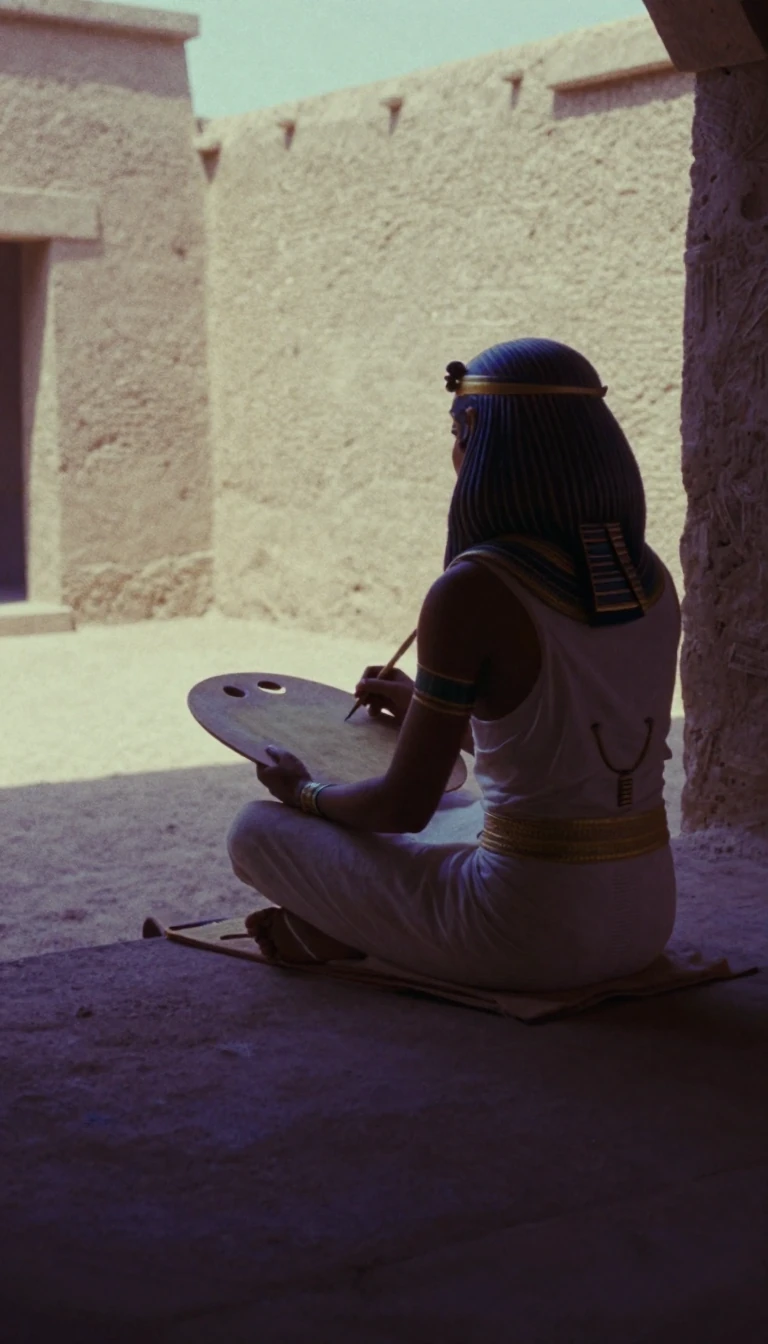 Why is the most important historian of Ancient Egypt a complete mystery to us?Manetho, a third-century BC priest, wrote the definitive history of Egypt in Greek. Yet, his original manuscripts are lost, leaving us to reconstruct his work from scattered, ofte…
 Was Australia’s most famous historian a brilliant storyteller or a purveyor of historical fiction?Manning Clark reshaped Australian history by abandoning dry academic analysis for epic, tragic narrative. While his six-volume masterpiece captivated the public, critics accused h…
 Manning Marable: The historian who redefined the life and legacy of Malcolm XManning Marable was a prolific scholar and activist who spent his career dissecting the complexities of race, class, and democracy in America. His final work, a monumental biograp…
- How a soldier-historian transformed our understanding of the past by rejecting political narrativesMarc Bloch, a founding father of the Annales School, turned his back on traditional, fact-obsessed history. After surviving the trenches of the First World War, he argued that his…
 How a decorated soldier transformed the study of war into a complex social scienceSir Michael Howard, a veteran of the Italian campaign and recipient of the Military Cross, revolutionized military history. He moved the field beyond simple battle accounts, argui…
 How one historian redefined a nation by challenging its place in imperial historyMykhailo Hrushevsky was more than a scholar; he was the architect of modern Ukrainian national consciousness. By rejecting narratives that marginalized Ukraine within Russian or P…
 Did the Germanic invasions of Gaul ever actually happen as we were told?Numa Denis Fustel de Coulanges challenged the long-held belief that Germanic tribes violently conquered Gaul. Instead, he argued that these groups peacefully integrated into the R…
 Pamphile of Epidaurus was the first known female historian of the Greco-Roman world.Living under Emperor Nero, Pamphile compiled thirty-three books of historical anecdotes. While her original manuscripts are lost, her influence persists through the works of later…
 The printer who saved America's history from being edited into oblivionPeter Force was a quiet printer who spent his life rescuing the raw, unvarnished documents of the American Revolution. While his contemporaries sanitized history to suit their own…
- Can modern police investigative methods solve the greatest cold cases in British history?Philippa Langley, the writer and producer who famously located the remains of Richard III in a Leicester car park, has turned her attention to the Princes in the Tower. By applyin…
 Did the concept of childhood simply not exist in the Middle Ages?Philippe Ariès, a pioneer of cultural history, famously argued that childhood was a social construction rather than a biological given. He claimed that medieval society lacked a d…
- How a moderate revolutionary architect shaped the scientific study of French historyPierre Daunou was a central figure in the French Revolution, yet he lacked the radical temperament of his peers. From drafting constitutions to managing the nation's archives, he …
- Why reading classic political texts as mere philosophy misses the point entirelyQuentin Skinner transformed intellectual history by arguing that political documents are not just abstract ideas, but active interventions in their time. By treating writing as a …
- Did a Roman senator invent the concept of national history for the Latin West?Quintus Fabius Pictor, a Roman senator and soldier, became the first to document Rome’s history in Greek. By blending mythic origins with political narrative, he shaped how the an…
- How one historian argued that capitalism turned work into a hollow, joyless drudgery.R. H. Tawney was not just a scholar; he was a socialist reformer who believed that modern capitalism stripped labor of its inherent value. By examining the intersection of religio…
 How a hidden survivor became the definitive chronicler of the Hungarian HolocaustRandolph L. Braham spent decades documenting the genocide in Hungary, yet he kept his own survival story secret until 2014. A former slave laborer who escaped the Russian front, h…
 Was Richard Hofstadter the iconic historian of the American consensus or its sharpest critic?Richard Hofstadter remains a towering figure in American historiography, yet his legacy is often misunderstood. While frequently labeled the leading voice of the 1950s consensus s…
 How one historian used the courtroom to dismantle historical lies about the HolocaustSir Richard J. Evans is a distinguished scholar of modern European history, best known for his definitive account of the Third Reich. Beyond his academic writing, he famously serv…
 How a journalist discovered that political power is not found at the ballot boxRobert Caro spent half a century investigating how power truly functions in America. After witnessing an unelected official override democratic processes, he abandoned conventiona…
 Robert Conquest: The Historian Who Treated the Soviet Union Like a Martian CivilizationRobert Conquest was a pivotal Cold War intellectual who shaped Western understanding of Soviet atrocities. A former British intelligence operative, he argued that the USSR was bes…
- Did railroads actually drive American growth, or is that just a historical myth?Robert Fogel revolutionized history by applying rigorous economic theory and quantitative methods to the past. His work famously challenged the assumption that railroads were indi…
- How one American historian shattered the cozy myths of Vichy FranceRobert Paxton transformed our understanding of World War II by proving the Vichy regime was not a passive victim of Nazi rule, but an active collaborator. His 1972 book forced Fra…
 Why Ron Chernow’s biographies are the gold standard for modern historical narrativeRon Chernow transformed the art of biography by treating historical figures with the narrative tension of an epic novel. By prioritizing exhaustive, original research over the wor…
 The Scholar-Bureaucrat Who Transformed the Ryūkyū Kingdom Through Radical Economic and Environmental ReformBorn in 1682, Sai On rose from a scholar-bureaucrat to become the most influential advisor in Okinawan history. By implementing sweeping land reforms, intensive forestry conservat…