 Intellect Plus
Ideas & Philosophy
Philosophy, psychology and big ideas: the thinkers, arguments and thought experiments that shape how we think.
17,867 cards. Each one is a 40-second story with a five-minute read behind it.
Biggest areas: Philosophers · Writers · Mathematics · Psychology · Philosophy · Religion and spirituality · Religious figures · Greek mythology
Subtopics
 Philosophers1,770 cards
 Writers1,444 cards
 Mathematics869 cards
 Psychology687 cards
 Philosophy668 cards
 Religion and spirituality605 cards
 Religious figures294 cards
 Greek mythology284 cards
 Artificial intelligence274 cards
 Abrahamic religions255 cards
 Mythology236 cards
- Philosophers, historians, political and social scientists197 cards
 Statistics169 cards
 Eastern religions135 cards
 Ethics126 cards
 Trivia & curiosities115 cards
 Identity66 cards
 Probability65 cards
 Historians61 cards
 Political philosophy57 cards
 Philosophy of science56 cards
 Religion56 cards
- Logical fallacies44 cards
 Consciousness39 cards
- Dharmic religions39 cards
 Logic38 cards
 Decision making34 cards
 Eastern philosophy33 cards
 Epistemology28 cards
 Game theory27 cards
- Classic philosophy26 cards
 Other religions24 cards
- Paradoxes20 cards
 Strategy20 cards
 Free will18 cards
 Attention17 cards
 Philosophy of mind16 cards
 Evidence14 cards
 Infinity14 cards
- Taoism14 cards
 Decision theory13 cards
- Reality13 cards
- Stoicism13 cards
 Truth13 cards
 Cognitive biases12 cards
 Thought experiments12 cards
 Medieval philosophy11 cards
 Mind11 cards
- Utopias & ideal worlds11 cards
 Dreams10 cards
 World religions10 cards
 Cynicism9 cards
- Existentialism9 cards
- Self knowledge9 cards
- Cooperation8 cards
 Descartes8 cards
 Fairness8 cards
 Justice7 cards
 Wellbeing7 cards
 Mythology of the ancient world6 cards
 Famous psychology experiments3 cards
Every ideas & philosophy card
 The uncanny unsettles us because it feels familiar, not mysteriousSome things disturb us not because they are strange, but because they are almost familiar. Freud traced this feeling to the German word unheimlich, the opposite of homely. A doll …
 A first principle is a starting assumption that cannot be proven from anything more basicEvery chain of reasoning has to begin somewhere. A first principle is a basic premise that cannot be derived from anything else in its system. Euclid built hundreds of geometry re…
 Gnostic myth cast the Old Testament's god as a lion-headed false creatorIn some Gnostic traditions, the god who shaped the material world was not a creator to be praised but a false, malevolent ruler called Yaldabaoth. Ancient Egyptian mockery of Jewi…
 Newton's famous giants line was built on an idea far older than himIsaac Newton's best-known remark about standing on giants' shoulders appeared in a 1675 letter. Yet the image is far older. Medieval scholars used a dwarf-on-a-giant metaphor to d…
 A 1945 guide to problem solving became a checklist used by programmers and engineersGeorge Pólya's slim guide How to Solve It, first published in 1945, lays out four phases for tackling any problem. Its ideas spread far beyond mathematics, reaching computer progr…
 A psychiatrist's bestseller opened with the blunt words "Life is difficult"The Road Less Traveled, published in 1978, begins with the line "Life is difficult" and argues that hardship is something to work through rather than avoid. Its author, psychiatri…
- Asimov modeled his galactic saga on a historian's account of Rome's declineIsaac Asimov wanted to tell a story like Gibbon's history of Rome, but across a galaxy. The result, the Foundation series, imagines a science that forecasts the behavior of whole …
- Kamadeva began as an abstract cosmic force of desire before becoming a godLong before he was a handsome god with a sugarcane bow, Kamadeva was an abstract principle in the Vedas, a 'first seed of mind' that helped shape creation. Over centuries of Hindu…
 The turtle story is older than the phrase, and philosophers still use itYou may know the joke: the world rests on a turtle, which rests on another turtle, and so on down. Its roots reach back to 17th-century travel accounts of Hindu myth and to a 19th…
 Could the most important moral question be about people not yet born?Imagine a broken bottle buried in a forest. Is it worse if a child steps on it today, or a child a century from now? Philosopher Derek Parfit posed this in the 1980s, and it helpe…
 A 1952 bestseller on positive thinking drew sharp criticism from theologians and psychiatrists alikeNorman Vincent Peale's 1952 bestseller reached millions of readers, yet it also drew fierce objections from church thinkers and mental health professionals. Its story runs through…
- Prana is Sanskrit for breath, and also a life force running through everythingIn yoga, Ayurveda and Indian martial arts, prana means breath, but also a vital principle that can seem to permeate even inanimate objects. Hindu texts describe five kinds of pran…
 A 1990s Warwick research group shaped ideas about hyperstition and accelerationismIn the mid-1990s a small collective at Warwick University blended philosophy, cyberpunk fiction and jungle music into experimental theory. Its ideas about self-fulfilling beliefs …
 Albert Camus concluded we should imagine Sisyphus happyAlbert Camus wrote The Myth of Sisyphus in 1942, during the Fall of France. He asked whether a life without meaning must end in suicide, and answered no. His image is a man condem…
 Zeitgeist: the invisible spirit that shapes an entire era's thinkingZeitgeist is a German word meaning 'spirit of the age.' It names the intellectual, cultural and political climate that seems to shape how people of a given period think and act. T…
- A famous argument about Jesus depends on a premise many scholars rejectC. S. Lewis argued that Jesus could only have been a liar, a lunatic, or God. Known as Lewis's trilemma, the argument has shaped Christian apologetics for decades, yet critics say…
 A psychiatrist's blog became a hub for debates on reason, ethics and AISlate Star Codex was a long-running blog by psychiatrist Scott Alexander that ranged across science, medicine, philosophy and futurism. Its posts were so numerous that a PDF of th…
- Kant argued we can never know things exactly as they truly areImmanuel Kant proposed that the world we experience is shaped by the structure of our own minds. Behind it sits a noumenon, an object existing independently of our senses that hum…
- Critics of capitalism range from reform advocates to outright revolutionariesCriticism of capitalism spans everything from calls for gentle regulation to demands for total replacement. Critics from anarchist, socialist, religious and conservative tradition…
 Individuation: how a thing is marked off as distinct from everything elseIndividuation is the idea of how something is picked out as a separate thing, one that is not something else. The concept runs through philosophy, psychology, physics and data pri…
- Marx and Engels's unpublished manuscript that first laid out historical materialismIn 1846 Karl Marx and Friedrich Engels wrote a long manuscript they could not get published. Its fate hides a striking idea: consciousness is shaped by material life, not the othe…
 Why do some people refer to themselves by name or as "he" instead of "I"?Julius Caesar wrote about his own military campaigns as if an outside observer had recorded them. Linguists call this illeism, and it does far more than sound odd. It can lend a f…
- The Will to Power was never a finished book by NietzscheThe Will to Power, one of Nietzsche's most cited works, was never completed by him. It is an anthology of notebook fragments assembled after his death by his sister and a friend. …
 Tiger parenting is a strict style rooted in Confucian ideas about educationThe phrase tiger mother entered mainstream American debate after a 2011 memoir by a Yale Law professor. Its roots run back to ancient Confucian teachings, which prized learning, o…
- A parable about money reveals how one talent could equal twenty years of labourIn a story Jesus told, a master entrusts his servants with talents, a unit of silver valued at roughly twenty years of a labourer's pay. The parable has been read as a call to use…
- Whataboutism: answering an accusation by pointing at someone elseWhen someone is challenged, they sometimes reply with a counter-question instead of an answer. That habit has a name, whataboutism, and it has a long history in propaganda and pol…
 Tathāgata: an ancient Indian term that may mean 'thus gone' or 'thus come'Tathāgata was an ancient Indian word for someone who had reached the highest religious goal. The Buddha used it when speaking of himself, and its exact original meaning is still u…
- A movement that wants technology to accelerate as fast as possibleEffective accelerationism, or e/acc, is a 21st-century movement that argues unrestricted technological progress, especially in artificial intelligence, can solve problems like pov…
- Some Christians have long argued that hell ends in destruction, not endless tormentFor centuries most Christians have taught that the damned suffer forever. A minority tradition, annihilationism, holds instead that the wicked are destroyed and their awareness en…
 Marx popularised a famous slogan, but he did not invent itThe phrase often credited to Karl Marx in 1875 has far older roots. Earlier writers, a 1639 covenant and even passages in the New Testament used closely related wording, and what …
 Immanence asks whether the divine is found inside the material world itselfIs the sacred somewhere far away, or woven into the world we touch? Immanence is the idea that the divine is present within the material world. Thinkers across religions and philo…
 Mind maps trace back to a 3rd-century thinker, long before the 1970s termThe term mind map is recent, popularized in the 1970s by Tony Buzan. But the idea of diagramming knowledge as branches around a central concept is far older. Some early examples w…
 No world government exists, yet thinkers argue one could ease inequality and pollutionPandemics, pollution and tax avoidance all cross borders, yet no single government manages them. Thinkers have debated for centuries whether a world government could exist, and wh…
- Democracy comes in thousands of forms, not just oneThe word democracy means rule by the people, yet the idea takes many shapes. Some systems let citizens vote on laws directly, while others choose representatives to decide for the…
 Queer theory began as a challenge to the idea that sexuality is fixedQueer theory emerged in the 1990s and asks a deceptively simple question: are gender and sexuality fixed facts of nature, or social constructions shaped by culture? Its scholars t…
 Robert Michels argued that every large organization eventually drifts toward rule by a fewIn 1911, a German sociologist studying a socialist party reached a stark conclusion: however democratic an organization starts out, a powerful minority tends to take control. He c…
- Viktor Frankl built a therapy on the idea that finding meaning drives us mostPsychiatrist Viktor Frankl argued that the strongest human motivation is not pleasure or power but the search for meaning. His approach, called logotherapy, grew out of his own su…
- Jung said that some complexes can take control of us, not just the other way roundCarl Jung proposed that the mind holds knots of emotion, memory and belief that he called complexes. A complex can gather around a single theme, such as a painful childhood event,…
 How Can Light Reveal What a Distant Star Is Made Of?Astronomers use spectroscopy to identify the chemical composition of distant stars by matching their unique spectral fingerprints to known laboratory data.
 How Does Your Body Know When to Wake Up?Explore the biological mechanisms of the suprachiasmatic nucleus and the molecular feedback loops that synchronize our bodies to the day-night cycle.
 The Surface That Makes Water Roll AwayExplore the science of superhydrophobicity, from the biomimetic 'Lotus Effect' to the engineering challenges of creating durable, water-repellent surfaces.
 G. K. Chesterton on lightness“Angels can fly because they can take themselves lightly.” (G. K. Chesterton, Orthodoxy)
 Samuel Taylor Coleridge on the sea“Water, water, every where, / Nor any drop to drink.” (Samuel Taylor Coleridge, The Rime of the Ancient Mariner)
 Michael Faraday on curiosity“There is no better, there is no more open door by which you can enter into the study of natural philosophy, than by considering the physical phenomena of a candle.” (Michael Fara…
 From Cocoa Pod to Chocolate BarThe journey of cocoa from West African farms to the final chocolate bar highlights a complex industrial process and the challenges faced by smallholder farmers.
- Uthra: The Lightworld Messengers of MandaeismUthra are divine messengers of light in Mandaeism, guiding souls and serving as guardians of sacred places. Their names often rhyme, and they are linked to ancient roots in Semiti…
 The Quran's Uzair: A figure of reverence, debate, and divine paradoxUzair, revered by Jews as the son of God, became a theological flashpoint in the Quran. The story of his 100-year slumber and resurrection reveals how ancient beliefs shaped Islam…
 Victor Houteff founded a cult that became a cult of terrorA Bulgarian immigrant turned Seventh-day Adventist preacher founded a movement that grew into a cult, eventually leading to a deadly siege that shocked the world. What started as …
 A ruler who built a fortress, a library, and a legacy of defianceĐurađ Branković, a Serbian despot, fought the Ottomans with 3,000 knights against 60,000, built a library of rare manuscripts, and died as the last Christian ruler of Serbia. His …
 Christian prophecy has repeatedly failed to predict the end of the worldFrom 1533 to 2011, countless Christians predicted the end of the world, yet none came true. These failures reveal the tension between faith and the human urge to forecast the futu…
 A church built on faith, fire hoses, and 'Sweet Daddy'The United House of Prayer for All People, founded by a Cape Verdean immigrant, grew into a movement with 27,500-50,000 members, street baptisms, and a leader who called himself '…
 Uppsala Cathedral: A 700-year-old bridge between pagan past and Protestant presentThis cathedral, built in the 13th century, once hosted Viking rituals and now stands as Sweden's Protestant spiritual heart. Its spires, redesigned multiple times, reflect centuri…
 Over 700,000 textual variants exist in New Testament manuscriptsThe New Testament contains more than 700,000 textual variants, revealing how copyists altered the text over centuries. These changes range from minor spelling shifts to major addi…
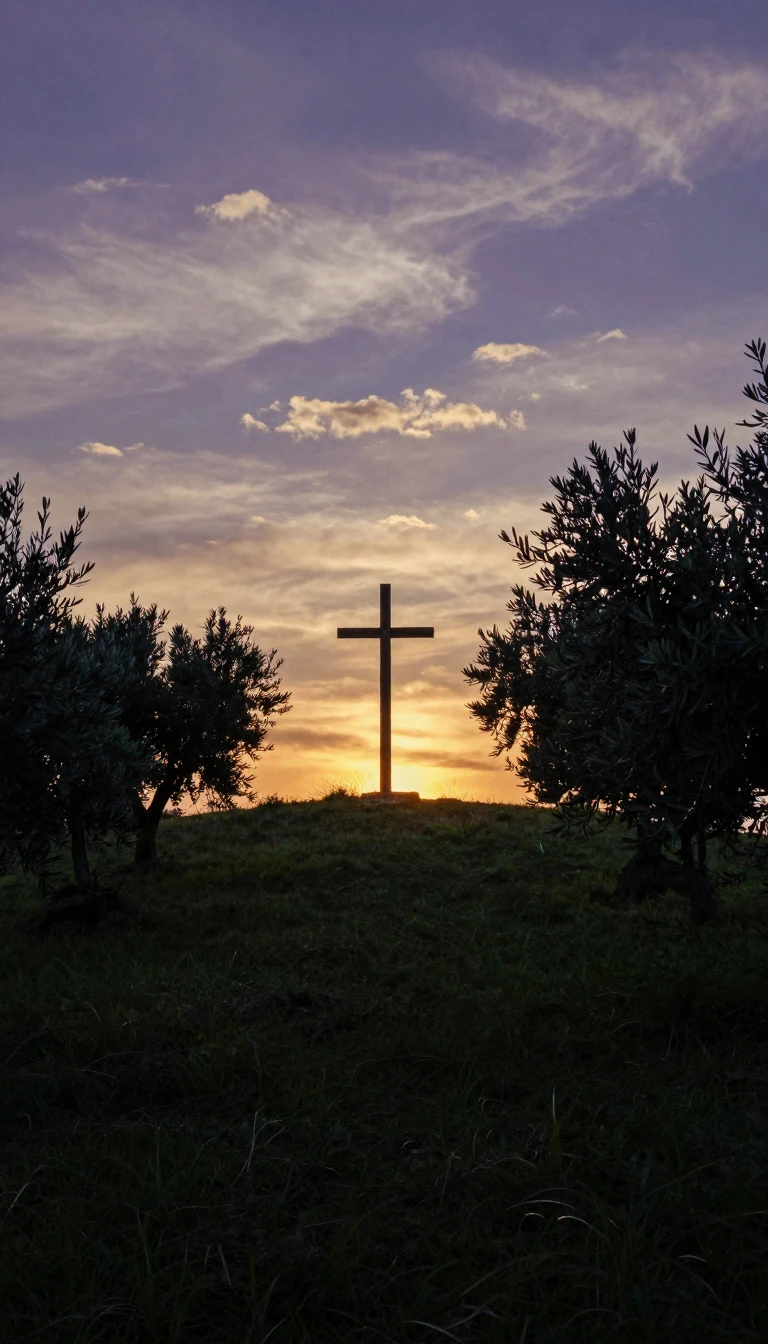 A cross speaks: the dream of the rood reimagines Christ's deathIn a dream, a cross recounts its role in Christ's crucifixion, blending pagan and Christian imagery to tell a story of sacrifice and triumph. This ancient poem, written in Old Eng…
 A 1970s book predicted the end of the world—and shaped modern politicsHal Lindsey’s book sold 28 million copies, influenced Reagan’s policies, and turned biblical prophecy into a cultural phenomenon. It warned of nuclear war, a revived Rome, and the…
 A murder ballad turned global hit, with a twist of history and lawThe song 'Tom Dooley' began as a tale of murder and betrayal in 1866, but became a cultural phenomenon through a web of legal disputes, artistic reinterpretations, and even a fict…
- The Testaments of the Twelve Patriarchs: Ethical guides buried in ancient textsOnce dismissed as Christian forgeries, these ancient texts reveal a Jewish ethical tradition that influenced biblical thought. They blend Jewish and Christian ideas, offering wisd…
 Temple Owls: A symbol of resilience and a legacy of athletic excellenceThe owl, once a symbol of night school, now represents a university that transformed into a powerhouse of sports and academic achievement. From the 1880s to today, Temple's Owls h…
- How to build a rich fantasy history without the tedious timeline workWorldbuilding often stalls when creators get bogged down in exhaustive chronology. This video introduces a streamlined three-step method designed to help you establish a believabl…
 Is veganism a spiritual necessity or a practical choice?Sadhguru explores the intersection of ethics, ecology, and spirituality in a conversation regarding the vegan lifestyle. This dialogue examines whether shifting our dietary habits…