 Intellect Plus
Writers
1,873 cards. Each one is a 40-second story with a five-minute read behind it. Page 12 of 32.
 Sergei Lukyanenko: The Russian science fiction titan whose humanist prose clashes with his politics.Born in Kazakhstan and rising to fame during the post-Soviet transition, Sergei Lukyanenko became a household name with his Watch series. Yet, the man who writes deeply about the …
 The tragic, dual life of the last poet of wooden Russia, Sergei YeseninSergei Yesenin was a self-styled peasant singer who became a rowdy, blasphemous icon of the revolutionary era. Torn between his idyllic, rural roots and the harsh industrializatio…
 The man who wrote the Soviet and Russian national anthems for two different regimes.Sergey Mikhalkov was a literary chameleon who survived the rise and fall of the Soviet Union. As a celebrated children's poet and state-sanctioned lyricist, he penned the words to…
 How a Tanganyikan civil servant became the father of modern Swahili literatureShaaban Robert transformed Swahili from a colonial administrative tool into a vibrant literary language. By blending traditional verse with experimental prose, he gave East Africa…
 The Chinese novelist who traded his pen for the study of ancient artifactsShen Congwen was a celebrated lyric novelist who rose from a military clerk in rural Hunan to a literary giant in Beijing. After facing intense political pressure in 1949, he aban…
 Sheridan Le Fanu: The Victorian master of the unseen and the unsettlingBefore Bram Stoker gave us Dracula, Sheridan Le Fanu was crafting the blueprint for modern horror. An Irish writer of profound subtlety, he mastered the art of the ambiguous ghost…
 Shin Kyung-sook: From Factory Worker to Global Literary Icon and Back AgainBorn in a rural village, Shin Kyung-sook rose to become a celebrated voice of South Korea’s 386 Generation. Her international breakthrough, Please Look After Mom, sold millions wo…
 The Yiddish humorist whose tales of shtetl life became a global cultural touchstoneSholem Aleichem was a preeminent Yiddish author who chronicled the lives of eastern European Jews. His work, which famously inspired the musical Fiddler on the Roof, captured the …
 Was the legendary Sanskrit playwright Shudraka a real king or a literary ghost?Shudraka is credited with the masterpiece The Little Clay Cart, yet historians remain divided on his existence. Was he a wise, elephant-training monarch who performed ancient ritu…
 Siegfried Sassoon: The Decorated War Hero Who Publicly Denounced the First World WarSiegfried Sassoon was a decorated British officer whose graphic, antiwar poetry shattered the romanticized image of the Great War. After receiving the Military Cross for bravery, …
 Simin Daneshvar: The Iranian Pioneer Who Defined Modern Persian Fiction for WomenAs the first major Iranian woman novelist, Simin Daneshvar transformed literature by centering the lives of ordinary people. From her early days writing under a pseudonym to her l…
- Sjón: The Icelandic polymath who writes from inside the belly of a whaleSigurjón Birgir Sigurðsson, known as Sjón, is an Icelandic visionary whose work blurs the lines between human and animal. From punk rock beginnings to Oscar-nominated screenplays,…
 How a Scottish poet used ancient Gaelic traditions to confront the modern world's crisesSorley MacLean transformed Scottish Gaelic poetry by fusing its oral heritage with the political intensity of the twentieth century. Though he published sparingly, his work bridge…
 How a young poet’s trauma transformed into the radical language of European constructivismSrečko Kosovel died at 22, leaving behind a massive, hidden archive of experimental work. Witnessing the horrors of World War I and the political erasure of his native Karst regio…
 Stephen Spender and the myth of the revolutionary Auden generationStephen Spender rose to prominence in the 1930s as a voice of political conscience. While often grouped with W. H. Auden as part of a radical literary movement, the reality was fa…
 Why Thailand’s greatest poet, the Shakespeare of the East, was once a jailed alcoholic.Sunthorn Phu, the legendary Thai poet, navigated a life of extreme highs and lows. From a celebrated court scribe under King Rama II to a disgraced merchant and monk, his journey …
 Susanna Centlivre was the eighteenth century's most successful female playwright, yet history nearly forgot her.Born in 1669, Susanna Centlivre rose from humble, uncertain origins to become the second most prominent woman of the English stage. Despite facing intense prejudice against female…
 How a Sierra Leonean poet turned the trauma of exile into a literary mapSyl Cheney-Coker has spent most of his adult life living outside his native Sierra Leone. This perpetual state of displacement shaped his radical, erudite poetry and his ambitious…
 Takeo Arishima: The Japanese Novelist Who Renounced His Inheritance for Socialist IdealsBorn into a wealthy samurai family, Takeo Arishima became a central figure of the Shirakaba literary movement. Yet, his life was defined by a restless search for meaning, shifting…
 How a 1929 novel about exploited crab fishermen became a modern Japanese bestseller.Takiji Kobayashi was a proletarian writer whose brutal murder by police at age 29 turned him into a martyr. Decades later, his masterpiece, The Crab Cannery Ship, unexpectedly sur…
 How a disgraced samurai wrote his way back into the Japanese elite classTakizawa Bakin was born into a declining samurai household, but he spent his life obsessed with restoring his family's lost status. Through a prolific career as a novelist, he ach…
 How a Ming Dynasty playwright used dreams to challenge the rigid politics of his time.Tang Xianzu, a disillusioned official, transformed Chinese theatre by prioritizing human desire over Confucian orthodoxy. Through his Four Dreams, he explored the tension between …
 A physician turned writer, Taslima Nasrin has lived in exile for three decadesTaslima Nasrin, a Bangladeshi-born physician and author, has spent over thirty years in exile due to her fierce feminist critiques and challenges to religious dogma. From fatwas a…
 How one poet ignited a revolution in the heart of Japanese traditional verseIn 1894, a young writer named Tekkan Yosano issued a bold call to dismantle the rigid conventions of traditional Japanese poetry. By championing originality over stale imitation, …
 Théodore de Banville: The Master of Rhyme Who Revived Forgotten French Poetic FormsA central figure in 19th-century French literature, Théodore de Banville bridged the gap between Romanticism and Symbolism. While he admired Victor Hugo, he demanded technical per…
 Théophile Gautier: The Flamboyant Critic Who Transformed French Literature Through Art and DanceA legendary figure of 19th-century France, Théophile Gautier moved from a rebellious youth in a scarlet waistcoat to a pillar of the artistic establishment. As a poet, journalist,…
 How a Burmese Poet Used Satire to Outsmart Colonial Censors and Define a NationThakin Kodaw Hmaing was more than a literary genius; he was the moral compass of 20th-century Burma. By mastering traditional verse to mask biting political critiques, he evaded c…
 Why Germany's Greatest Realist Novelist Did Not Start Writing Fiction Until Age Fifty-EightTheodor Fontane spent decades as an apothecary and a journalist, only turning to the novels that defined his legacy late in life. A sharp observer of Prussian society, he used his…
 Why a forgotten Scottish poet helped shape the modern university systemThomas Campbell was a literary sensation in 1799, yet today he is largely remembered for his activism and institutional influence. Beyond his celebrated poetry, he was a key archi…
- Thomas Dekker was the tireless, debt-ridden voice of London's bustling Elizabethan streets.A prolific playwright and pamphleteer, Thomas Dekker captured the vibrant, gritty reality of London life like no other. Despite his immense output and talent for colloquial speech…
 Was Ireland's national bard a radical revolutionary or a darling of the British elite?Thomas Moore was the nineteenth century's most celebrated Irish poet, yet he lived a life of profound contradiction. While he championed Irish resistance through his lyrics, he si…
 Thomas Wolfe was once the literary world's greatest hope—then its most ridiculed author.A titan of the Southern Renaissance, Thomas Wolfe was hailed by Sinclair Lewis as a potential world-class genius. Yet, after his premature death at 37, his reputation collapsed un…
 The Tudor diplomat who brought the sonnet to England and survived the TowerSir Thomas Wyatt was more than a courtier; he was a pioneer who reshaped English verse. While navigating the lethal politics of Henry VIII’s court, he introduced the sonnet to Eng…
- The monk who created the world's most famous libertine, the legendary Don Juan.Tirso de Molina was a Spanish Golden Age dramatist and Mercedarian friar who balanced theological rigor with a flair for the stage. He is best known for introducing Don Juan to li…
 Did Tom Wolfe and the New Journalists destroy the concept of journalistic objectivity?In the 1960s, a group of writers including Tom Wolfe began applying fiction techniques to nonfiction reporting. By prioritizing vivid scenes and personal voice over traditional in…
 How a Swedish psychologist used poetry to unlock the mysteries of the human mindTomas Tranströmer, a Nobel laureate who balanced a career as a psychologist with a life of verse, transformed the mundane into the profound. After a debilitating stroke in 1990, h…
 Tomi Ungerer: The Archivist of Human Absurdity Who Redefined Children's Literature and Political SatireFrom the horrors of wartime occupation to the heights of international acclaim, Tomi Ungerer was a restless creative force. A master of both whimsical children's books and biting …
 Torquato Tasso: The Renaissance genius who balanced epic ambition with a fractured mindTorquato Tasso was the late Renaissance's most celebrated poet, famous for his epic Jerusalem Liberated. Yet, his life was a turbulent cycle of brilliant literary achievement, int…
 How a misunderstood, disfigured poet became the secret architect of modern verseTristan Corbière lived a marginal life defined by physical pain and isolation in a Breton manor. Yet, this obscure, cynical bachelor, who died at 29, left behind a single collecti…
- How a revolutionary poet became a secular saint for a newly unified ItalyUgo Foscolo was a soldier, a patriot, and a literary titan who lived a life of dramatic contradictions. From fighting in Napoleonic wars to dying in a London debtors' prison, his …
 How a factory worker redefined Finland's national identity through the lens of warVäinö Linna, a self-taught textile mill worker with only six years of formal schooling, transformed Finnish literature. His unflinching depictions of ordinary soldiers and rural l…
- Why a legendary Siberian writer believed modernizers deserved a stake through the heartValentin Rasputin was the voice of the Soviet Village Prose movement, mourning the destruction of traditional rural life by industrial projects. He saw the flooding of his own chi…
 Varlam Shalamov survived the Gulag to write the definitive chronicle of its horrors.A survivor of the Kolyma labor camps, Varlam Shalamov transformed his harrowing experiences into a masterpiece of twentieth-century literature. His Kolyma Tales offer a stark, unf…
 Vasil Bykaŭ: The Soviet War Hero Who Became a Fierce Dissident CriticVasil Bykaŭ transformed from a decorated Red Army lieutenant into a profound literary voice, capturing the moral agony of World War II. His uncompromising realism drew both state …
 How a Soviet doctor became the voice of freedom through jazz and hip lingoVasily Aksyonov was a Soviet novelist who traded the dreary prose of socialist realism for the rhythm of American jazz. As a leading figure of the 1960s generation, he championed …
- The humble priest's son who single-handedly reshaped the sound of the Russian language.Born to a poor priest, Vasily Trediakovsky rose to become Russia's first commoner educated at the Sorbonne. He returned home to dismantle archaic poetic structures, introducing We…
- The illegitimate son who became the most powerful literary architect of Imperial RussiaVasily Zhukovsky was a master translator who single-handedly imported Romanticism to Russia. As a court tutor, he wielded immense influence, protecting literary giants like Pushki…
 Velimir Khlebnikov: The Futurist mathematician who tried to calculate the future of historyBorn Viktor, this Russian poet reinvented language to unlock hidden truths. A central figure of Futurism, he pioneered a translogical tongue called zaum and authored futurological…
 How Vicente Aleixandre used surrealism to illuminate the human condition in the cosmosAwarded the 1977 Nobel Prize in Literature, Vicente Aleixandre was a master of the surreal who reshaped Spanish poetry. From his early, melancholic explorations of nature to his l…
 Is Russia's most influential intellectual actually a computer program or a collective of authors?Victor Pelevin is a literary phantom. Despite selling millions of books and winning major awards, he avoids public life, shuns social media, and rarely grants interviews. This rec…
 The diplomat who defined Brazilian cool while drinking whiskey on stageVinicius de Moraes was a career diplomat and a poet who helped birth bossa nova. Known as O Poetinha, he lived a life of contradictions: a refined intellectual who famously declar…
- Why W. G. Sebald rejected the German postwar novel as a pestilenceW. G. Sebald was a literary outlier who transformed how we process historical trauma. By blending fact, fiction, and haunting photography, he challenged the established traditions…
 Wallace Stevens: The Insurance Executive Who Redefined Modern Poetry Through His ImaginationWallace Stevens lived a double life: a prosperous insurance vice president by day and a profound modernist poet by night. While he spent decades evaluating surety claims in Hartfo…
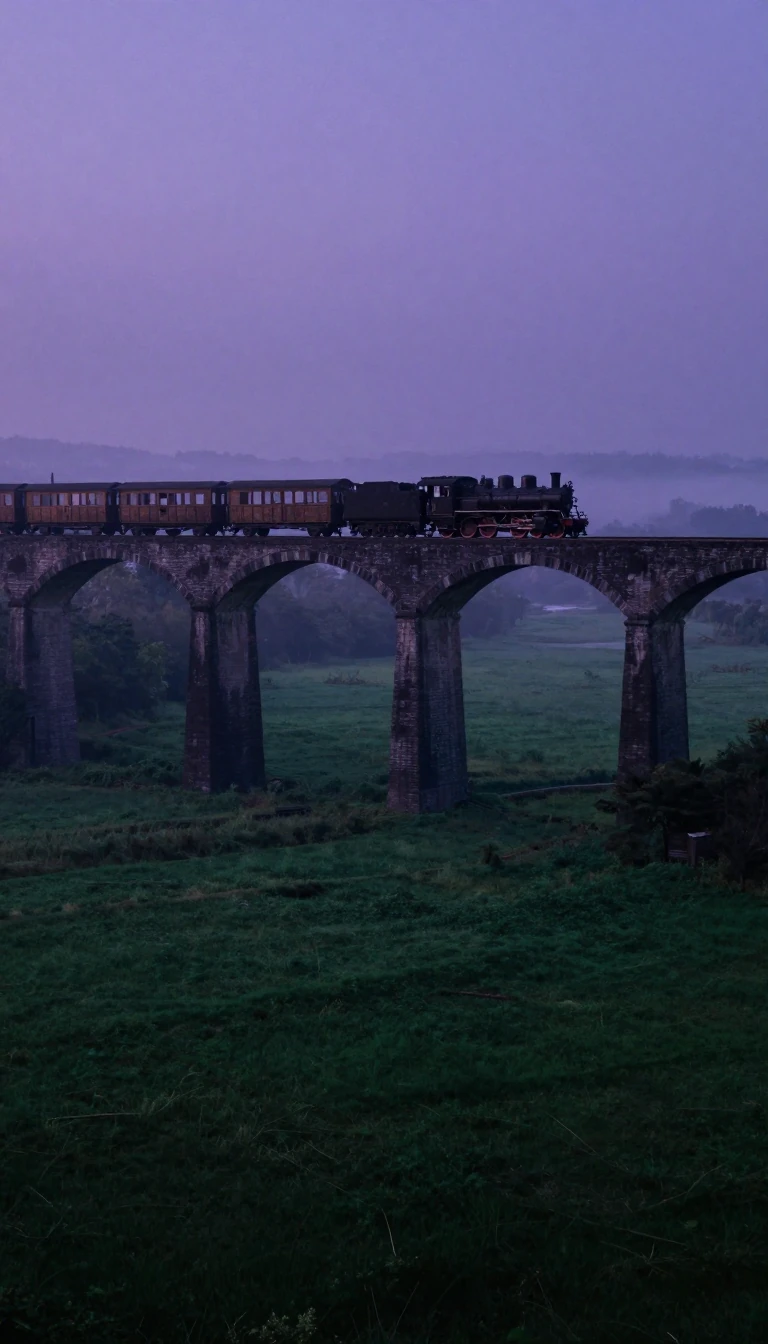 How a vicar’s childhood nights by a railway tunnel created a global iconWilbert Awdry, an Anglican priest, turned the rhythmic sounds of steam engines he heard from his bedroom into the world of Thomas the Tank Engine. What began as bedtime stories fo…
- How a rejected accountant became a literary titan of the African continentWilbur Smith was a tax assessor who failed to sell his first manuscript twenty times. After embracing his own life experiences—hunting, mining, and the complexities of his homelan…
- The Victorian poet who turned his back on empire to champion Egyptian nationalismWilfrid Scawen Blunt was an anomaly of the late Victorian era. A diplomat turned anti-imperialist, he spent his life defying the conventions of his class. From breeding Arabian ho…
 Beyond the fairy tales: The vibrant, social life of Wilhelm GrimmWhile history remembers the Brothers Grimm as a singular, inseparable unit, Wilhelm Grimm was a distinct personality. A gifted storyteller with a jovial spirit, he was the social …
 Willa Cather: The Frontier Novelist Who Found Community in the Vast American LandscapeWilla Cather transformed the American frontier into a literary stage, crafting stories of immigrants and settlers that captured the spirit of the Great Plains. Though she became a…
 Willem Frederik Hermans: The Dutch Master of Epistemological Nihilism and Existential DreadConsidered one of the three most important postwar Dutch authors, Willem Frederik Hermans crafted a unique, bleak literary world. His protagonists are often loners trapped in a re…
 Why did one of England's greatest playwrights quit the stage at age thirty?William Congreve dominated the Restoration theatre with brilliant, satirical comedies of manners. Yet, after only seven years and five plays, he abruptly abandoned the stage in 17…