 Intellect Plus
Other
32 cards. Each one is a 40-second story with a five-minute read behind it.
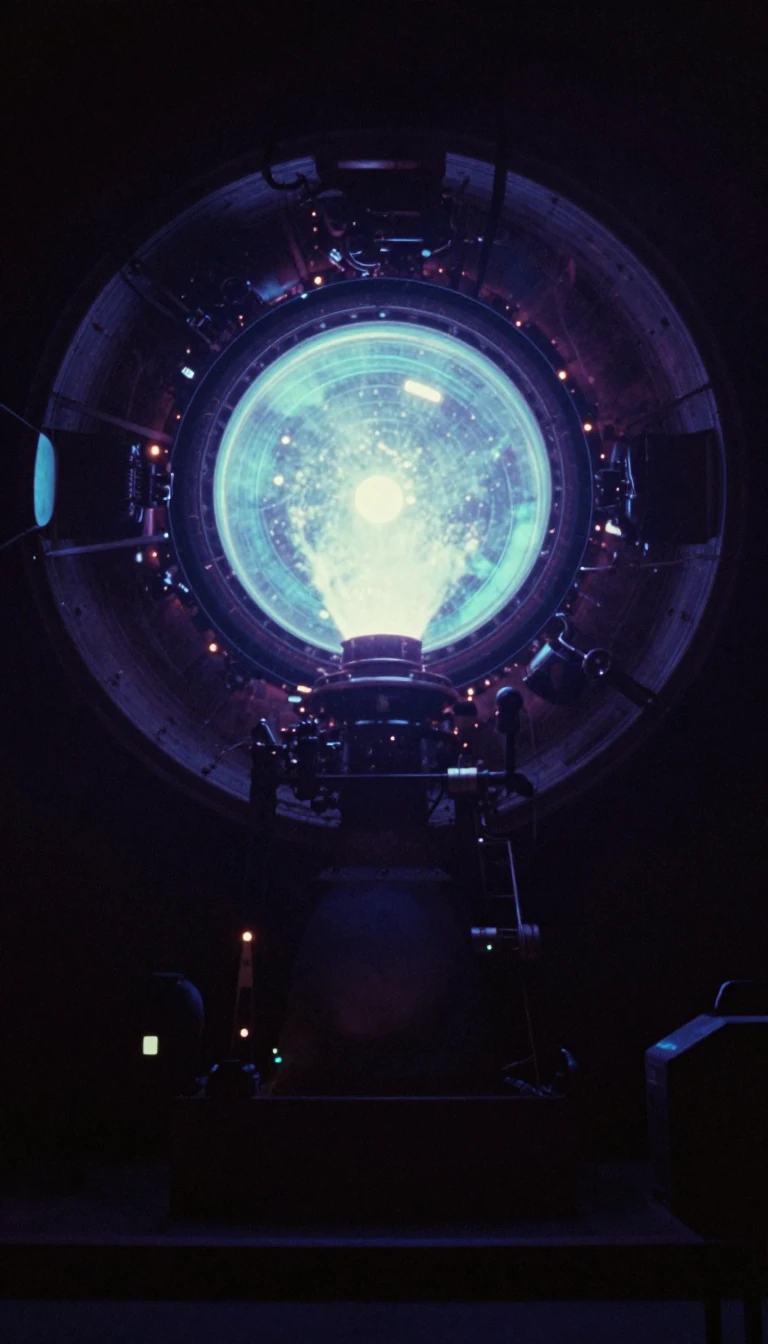 The 6.2-kilogram sphere of plutonium that earned a reputation for being cursedKnown as the demon core, this subcritical plutonium-gallium sphere caused two fatal radiation accidents at Los Alamos. Scientists nicknamed the experiment tickling the dragon's ta…
 How a radical shift in physics created the world's most powerful weapon designBefore 1951, scientists struggled to ignite thermonuclear fuel by simply heating it. A breakthrough at Los Alamos revealed that compressing fuel with radiation from a fission prim…
 Before the digital age, clockwork gears and levers automated the world's most complex arithmetic.Long before silicon chips, inventors harnessed the precision of clockmaking to build machines that could add, subtract, and multiply. From Blaise Pascal's tax-saving device to the…
 How Euler and Lagrange revolutionized physics by finding the shortest path to motionIn the 1750s, two mathematicians transformed classical mechanics by developing a system of equations that identifies stationary points of action. This elegant framework, which rem…
 Why the smoothest functions are actually the rarest in the mathematical universeIn calculus, we learn that a differentiable function is one that lacks sharp corners or breaks, allowing for a precise slope at every point. Yet, mathematically, these smooth func…
 Computer vision aims to give machines the ability to interpret the world through sightComputer vision is the interdisciplinary field of enabling machines to extract, analyze, and understand useful information from images or videos. By mimicking human visual systems…
 Why the whole is often far more than the sum of its partsEmergence describes how complex systems develop behaviors that their individual components lack. From the swarming of starlings to the formation of galaxies, these phenomena revea…
 Delete the middle third forever and you remove everything, yet points remainTake a line segment, erase its middle third, then erase the middle third of each piece left, and keep going forever. Add up everything removed and it equals the full original leng…
 In shogi, captured pieces switch sides and come back to fightTake an opponent's piece in Western chess and it is gone for good. In shogi, Japanese chess, you keep it in hand and can drop it back onto the board as your own. That single rule,…
 Stanisław Ulam filled a café notebook with problems, then invented the Monte Carlo methodIn 1930s Lwów, mathematicians argued for hours at the Scottish Café and wrote their unsolved puzzles in a thick notebook supplied by Stefan Banach's wife. Stanisław Ulam contribut…
 Why Britain and France kept paying for Concorde long after it made senseBy the time Concorde's economics had collapsed, London privately called it a commercial disaster that should never have begun. Yet both governments kept funding it. Economists now…
 Perturbation theory tackles hard problems by nudging easy ones, one correction at a timeThe Moon's orbit defeated even Isaac Newton, who reportedly complained that the problem made his head ache. Earth and Sun both tug on it, so no tidy formula fits. The fix mathemat…
 The PID controller began with an engineer watching a ship's helmsmanIn 1922 Nicolas Minorsky, designing automatic steering for the US Navy, noticed that a good helmsman reacts to three things at once: how far off course the ship is, how long it ha…
 John Nash won a Nobel for 28 pages, but mathematicians prize his geometry moreMost people know John Nash from A Beautiful Mind and from the equilibrium in game theory that earned him an economics Nobel. Yet the mathematician Mikhael Gromov called one of Nas…
 Why fewer fishing boats in wartime meant more sharks in the netsDuring the First World War, Adriatic fishing almost stopped, and when catches resumed a marine biologist noticed something odd: a larger share of predatory fish. He asked his girl…
 One mathematical idea covers length, area, mass and the odds of an eventLength, area, volume, mass and probability look like separate notions, yet mathematicians treat them all as versions of one thing, called a measure. The instinct behind it goes ba…
- Nobody agrees what makes a country a microstate, but tiny nations thrive anywayVatican City covers just 49 hectares and has fewer than a thousand residents, making it the smallest recognised sovereign state. Yet there is no agreed definition of a microstate.…
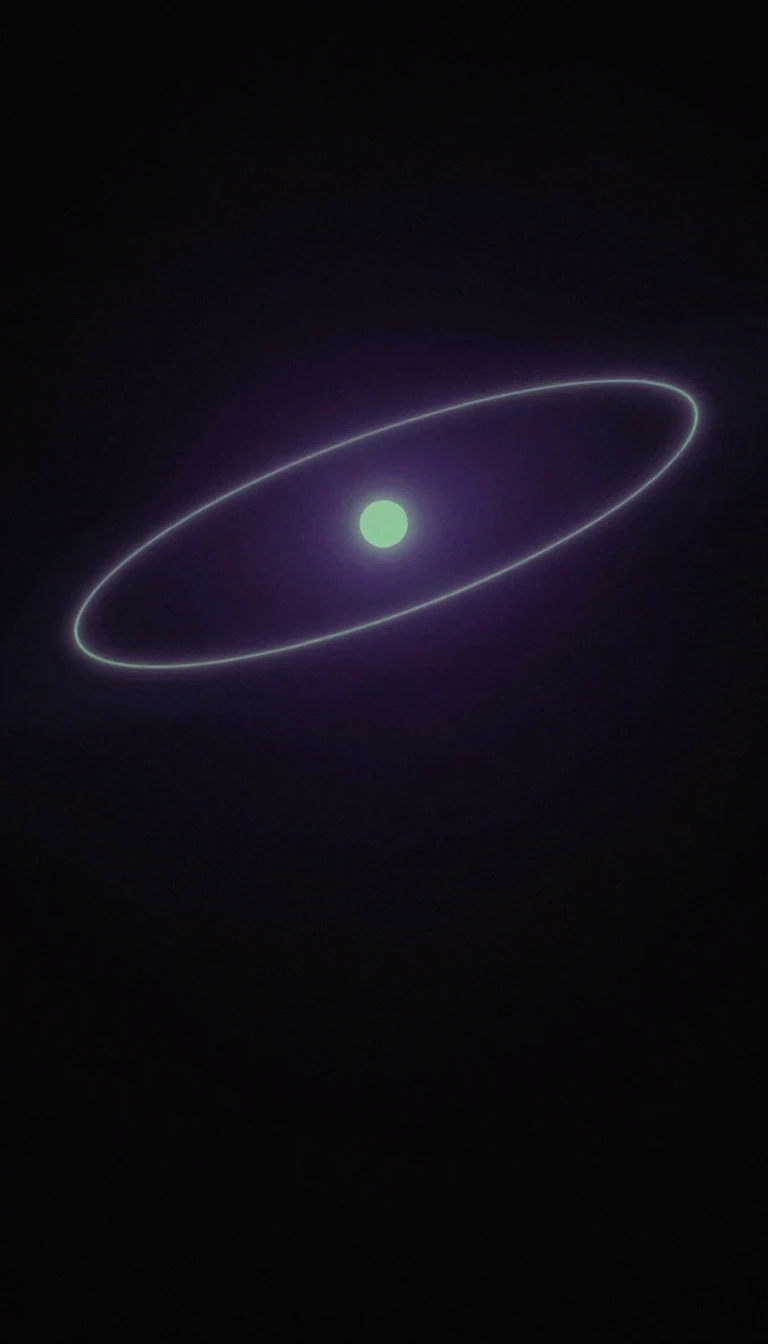 Pluto crosses Neptune's path yet never gets close, thanks to rhythmPluto's orbit cuts inside Neptune's, and yet the two can never collide. Pluto goes around the Sun twice for every three Neptune laps, and that fixed rhythm guarantees Neptune is a…
 How engineers crash a car thousands of times without building oneThe equations describing how metal bends, heat spreads or air flows around a wing are usually impossible to solve exactly for a real, awkward shape. The finite element method side…
 When the objective bends, linear solvers no longer sufficeNonlinear programming hunts maxima or minima when the goal function or the constraints refuse to stay linear. Feasible, infeasible and unbounded cases sort the landscape; Karush–K…
 Wartime math that moved convoys, camouflage, and depth chargesOperations research applies models, statistics and optimization to messy decisions—maximise yield or minimise risk. Born around Britain's Chain Home radar in 1937 and forged in Wo…
 Pure math chases beauty first—and still powers RSA laterPure mathematics studies ideas for their own sake, not for an immediate gadget. Greeks already split number theory from practical reckoning; around 1900 paradoxes and strange geom…
- Applied maths is a craft of models, not a single syllabusApplied mathematics puts mathematical methods to work in physics, engineering, medicine, finance, computing, and industry. Practitioners build and study models of real problems, y…
 Category theory maps maths by arrows, not just objectsInvented mid-century by Samuel Eilenberg and Saunders Mac Lane for algebraic topology, category theory treats structures by how they relate. Objects sit at ends of morphisms—arrow…
 Chaos is deterministic—and still wrecks long forecastsChaos theory studies systems ruled by fixed laws yet wildly sensitive to starting conditions. Edward Lorenz put it starkly: the present fixes the future, but an approximate presen…
 Control theory steers systems by closing the error loopControl theory designs inputs that drive a dynamical system toward a desired state while limiting delay, overshoot, and steady error. A controller watches the process variable, co…
- A dynamical system is a rule for how a state evolvesIn mathematics, a dynamical system pairs a space of states with a rule saying how each point moves through time. Pendulums, pipe flow, airborne particles, and spring fish counts a…
- Dynamical systems theory asks what happens in the long runDynamical systems theory describes complex evolving systems with differential or difference equations. Continuous versions generalise classical mechanics by postulating equations …
 Game theory turns confrontation into a payoff matrixGame theory models multi-agent strategy as games among players who choose actions to raise payoffs. It spans biology, computing, economics, law, and philosophy, and has earned man…
 Shannon made uncertainty itself a measurable quantityInformation theory quantifies how messages are stored and sent under noise. Claude Shannon formalised the field in the 1940s after earlier Bell Labs work by Harry Nyquist and Ralp…
- Linear programming finds optima on a polytope of constraintsLinear programming maximises or minimises a linear objective under linear equalities and inequalities. Feasible points form a convex polytope—an intersection of half-spaces—and th…
- Optimisation is the hunt for a best feasible choiceMathematical optimisation—also called mathematical programming—picks a best element from allowed alternatives by some criterion. Discrete problems seek integers, permutations, or …