 Intellect Plus
Science
Physics, chemistry, biology and maths: how the world works, the experiments that showed it and the people behind the discoveries.
17,267 cards. Each one is a 40-second story with a five-minute read behind it.
Biggest areas: Physics · Mathematicians · Biology · Chemistry · Geometry · Social scientists · Algebra · Geology
Subtopics
 Physics1,675 cards
 Mathematicians976 cards
 Biology884 cards
 Chemistry743 cards
 Geometry689 cards
 Social scientists487 cards
 Algebra449 cards
 Geology408 cards
 Scientists, inventors and mathematicians330 cards
 Basics306 cards
 Evolutionary biology298 cards
 Human body & genes278 cards
 Particle physics256 cards
- Mechanics244 cards
- Measurement225 cards
 Calculus and analysis205 cards
 Biochemistry178 cards
 Statistics and probability174 cards
 Thermodynamics170 cards
 Cell biology161 cards
 Discrete mathematics146 cards
 Salts and ions145 cards
 Microbiology131 cards
- Probability129 cards
 Number theory113 cards
 Biological processes and physiology104 cards
 Theory102 cards
- Organic compounds96 cards
- Electromagnetism94 cards
 Foundations91 cards
- Condensed matter physics83 cards
 Waves83 cards
 Nuclear physics81 cards
 UK & Ireland: science79 cards
- Reactions and synthesis78 cards
 Scientific discoveries77 cards
 Chemical elements68 cards
 Biochemistry and molecular biology65 cards
 Earth science64 cards
 Researched63 cards
 Separation processes61 cards
 Analysis58 cards
 Functions56 cards
 Genetics and molecular biology53 cards
- Biology and health sciences: General49 cards
 Physics basics48 cards
 Color47 cards
 Optics & light47 cards
 Pre-modern figures42 cards
 Science basics42 cards
 Acids and bases41 cards
- Applied mathematics40 cards
 Atomic and molecular physics39 cards
- Research methods36 cards
 Inventors and engineers33 cards
 Other32 cards
 Alloys and ceramic compounds30 cards
 Molecular compounds30 cards
 Biology basics28 cards
 Found by OrchestratorBot27 cards
 Scientific instruments23 cards
 Theoretical computer science22 cards
 Computer scientists and programmers19 cards
 Infinity19 cards
 Water19 cards
- Magnetism18 cards
 Prime numbers & number theory18 cards
 Entropy16 cards
 Pseudoscientists15 cards
 Relativity15 cards
- Climate13 cards
- Electricity & magnetism13 cards
 Isotopes13 cards
- Women in science13 cards
 Global Curiosity Questions12 cards
 Materials12 cards
 Famous experiments11 cards
- Quantum11 cards
 Volcanoes11 cards
- Atoms10 cards
- Cells10 cards
 Cold10 cards
- Future Frontier10 cards
- Ice10 cards
 Light10 cards
- Proof10 cards
- Elements9 cards
 Famous equations9 cards
 Maths9 cards
- Stars9 cards
 Thermodynamics & heat9 cards
 Heat8 cards
- Minerals & crystals7 cards
 Nature: How Long Can It Live?7 cards
 Units & measurement7 cards
- How Things Work: The Journey of Crude Oil6 cards
 How Did the Dinosaurs Become Extinct?5 cards
- How Things Work: Gas from Source to Supply5 cards
- Quantum Biology5 cards
- Everyday Science Questions4 cards
 Glass4 cards
Every science card
 The Sun only shines because particles cheat.By classical physics, the Sun's core isn't hot enough for protons to fuse: they should repel each other before they touch. Quantum mechanics lets them 'tunnel' through that barrie…
- A physicist who helped found quantum computing theory also sees knowledge as endlessly growingDavid Deutsch, a physicist at the University of Oxford, is often called the father of quantum computing. He helped describe the quantum Turing machine and devised early algorithms…
- Heavy aircraft leave rotating air whirlpools that can flip smaller planesEvery aircraft that generates lift sheds a pair of rotating air vortices from its wingtips. Behind a heavy jet these vortices can linger for more than a minute and carry enough fo…
- Chloroethane is a gas at room temperature, yet it is sold as a liquid under pressureChloroethane, also called ethyl chloride, is a gas at ordinary temperatures with a sharp, ether-like smell. Its boiling point sits just above freezing, so it is stored and shipped…
 Hard water is shaped by the rock its rain drains throughRain is almost pure, yet the water from your tap can be loaded with minerals. The difference comes from the ground it passes through. Limestone, chalk and gypsum release calcium a…
- A vacuum flask keeps drinks hot or cold by emptying the air between two wallsYour flask keeps coffee warm for hours because of a near-vacuum hidden inside its walls. Scottish scientist James Dewar developed the idea in 1892 while studying very low temperat…
- Mutual information measures how much knowing one thing tells you about anotherKnowing the result of one thing can reduce your uncertainty about another. Information theory gives this idea an exact measure called mutual information, defined by Claude Shannon…
 A ball bearing lets balls do the hard work of reducing frictionRolling beats sliding. A ball bearing places small steel or ceramic balls between two races so a spinning shaft meets far less resistance than two flat surfaces rubbing together. …
- Absinthe's notorious thujone was far less abundant than legend claimedFor decades absinthe was blamed on thujone, a compound said to produce hallucinations and madness. Modern lab tests show the bottles held far less of it than early estimates sugge…
- Water's relative permittivity is about 80, while n-hexane's is under 2Relative permittivity compares how strongly a material weakens an electric field against vacuum. Water scores about 80 at 20 degrees Celsius, while n-hexane scores 1.89. That sing…
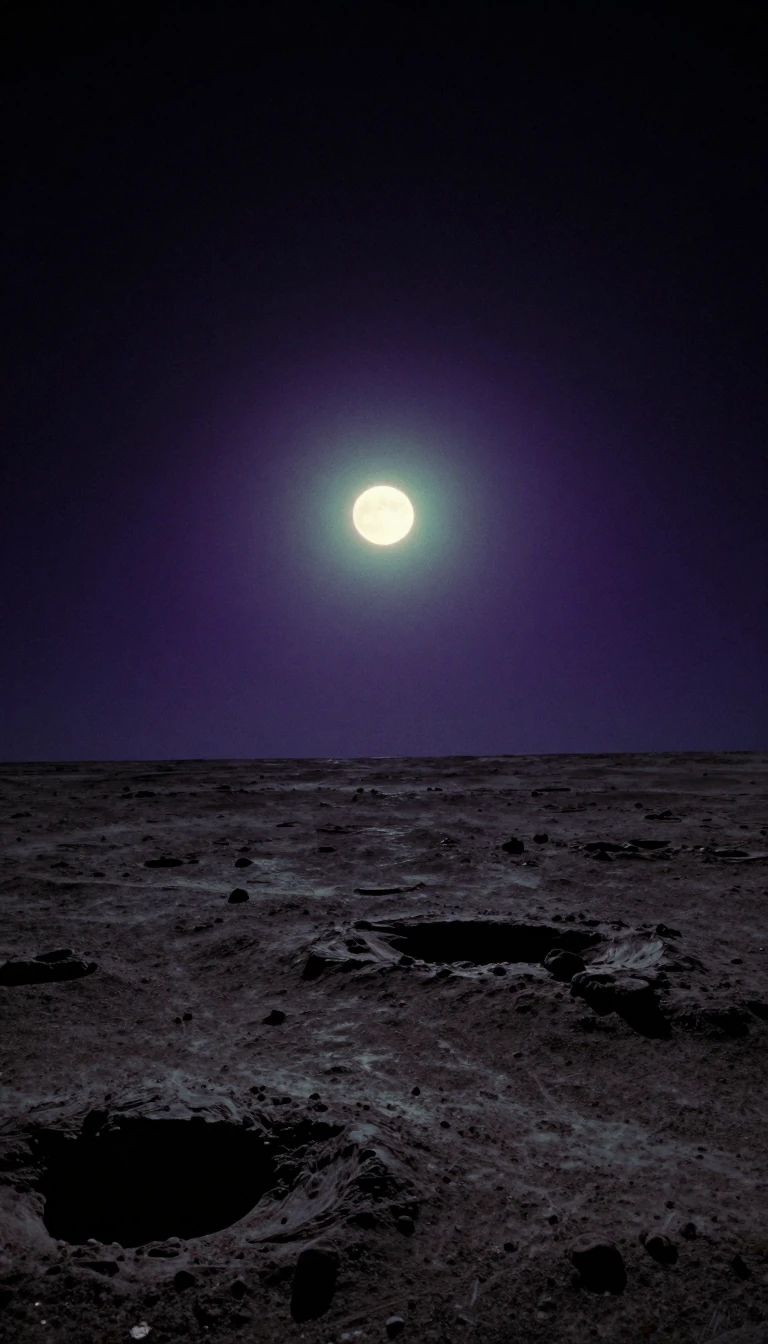 Your sundial and your clock can disagree by more than fifteen minutesA sundial shows apparent solar time, while a clock keeps mean solar time. The gap between them, called the equation of time, swings through the year and reaches roughly sixteen mi…
- Kernel density estimation draws a smooth curve through scattered data without assuming a shapeHand a statistician a scatter of data points with no assumed shape, and kernel density estimation can still expose the pattern hidden inside them. It places a smooth bump on each …
 Lab-grown diamonds are real diamonds, chemically the same as mined onesA synthetic diamond is built from the same pure carbon, arranged in the same crystal lattice, as a diamond formed deep in the earth. What takes millions of years underground can n…
- Most algae are harmless, but a few can turn a bloom into a health hazardAlgae are simple plants that support many food webs, yet only a small share of species produce toxins. When those toxin-making species multiply excessively, they create a harmful …
 Why one dead bulb can darken an entire string of lightsWire components one after another and they share a single path, so the same current flows through each one. Wire them side by side and each receives the full supply voltage. That …
 Storm researchers once placed instruments directly in tornado paths to measure them from withinTornadoes are too violent and fast for ordinary instruments to survive. The TWISTEX team, led by Tim Samaras from 2007, built hardened pressure probes and set them in tornado path…
- Your Erdős number measures how many co-authored papers separate you from one prolific mathematicianPaul Erdős wrote around 1,500 mathematical articles, most of them co-written, and he had 509 direct collaborators. Their collaborators have Erdős number 2, and the chain keeps goi…
 Some rocks travel hundreds of kilometres, carried by ancient ice and left far from homeA glacial erratic is a rock that sits in a place where its kind of rock is not native. Glaciers carried it there, often over hundreds of kilometres, and left it behind when the ic…
 Can a later event really affect an earlier one? Physics says the answer is murky.Retrocausality means an effect comes before its cause. For centuries philosophers treated it as a contradiction. Yet most physical laws are time symmetric, and some quantum models…
- Leibniz read ancient Chinese hexagrams as binary numbers, centuries before computersLong before computers existed, Gottfried Leibniz published the modern binary number system in 1689. He was struck by the I Ching, an ancient Chinese text whose hexagrams line up w…
- A matrix's condition number measures how much errors in inputs get amplifiedSolving a system of linear equations can magnify tiny input errors into large output errors. The condition number, a single figure computed from a matrix, tells you how much that …
- A lake can slosh back and forth like bathwater and flood a cityA seiche is a standing wave that rocks an enclosed body of water back and forth. It can be a few centimetres high in a harbour or several metres high on a lake. Some are set off b…
 Google Brain taught a neural network to spot cats without ever labelling themIn 2012, a Google research team trained a large neural network on frames from 10 million YouTube videos. Nobody labelled the cats for it, yet it learned to pick out the concept on…
- A reactor design that cools itself using gravity and stored waterThe AP1000 is a nuclear reactor built to remove its own leftover heat with water that flows by gravity, even if operators take no action. Its designers also aimed to cut building …
- Gamma matrices are four matrices that encode how spin and relativity fit togetherPaul Dirac introduced gamma matrices in 1928 as a set of matrices governed by particular anticommutation rules. Those rules alone generate a Clifford algebra for spacetime, and th…
 Sort, subtract, repeat: four-digit numbers almost always end at 6174Choose a four-digit number with at least two different digits, arrange its digits from largest to smallest and then smallest to largest, and subtract. Repeat the step and the sequ…
- A coal-industry question helped launch a theory of sudden connectivityPour liquid onto porous coal and will it reach the bottom? That practical question gave rise to percolation theory. Its key idea is a sharp critical point: below it a network spli…
- Telomerase rebuilds the protective ends of chromosomes that shorten with every cell divisionEach time a cell copies its DNA, the tips of its chromosomes lose a little length. An enzyme called telomerase can add those lost repeats back. Its activity is tightly controlled,…
 A state-space model tracks hidden internal variables to describe how a system evolvesEngineers and economists often describe a system by following a set of internal state variables instead of only watching its inputs and outputs. This state-space approach turns sy…
 A kinesin walks along microtubules by taking about a hundred steps before letting goInside a cell, large cargo cannot simply drift to where it is needed. Kinesin, a motor protein, carries it along microtubule tracks, spending one molecule of ATP per step. Its two…
 Some radio waves are so long that one antenna can reach submarines worldwideExtremely low frequency radio waves stretch across thousands of kilometres and can pass through seawater, which ordinary radio cannot. Navies have used them to reach submerged sub…
- About 1.7 billion years ago, nature ran a nuclear reactor in GabonRoughly 1.7 billion years ago, uranium ore at Oklo in Gabon sustained nuclear chain reactions with no human help. Groundwater acted as the moderator, and the reactor switched itse…
 A glowing photo technique was born from a hospital observation in 1939In 1939, Soviet engineer Semyon Kirlian noticed a glow near a patient receiving high-frequency treatment. That observation led to Kirlian photography, a method that records electr…
- Fish with fins that became the first four-legged animals' ancestorsTetrapodomorphs are a group of lobe-finned fishes and their descendants, including every four-limbed vertebrate alive today. Their fossils, found from the early Devonian onwards, …
- Oxygen's most reactive byproducts are also essential messengers inside living cellsOxygen is essential to life, yet some of its byproducts are highly reactive molecules. Scientists now recognise that these reactive oxygen species are not only harmful. Controlled…
- A chemist who won nearly every prize in his field, except the NobelChintamani Nagesa Ramachandra Rao, known as C. N. R. Rao, is an Indian chemist whose work on solid-state materials deepened understanding of high-temperature superconductivity and…
 A screwdriver slip in 1946 turned a routine lab test into a fatal chain reactionIn 1946, physicist Louis Slotin was running a criticality experiment at Los Alamos when a tool slipped and a reaction went supercritical. He stopped it within moments, yet he had …
- A man born colour-blind now hears colours through a skull implantNeil Harbisson was born with complete colour-blindness, yet he now perceives light beyond human vision. An antenna implanted in his head converts wavelengths into vibrations he ex…
- A living cell is a system that produces the very parts that produce itChilean biologists Humberto Maturana and Francisco Varela coined autopoiesis in 1972 to describe something living cells do: they continuously make and maintain their own component…
 Color temperature describes light's color, not the actual heat of its sourceColor temperature is a way of describing light by matching it to the glow of an idealized heated object. The label refers to the color of light, not how hot its source really is. …
- A single-determinant shortcut makes the many-electron problem tractable by repeated self-checkingThe exact Schrödinger equation for many electrons has no known analytic solution, so physicists approximate it. The Hartree–Fock method lets each electron feel an averaged field f…
 A small device can work out where you are with no outside signalAn inertial measurement unit tracks motion using only sensors inside itself, with no satellites or radio beacons needed. It is found in aircraft, missiles, submarines, spacecraft,…
 A tiny RNA found in worms reshaped how cells control their genesVictor Ambros found that a short strand of RNA in a tiny worm could switch off a specific gene by binding to its message. That finding revealed a new class of molecules, microRNAs…
- A time crystal repeats in time instead of space, without energy inputOrdinary crystals repeat their atomic patterns across space. A time crystal repeats across time instead. In a 2021 experiment on a quantum computer, its motion kept cycling with n…
 The mathematician who proved a 39-digit Mersenne number prime by handA nineteenth-century French mathematician, Édouard Lucas, tested a 39-digit number for primality by hand and proved it prime in 1876. That result stood as the largest known Mersen…
- Cat coat colour comes from a handful of genes working togetherA cat's coat is written in its DNA. A few genes decide whether fur looks black, brown, red or diluted, and how it is patterned. Some colours even shift as a kitten grows older. He…
 Could quantum effects inside brain cells explain consciousness? Many scientists doubt itOrchestrated objective reduction proposes that consciousness starts at the quantum level, inside tiny structures called microtubules within neurons. It is a bold idea from Roger P…
 Why triangles hold their shape while four-sided frames can swayBridges, roofs and bicycle frames rely on triangles more than almost any other shape. A truss is a rigid framework of straight members joined at nodes, and its strength comes from…
 Twisted wire pairs were invented by Alexander Graham Bell in 1881Two wires twisted together can cancel out electrical noise that would otherwise corrupt a signal. The idea dates to Alexander Graham Bell, and it still carries much of the world's…
- Physics splits into many branches, from quantum mechanics to cosmologyPhysics is not one subject but a family of branches. Classical mechanics tracks forces and motion, while quantum mechanics treats atoms and their particles. Thermodynamics, relati…
- Spraying particles into the sky could cool Earth, but every option carries trade-offsVolcanoes naturally cool the planet by lofting reflective particles into the stratosphere. Scientists are studying whether people could copy that effect on purpose. Injection loca…
- A nuclear explosion releases energy from splitting or fusing atomic nuclei, not from chemistryNuclear explosions release energy from changes inside atomic nuclei rather than from chemical reactions. The energy density is so much greater that a nuclear blast can be millions…
 Most crowd crush deaths are asphyxia, not stampedes, and many are preventableCrowd disasters are often blamed on panic, but crowd scientists say density is the real danger. When people are packed tightly enough, the crowd behaves like a fluid, and people c…
- A whale's earliest known ancestor once walked on four long legsWhales are the heaviest animals known, yet their early relatives lived on land. Pakicetus, a fossil cetacean from about 48.5 million years ago in present-day Pakistan, had functio…
- The quartic is the highest-degree polynomial with a general radical formulaQuadratics and cubics have general formulas built from radicals, and so does the quartic, the next degree up. Ferrari's method appeared in 1540 but required a cubic first. Later, …
- Sound can shape sand into patterns, and the physics behind it is classicalSprinkle fine sand on a metal plate, draw a violin bow along its edge, and the grains gather into symmetrical figures. The shapes follow from the plate's geometry and the sound's …
- Blued steel gets its dark finish from a magnetite layer, not paintGun barrels and fine tools look blue-black because their surface is chemically converted into magnetite, the black oxide of iron. Unlike rust, this layer does not flake away. Blui…
- Quantum teleportation moves quantum information, not matter, between distant placesQuantum teleportation does not beam objects like the Star Trek transporter. It transfers a quantum state from one location to another without moving any matter. Physicists first d…
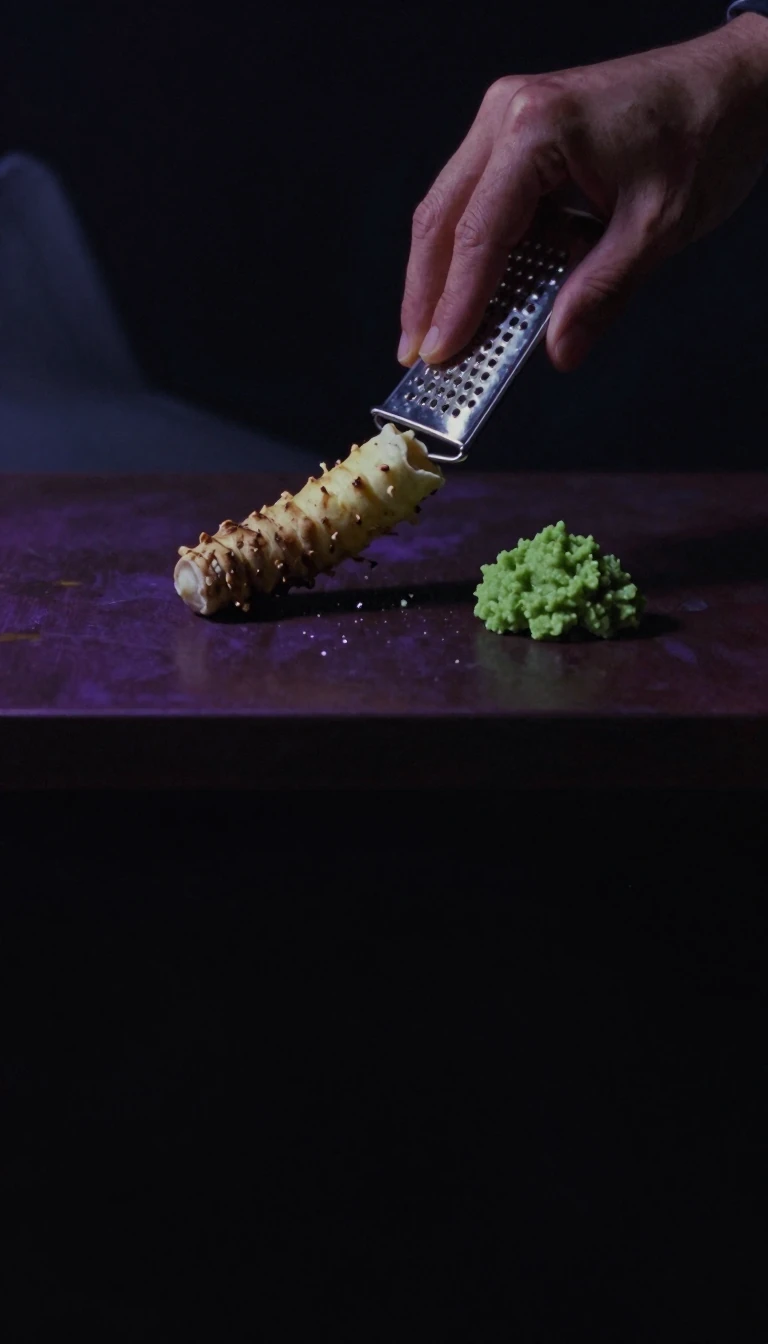 A mold that makes sake and soy sauce has never been found to produce toxinsAspergillus oryzae, known in Japan as kōji mold, helps turn rice, barley and soybeans into sake, miso and soy sauce. Its close relatives produce dangerous aflatoxins, yet this mol…
- A common lab solvent is mostly made as a leftover from another processAcetonitrile is a colourless liquid that is produced largely as a side product of making acrylonitrile. Refineries use it to pull butadiene out of hydrocarbon streams, while chemi…