 Intellect Plus
Scientists, inventors and mathematicians
349 cards. Each one is a 40-second story with a five-minute read behind it. Page 5 of 6.
 Hypatia's death had nothing to do with the Library of AlexandriaModern retellings often link Hypatia's killing to the burning of the great Library. But the library was already gone during her lifetime. The real Hypatia was a celebrated Alexand…
 Ibn al-Haytham may have written his Book of Optics while feigning madnessLegend says that after failing a task for Cairo's volatile caliph al-Hakim, Ibn al-Haytham pretended to be mad and lived under house arrest. In those years he produced the seven-v…
 Irving Langmuir named plasma after blood and coined 'pathological science'Studying glowing ionised gas inside lamps, Irving Langmuir thought it resembled blood plasma and gave the state of matter its name. The Nobel-winning chemist also made light bulbs…
 Henri Poincaré found chaos while working as a mining engineerPoincaré was called the last universalist, a mathematician at home in every branch of his subject. Studying how three bodies move under gravity, he became the first to find a dete…
 Before his tower, Gustave Eiffel built the skeleton inside the Statue of LibertyGustave Eiffel's firm designed the tower that carries his name, but his skill with wind loads first brought him a different commission. In 1881 the sculptor Auguste Bartholdi aske…
 Hans Bethe explained how heavy stars shine, and kept publishing into his ninetiesIn 1939 Hans Bethe worked out that heavier main-sequence stars are powered by a cycle of reactions involving carbon, nitrogen and oxygen, which earned him the 1967 Nobel Prize in …
 Ørsted's compass discovery was no lecture-hall accidentA popular story says Hans Christian Ørsted stumbled on electromagnetism mid-lecture when a wire twitched a compass. In fact he had been hunting for a link between electricity and …
 Hans Krebs lost his German job in 1933 and found his cycle in EnglandDismissed by the Nazi regime in 1933 because of his Jewish ancestry, Hans Krebs was quickly rescued by a Cambridge biochemist. German officials let him take his lab equipment alon…
 Harold Urey found heavy hydrogen and offered to fly one way to the MoonHarold Urey won the 1934 Nobel Prize in Chemistry for discovering deuterium, the heavy form of hydrogen. Decades later, when Apollo astronauts brought back lunar rock, he examined…
 Heinrich Hertz proved radio waves exist and saw no use for themBetween 1886 and 1889 Heinrich Hertz generated and detected invisible electromagnetic waves, confirming a prediction by James Clerk Maxwell. He considered it purely a test of theo…
 Hendrik Lorentz wrote the equations of relativity before Einstein explained themThe mathematics at the heart of special relativity carries the name of a Dutch physicist, Hendrik Lorentz. Working to rescue the idea of a light-carrying aether, he introduced a l…
 Two cloudy days in Paris led Henri Becquerel to radioactivityHenri Becquerel expected sunlight to make uranium salts give off X-ray-like rays. When overcast skies in late February 1896 halted his tests, he left the wrapped plates in a drawe…
 The Father of Railways couldn't read until he was eighteenGeorge Stephenson, whose track width became the standard gauge for most of the world's railways, grew up in a Northumberland mining village with illiterate parents and no money fo…
 George Washington Carver picked his middle initial at random to fix a mail mix-upBorn enslaved in Missouri and kidnapped as a baby, Carver became Iowa State's first Black student and a scientist Time magazine called a Black Leonardo. Even his famous name was i…
 The Big Bang was first proposed by a Catholic priestGeorges Lemaître was an ordained Belgian priest and a physicist. He was the first to argue that receding galaxies meant the universe is expanding, and his hypothesis of a primeval…
 A gambling doctor wrote the first serious study of probabilityGerolamo Cardano was always short of money, so he gambled and played chess to stay solvent. Out of that habit came a book on dice that holds the first systematic treatment of prob…
 Gilbert Lewis was nominated 41 times for a Nobel and never wonGilbert N. Lewis explained the covalent bond as a shared pair of electrons, gave chemistry its dot diagrams, and coined the word photon. His students collected Nobel Prizes by the…
 One letter from Bertrand Russell shook Frege's life's work just before publicationGottlob Frege spent decades trying to prove that all of arithmetic could be built from pure logic. In 1903, as the second volume of his masterwork was going to press, Bertrand Rus…
 Gregor Mendel founded genetics after twice failing his teaching examAn Augustinian friar in Brno grew some 28,000 plants, mostly peas, and found that hidden traits return in predictable ratios. He presented the results to about forty listeners in …
- British customs destroyed Marconi's first radio gear, fearing it was a bombIn early 1896 a 21-year-old Guglielmo Marconi landed at Dover with a case of strange apparatus. Amid British fears of Italian anarchists, officials suspected a bomb and had his eq…
 Gustav Kirchhoff read the Sun's ingredients from its lightIn 1859 Gustav Kirchhoff showed that the Sun contains sodium, without leaving his laboratory in Heidelberg. By passing light through a spectroscope, he and the chemist Robert Buns…
 G. H. Hardy boasted his mathematics was useless; physics and cryptography disagreeHardy, the Cambridge purist who discovered Ramanujan, took pride in never having done anything useful. Yet his formula with Ramanujan for counting integer partitions helps physici…
 Ohm's law was so coldly received that Ohm quit his teaching jobToday every electronics student learns that current rises in step with voltage. When a Cologne schoolteacher named Georg Ohm published that relationship in 1827, his own college w…
 Gaspard Monge solved a week-long fortress problem with drawings in two daysMilitary engineers at Mézières expected a fortification calculation to take a week. Gaspard Monge, a merchant's son barred from the officer school because he was not noble, handed…
 Georg Cantor proved some infinities are bigger, and paid a heavy priceGeorg Cantor showed there are more real numbers than counting numbers, which means infinity comes in different sizes, endlessly. Leopold Kronecker called him a scientific charlata…
 A shoemaker's self-taught son wrote the logic every computer now runsGeorge Boole left formal schooling early, taught himself languages and calculus, and was supporting his family by sixteen. In 1847 he turned logic into algebra built on true and f…
 George Eastman made photography a push of a button for everyoneBefore 1888, taking a photograph meant handling chemicals yourself. George Eastman, a former bank clerk, sold a roll-film camera and promised customers that if they pressed the bu…
 Georges Cuvier proved species go extinct, yet rejected evolution entirelyIn the 1790s many naturalists doubted that any species had ever vanished completely. Georges Cuvier compared fossil bones with living animals and settled the argument, naming the …
 A Danish botanist wrote the first plant ecology textbook, then got plagiarisedIn 1895 Eugen Warming published Plantesamfund, often called the first textbook of plant ecology, and asked a new question: why do unrelated plants in distant places solve drought,…
 Fibonacci's real legacy was teaching Europe to count with Arabic numeralsThe rabbit sequence made his name famous, but Fibonacci's bigger gift was practical. His 1202 Book of Calculation showed European merchants how Hindu-Arabic digits, with zero and …
 The Lady with the Lamp was also a pioneering data visualiserFlorence Nightingale is remembered walking hospital wards at night, but her sharpest weapon may have been a chart. She popularised the polar area diagram, a circular graph still u…
 Before DNA, Francis Crick designed naval mines and measured boring waterThe man who helped crack DNA's double helix spent World War II designing magnetic and acoustic mines for the Admiralty. His abandoned doctoral project, on the viscosity of hot wat…
- Frederick Sanger won the chemistry Nobel twice, first for proteins then DNAOnly three people have won two Nobel Prizes in the same category, and Frederick Sanger is one. First he proved proteins have exact, definite sequences by decoding insulin. Then he…
 Friedrich Wöhler made urea from minerals and rattled belief in a life forceIn 1828 chemists widely believed organic compounds required a vital force found only in living things. Friedrich Wöhler then made urea, a substance from urine, out of inorganic in…
- Fritz Haber's ammonia feeds billions, and his gas weapons haunt historyFood grown with ammonia from the Haber–Bosch process is estimated to sustain nearly half the world's population. The same chemist also pioneered chlorine as a weapon in World War …
 Galen's anatomy, drawn largely from apes, ruled Western medicine for centuriesFor more than 1,300 years, Western doctors learned the body largely through one physician from Pergamon. Galen worked when human dissection was banned across the Roman Empire, so …
 Galileo turned a Dutch spyglass idea into a tool that reshaped the heavensA lutenist's son who dropped medicine for mathematics, Galileo heard of a Dutch spyglass in 1608 and within a year had built his own. Pointing it upward, he saw mountains on the M…
 The cyclotron began as a library doodle and a junkyard magnetOne evening in 1929 Ernest Lawrence flipped through a journal in the Berkeley library and saw a diagram of a straight-line particle accelerator. He imagined curling it into a spir…
- A flax miller's son from New Zealand found the atomic nucleusErnest Rutherford, fourth of twelve children on New Zealand farmland, became the father of nuclear physics. He showed that an atom's charge sits in a tiny core, performed the firs…
 The man behind the Mach number refused to believe atoms existedErnst Mach photographed shock waves from supersonic bullets, and anyone who quotes a speed as Mach 2 is using his name. He also shaped Einstein's thinking about space and inertia.…
- Schrödinger wrote his famous wave equation while recovering in a Swiss sanatoriumTuberculosis sent Erwin Schrödinger to a sanatorium in Arosa several times in the 1920s, and there he worked out the equation at the heart of quantum mechanics. He later coined th…
 The father of geometry is almost a complete mystery as a personEuclid's Elements dominated geometry for more than two thousand years, until the early 19th century. Yet nobody knows when he was born, and nearly everything about his life comes …
 The man behind the flat gramophone record also built early helicoptersEmile Berliner gave the world the flat, laterally cut disc record, which could be stamped out in copies from a master. The same restless inventor designed an early microphone, los…
 Emmy Noether lectured for four years under David Hilbert's nameWhen Göttingen's philosophy faculty balked at hiring a woman, Emmy Noether spent four years teaching courses advertised as Hilbert's. Her theorem linking symmetry to conservation …
 Fermi's Nobel-winning new elements turned out to be fission productsEnrico Fermi won the 1938 Nobel Prize partly for creating new elements by firing slow neutrons at uranium and thorium. What he had actually produced were fragments of split atoms.…
 Almost all we know of Diophantus's life comes from an algebra riddleLagrange called Diophantus the inventor of algebra, yet his dates could fall anywhere across five centuries. The one personal detail is a puzzle in the Greek Anthology describing …
 Mendeleev's periodic table predicted three elements nobody had yet foundDmitri Mendeleev did more than tidy the known elements into rows. His periodic law let him correct uranium's atomic weight and forecast the properties of gallium, germanium and sc…
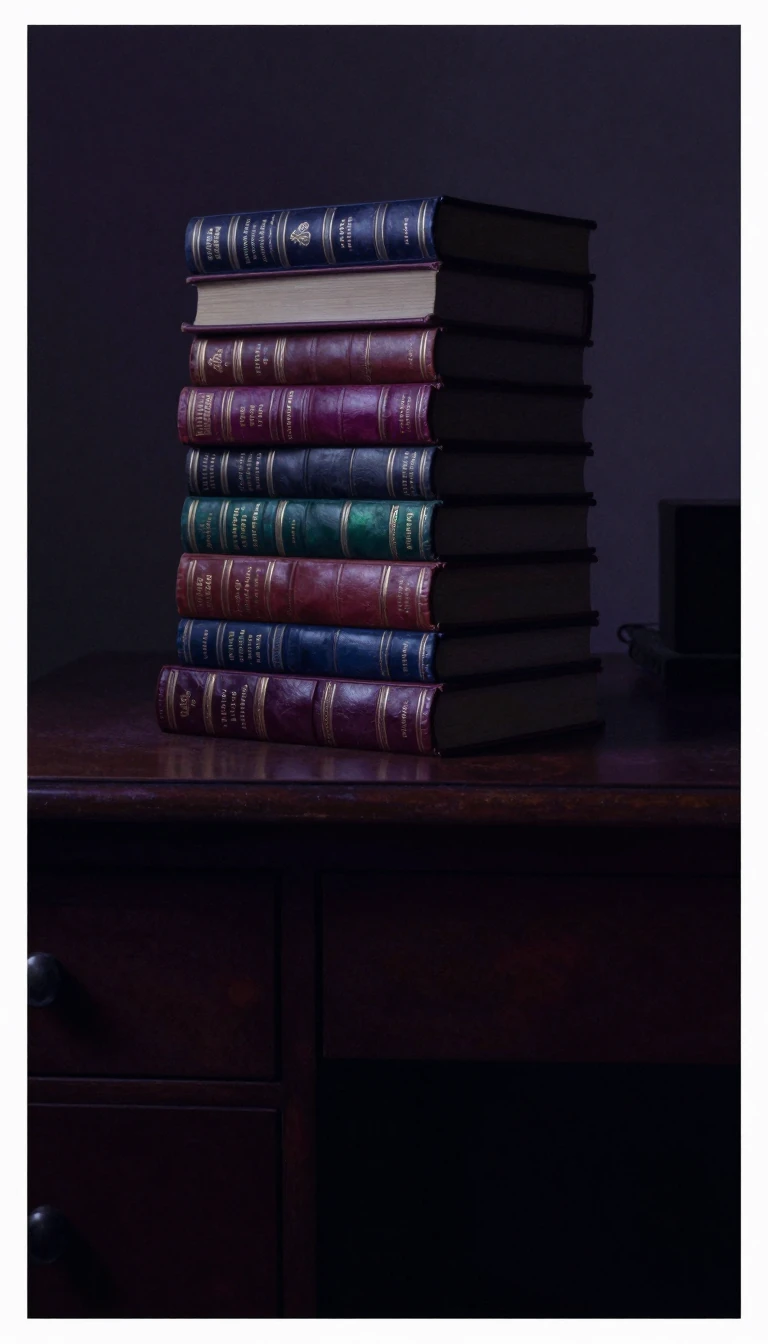 Donald Knuth's book on compilers grew into a seven-volume life's workIn 1962 a publisher asked Donald Knuth for a book on compilers. He decided he first needed a theory of programming itself, and the project swelled into The Art of Computer Program…
 Dorothy Hodgkin spent 35 years working out the structure of insulinUsing X-rays bounced off crystals, Dorothy Hodgkin revealed the shapes of penicillin, vitamin B12 and, after three and a half decades, insulin. She remains the only British woman …
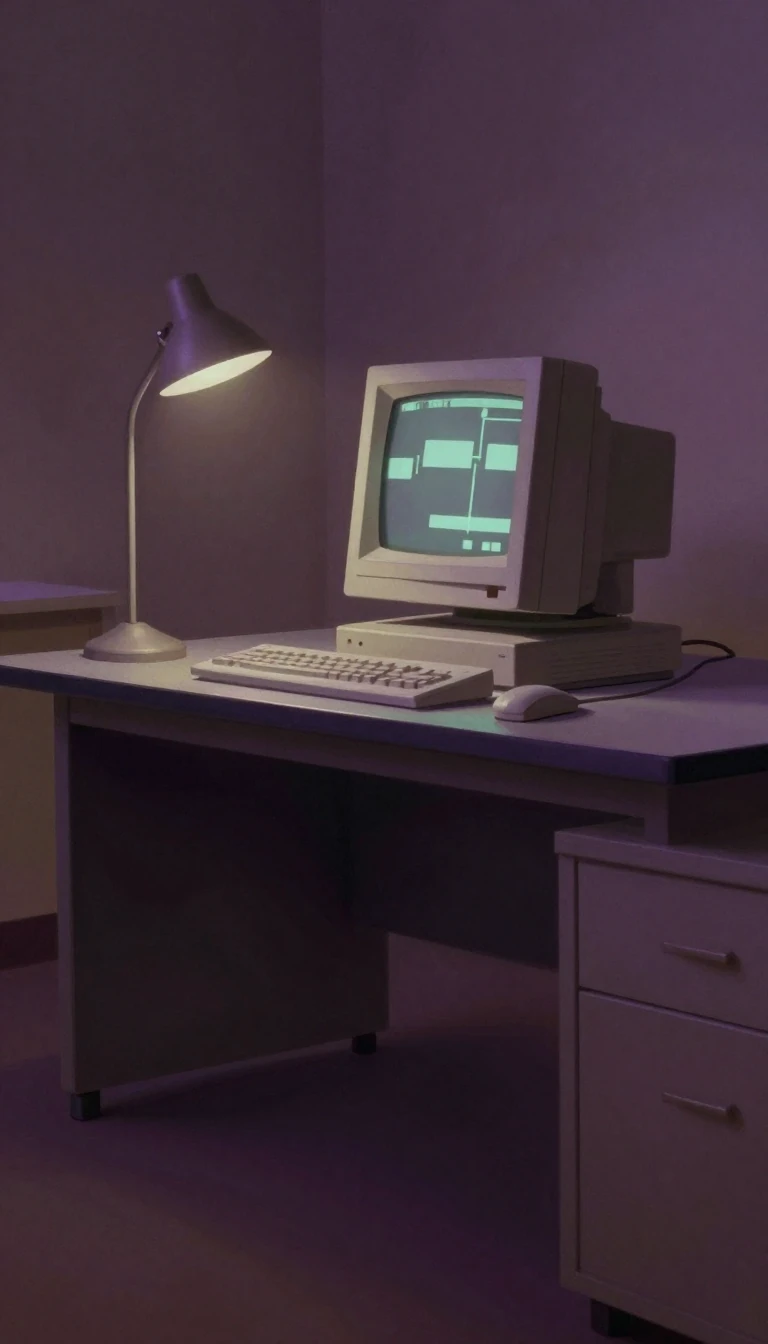 The computer mouse and hypertext both debuted at a single 1968 demonstrationIn 1968 Douglas Engelbart showed an audience a pointing device called a mouse, linked text, word processing and bitmapped screens, when most people could only reach a computer thr…
- Dijkstra's marriage certificate refused 'programmer' because no such job existedWhen Edsger Dijkstra married in 1957 and gave his profession as programmer, Dutch officials rejected it as not a real occupation. He had been the Netherlands' first one since 1952…
 Edward Drinker Cope named over 1,000 vertebrate species and nearly went brokeCope published 1,400 papers and described more than a thousand backboned animals, including dozens of dinosaurs. His feud with Othniel Charles Marsh set off the fossil race known …
- Edward Teller's father once travelled to Karlsruhe to question his switch to physicsEdward Teller, remembered as the father of the hydrogen bomb, nearly became a chemical engineer. Lectures by visiting professor Herman Mark convinced him that new physics was tran…
- Before proving the universe expands, Edwin Hubble studied law and coached basketballEdwin Hubble showed that many so-called nebulae were galaxies far beyond the Milky Way, and in 1929 confirmed that distant galaxies recede faster. Yet he first trained in law to h…
 A government accountant did world-class physics in his spare hours and won a NobelC. V. Raman spent years auditing accounts for the colonial finance service while running experiments at night in a Calcutta institute. A sea voyage made him doubt the accepted rea…
 Chien-Shiung Wu proved nature can tell left from right; colleagues got the NobelPhysicists long assumed the laws of nature do not distinguish a process from its mirror image. Chien-Shiung Wu's experiment showed that assumption, parity conservation, fails. Tsu…
 Huygens's pendulum clock stayed the most accurate timekeeper for almost 300 yearsChristiaan Huygens invented the pendulum clock, found Saturn's moon Titan, explained the planet's rings, and worked out centrifugal force a decade ahead of Newton. His wave theory…
 Claude Bernard wanted to be a playwright; a critic sent him to medicineIn 1834 a young druggist's assistant took his five-act tragedy to a Paris critic, who told him to study medicine instead. Claude Bernard went on to explain how the body keeps its …
 A student's master's thesis became the birth certificate of digital computingIn 1937 Claude Shannon showed that on-off electrical switches could carry out any operation of Boolean logic. That insight underpins every digital circuit. Eleven years later he f…
 Daniel Bernoulli tied his father for a prize, and his father banned himWhen Daniel Bernoulli shared first place with his father Johann in a Paris science contest, Johann reportedly threw him out of the house, unable to bear being matched. He is also …