 Intellect Plus
Games
257 cards. Each one is a 40-second story with a five-minute read behind it. Page 2 of 5.
 The dark military origin of the world's most flexible card gameCrazy Eights is more than a simple shedding game; it is a foundational pattern for countless variations like Uno and Mau-Mau. While children once played it with leftover cards fro…
 Before the modern pitch, ancient China used cuju to unify a sprawling empire.Long before association football, cuju served as a vital social and military tool across imperial China. Evolving from a rigorous combat exercise into a sophisticated sport that t…
 Dance Dance Revolution transformed the arcade into a high-intensity arena for digital athleticism.Since its 1998 debut, Dance Dance Revolution has evolved from a simple rhythm game into a global competitive phenomenon. By requiring players to synchronize their movements with c…
 Why Dark Souls became a legendary test of patience and player ingenuityReleased in 2011, Dark Souls redefined the action role-playing genre by rejecting modern handholding. Instead of guiding players, it demands mastery through repeated failure, care…
- From cardboard to code: how digital card games mastered the art of the collectionDigital collectible card games evolved from simple virtual replications of physical decks into a massive, billion-dollar industry. By automating complex rules and introducing mech…
 The end of the physical game era: how digital distribution transformed the industryDigital distribution has fundamentally reshaped gaming, replacing physical cartridges and discs with instant, global access. While this shift has empowered independent developers …
 Diplomacy is the board game where your greatest weapon is a well-timed lie.Created in 1954, Diplomacy strips away the dice and luck of traditional wargames. Instead, it forces seven players to negotiate, form alliances, and inevitably betray one another.…
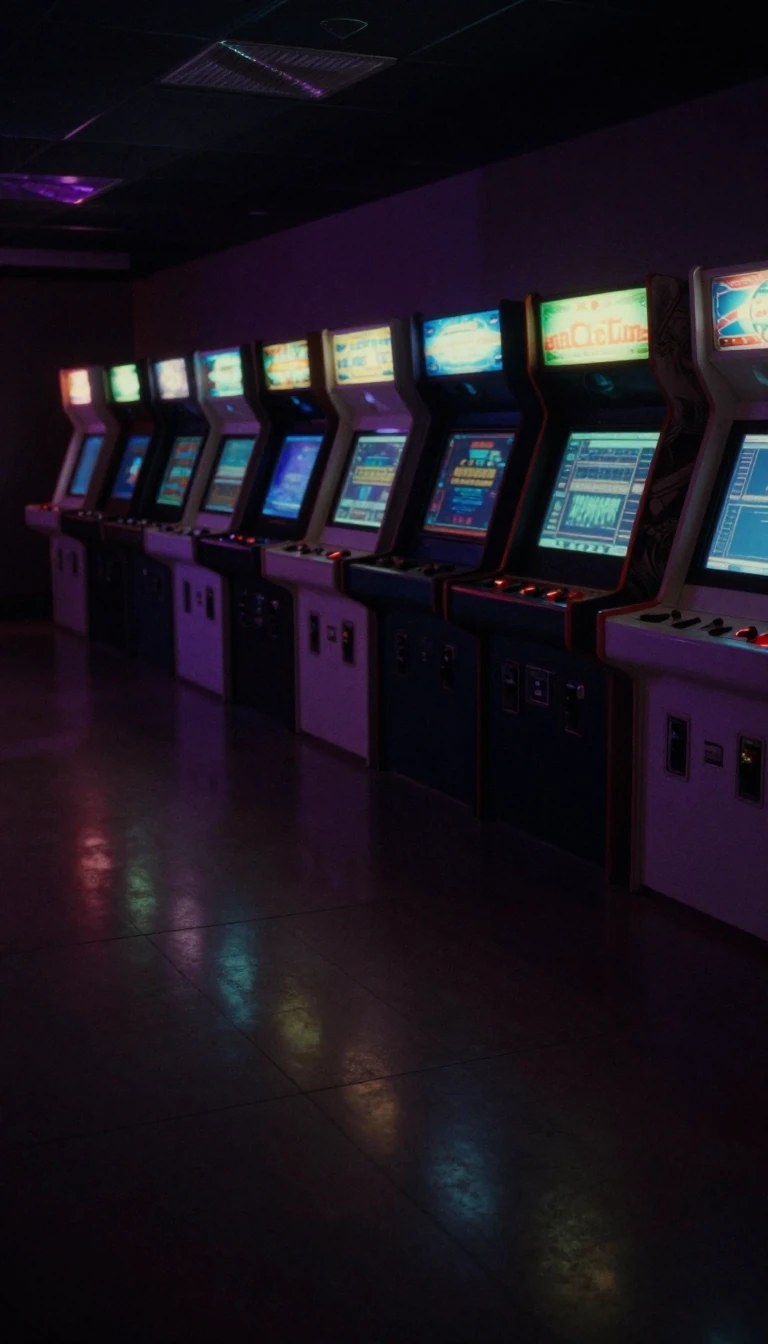 How a failed arcade cabinet became the foundation for Nintendo’s global gaming empireWhen Nintendo’s Radar Scope failed in 1980, the company was left with thousands of unsold machines. To save the startup, they tasked a young designer with creating a new game for …
 Dota 2 is a complex digital battlefield where two teams fight to destroy the Ancient.Born from a community mod for Warcraft III, Dota 2 has evolved into a global esports juggernaut. This multiplayer online battle arena pits two teams of five against each other in …
 How a Japanese role-playing series defined a genre and sold 100 million copiesSince its 1986 debut, Dragon Quest has shaped the landscape of role-playing games through intuitive design and iconic mechanics. From its turn-based combat to the beloved Slime ma…
 Beyond the casino floor: why draw poker remains the ultimate home game laboratoryWhile modern tournaments favor community cards, draw poker remains the foundational variant where players refine hands through strategic discards. From the high-stakes jackpots of…
 From ancient dice to modern beer pong, drinking games have defined social competition.Drinking games are far more than modern college pastimes. From ancient Greek target practice to Tang dynasty referees and 19th-century German card games, these rituals have long s…
- Why the simple game of Duck, Duck, Goose may be a relic of ancient courtshipWhile most know it as a playground staple for preschoolers, the game of Duck, Duck, Goose hides a complex history. Folklorist Alice Gomme once linked its mechanics to archaic marr…
 How a small, five-month project became one of the world's highest-grossing entertainment franchisesDungeon Fighter Online was never meant to be a titan. Originally conceived as a modest, short-term project by Neople, this 2D side-scrolling action game defied expectations to bec…
 Why Russia's most popular card game is designed to crown a single loserIn Durak, the goal is not to win, but to avoid being the last person holding cards. Originating in the 18th century, this Russian staple turns the traditional card game on its hea…
 Why the most effective classroom tool might be the one you play for funEducational games transform learning into an interactive narrative, leveraging our fundamental drive for problem-solving and social connection. By simulating real-world risks in a…
- Why the most effective classroom lessons might be found inside a video gameEducational gaming has evolved from simple digital drills into sophisticated simulations that teach complex history, physics, and strategy. By allowing students to fail safely and…
 How a 1984 space game used procedural generation to build an entire universeElite revolutionized gaming by fitting an expansive, procedurally generated galaxy into the tiny memory of 8-bit home computers. By using a single seed number and a fixed algorith…
 Before modern football, ancient Greeks played a high-contact ball game called episkyros.While the famous Olympic Games famously excluded team sports, ancient Greece hosted a separate, intense ball game known as episkyros. This highly physical contest involved two tea…
 Why millions of people pay to be locked in a room and solve puzzlesEscape rooms turn players into protagonists of a high-stakes narrative. By solving mental challenges and uncovering hidden clues within a limited timeframe, teams of two to ten pe…
- Why modern board games prioritize resource management and strategy over direct player conflictEurogames, or German-style games, emerged from a postwar aversion to conflict, favoring economic competition and resource management over warfare. Unlike traditional games, they e…
- How a failed game rights negotiation birthed a legendary post-apocalyptic gaming franchiseBorn from the ashes of a lost intellectual property, Fallout evolved from a spiritual successor to a 1988 classic into a sprawling atompunk universe. Today, it spans decades of vi…
- Why fighting games evolved from simple brawlers into a high-stakes digital martial artFighting games are more than just button-mashing. Born from martial arts cinema and early arcade experiments, the genre transformed into a precise, strategic discipline. By master…
- How a failed Nintendo 64 prototype birthed a 1997 gaming revolutionFinal Fantasy VII was originally destined for the Super Nintendo, then nearly collapsed on the Nintendo 64. By switching to the PlayStation’s CD-ROM format, Square created a landm…
- Why the first-person perspective changed how we experience virtual worlds foreverBy rendering the game world through the eyes of an avatar, the first-person perspective creates an immersive illusion of presence. From early wireframe flight simulators to the co…
- Why the simplest form of poker is rarely found in modern casinosFive-card draw is the quintessential entry point for poker novices and the foundation of video poker. Yet, despite its accessibility and status as a classic home game, it has larg…
- Why the original form of stud poker faded from the world's biggest stagesFive-card stud was once the definitive poker experience, born during the American Civil War. While it dominated early World Series of Poker tournaments in the 1970s, the game has …
- From simple dials to brain-computer interfaces, how we command our digital worlds has evolved.The game controller is far more than a plastic gamepad. It is an evolving bridge between human intent and digital action, spanning everything from flight-sim yokes and rhythm-game…
- How game engines transformed video games from singular experiments into a massive industrial powerhouseBefore the 1990s, video games were built from scratch, with code often discarded after a single project. Today, game engines act as sophisticated middleware, providing reusable fr…
- Are game mechanics the rules of play or the experience of playing itself?Game mechanics are the fundamental building blocks of play, yet experts cannot agree on a single definition. Are they the rigid rules governing your actions, or the invisible syst…
- Why the line between a game of skill and pure luck is legally blurredIs poker a test of strategy or a roll of the dice? The answer depends on which judge you ask. While games of chance rely on randomizing devices like cards or wheels, the distincti…
- Is your favorite game decided by your talent or just a roll of the dice?The line between skill and chance is thinner than you think. While we often categorize games by their reliance on strategy versus luck, most activities occupy a complex middle gro…
 Nintendo's GameCube was a commercial underdog that redefined the modern gaming controller layout.Released in 2001, the GameCube was Nintendo's attempt to reclaim the market with a compact, disc-based console. While it struggled to outsell the PlayStation 2 and Xbox, its innov…
- Why the term gameplay remains one of the most elusive concepts in modern designGameplay is the fundamental connection between a player and a game, yet experts cannot agree on a single, precise definition. While it emerged alongside video games in the 1980s, …
 How a massive open-world RPG became a $6.3 billion global cultural phenomenonGenshin Impact transformed mobile gaming by blending high-fidelity anime aesthetics with a complex elemental combat system. Developed by miHoYo, this free-to-play title has genera…
 From Greek Vengeance to Norse Redemption: The Evolution of the God of War FranchiseCreated by David Jaffe, the God of War series has evolved from a fixed-camera Greek tragedy into an expansive, over-the-shoulder Norse epic. With over 66 million games sold, this …
- How a team of inexperienced developers created the most influential shooter in gaming historyDeveloped by a novice team over two and a half years, GoldenEye 007 defied low expectations to become a cultural phenomenon. It transformed the first-person shooter genre, proving…
- How Grand Theft Auto V redefined the open-world blockbuster through a three-protagonist designGrand Theft Auto V shattered entertainment records by letting players inhabit three distinct criminals simultaneously. By moving beyond the single-protagonist structure, Rockstar …
- How a plastic guitar controller became a two-billion-dollar cultural phenomenonLaunched in 2005 with a modest one-million-dollar budget, the Guitar Hero series transformed rhythm gaming into a global sensation. By simulating lead, bass, and rhythm guitar pla…
- How a physics-defying shooter redefined gaming and sold 12 million copies worldwideReleased in 2004, Half-Life 2 transformed the first-person shooter genre by integrating the Havok physics engine. Beyond its intense combat, the game introduced realistic characte…
- How a failed game concept became the most influential shooter in historyWhen Valve’s debut project felt lifeless in 1997, the team took a radical risk. They abandoned traditional cutscenes, formed a rotating design committee called the cabal, and bake…
- From a Mac strategy game to a multiplatform juggernaut: the evolution of HaloOriginally conceived as a real-time strategy game for Macintosh, Halo transformed into the Xbox's definitive first-person shooter. Over two decades, the franchise has generated ov…
- Why the simplest games played with only our hands are essential for cognitive developmentHand games are far more than childhood diversions. From ancient bluffing rituals to modern classroom tools, these activities serve as vital instruments for teaching rhythm, music …
- How a bored businessman on a train sparked the handheld gaming revolutionIn 1979, a Nintendo designer watched a commuter fiddle with a calculator, sparking the idea for the Game & Watch. This simple observation birthed the D-pad and set the stage for t…
- Why the world's most popular trick-avoidance card game is often played by the wrong name.Hearts is a classic game of evasion where winning is the ultimate failure. While often confused with its aggressive cousin Black Lady, the original game has evolved through centur…
 How a Chinese mobile game became the world's highest-grossing digital entertainment phenomenonHonor of Kings dominates the global mobile market, boasting over 100 million daily active players. This multiplayer online battle arena, created by TiMi Studio Group and distribut…
 Why horror games are the only genre defined by narrative rather than gameplay mechanicsMost video games are categorized by how you play them, but horror games are defined by their intent to terrify. By stripping players of control and leveraging psychological dread,…
 Why the phrase close only counts in horseshoes is actually a technical misnomerWhile the popular idiom suggests proximity is the primary goal of horseshoes, the game is actually defined by precision. In professional play, ringers—shoes that perfectly encircl…
- Why the most addictive video games are essentially glorified, automated spreadsheetsIncremental games, or idle games, turn the act of waiting into a core mechanic. By blending repetitive clicking with complex automation, these titles create a loop of exponential …
- Before 3D graphics, players navigated complex digital worlds using only their imagination and textInteractive fiction defined early computing, allowing players to explore vast, text-based environments through simple commands. While modern gaming relies on high-resolution visua…
 Why Korean Chess Players Start With a Half-Point Advantage to Avoid a DrawJanggi is a strategic board game native to Korea, sharing roots with Chinese xiangqi but evolving into a distinct, fast-paced challenge. Unlike Western chess, players can pass the…
 The Swahili-inspired game of physical skill that conquered the global toy marketBorn from a family pastime in the 1970s, Jenga evolved from simple wooden blocks into a global phenomenon. While the game is defined by its 54-block tower and precarious mechanics…
 Keep the feather in the air: the ancient Asian sport of kicking shuttlecocksJianzi is a traditional game where players use their bodies to keep a weighted shuttlecock aloft, strictly avoiding their hands. With roots tracing back to the Han dynasty, this s…
- How 16th-century Portuguese sailors sparked a unique Japanese obsession with card gamesWhen Portuguese traders arrived in Japan during the 1500s, they brought playing cards that would eventually evolve into a diverse, distinctly Japanese cultural phenomenon. From hi…
- Kemari: The ancient Japanese sport where cooperation, not competition, is the ultimate goalForget scoring goals or defeating opponents. Kemari, a traditional Japanese game dating back over a millennium, is entirely non-competitive. Players work together to keep a deersk…
 Beyond the tag: The ancient Indian sport of Kho Kho is going globalKho Kho is a high-speed traditional Indian tag game where nine chasers hunt three defenders on a rectangular court. Players must navigate complex movement restrictions, using a ta…
- Why the most important piece in chess is often the most useless until endgameThe king is the only piece that can never be captured, yet its survival dictates the entire game. While it spends the opening and middlegame hiding behind pawns, it transforms int…
- How a series of fairy-tale adventures defined the golden age of PC gamingCreated by Roberta Williams for Sierra Entertainment, the King's Quest series pioneered animation and pseudo-3D movement in graphic adventures. Spanning from 1980 to 2016, these g…
- Why the world's most popular solitaire game remains a mathematical mystery to expertsKlondike is the definitive solitaire experience, yet its true winnability remains unknown. While digital versions have made it a household staple, mathematicians still struggle to…
 From Roman soldiers to backyard classics: the enduring evolution of lawn gamesLawn games are more than just casual backyard entertainment. From the ancient roots of ball-rolling in Rome to modern adaptations like KanJam, these games have evolved through cen…