 Intellect Plus
Organizations
83 cards. Each one is a 40-second story with a five-minute read behind it.
 The 'Dark Money' loophole: How 501(c)(4) groups influence politics anonymouslyWhy do some political groups spend hundreds of millions without disclosing their donors? It comes down to a specific tax designation. While 501(c)(3) charities are strictly barred…
- The political dynasty of Malaysia: navigating power and party shiftsMukhriz Mahathir is a primary architect of Malaysia's modern political landscape. As the son of former Prime Minister Mahathir Mohamad, his career illustrates the complex interpla…
 Why France’s elite literary council demands its members pay for their own uniformsThe Académie Française, founded in 1635 to guard the purity of the French language, is a bastion of tradition. Its forty members, known as the Immortals, hold office for life. Yet…
 How a failed psychiatric patient and a surgeon built a global recovery movementAlcoholics Anonymous began in 1935 as a desperate meeting between two men in Ohio. Today, it spans 180 countries and nearly two million members. By rejecting hierarchy and profess…
 How a 19th-century scientific society became the world's largest advocate for researchFounded in 1848 to foster collaboration, this organization evolved from a small group of geologists into a global powerhouse. Today, it publishes the prestigious journal Science a…
 How a century of legal battles shaped the American definition of constitutional freedomFounded in 1920, the American Civil Liberties Union has spent over a century challenging censorship and defending constitutional rights. From the famous Scopes trial to modern bat…
 How Five New York Families Transformed Organized Crime Into a Structured Corporate EmpireIn 1931, a violent power struggle for New York City's underworld ended with the birth of the Five Families. By formalizing territories and establishing a governing Commission, the…
- Why a Cold War security pact split over nuclear ships and never fully healedSigned in 1951, the ANZUS treaty was designed to secure the Pacific against communism. Yet, by 1986, it fractured when New Zealand banned nuclear-capable vessels from its waters. …
 How a wartime network of engineers built the world's premier computing societyBorn from the urgent need for communication among early computer pioneers, the Association for Computing Machinery has evolved from a small 1947 committee into a global powerhouse…
 How a party that birthed a nation eventually faced a total state banFounded in 1949 to secure Bengali rights, the Awami League evolved from a regional opposition movement into the architect of Bangladesh’s independence. Yet, after decades of domin…
 How Britain’s national academy for humanities and social sciences manages its intellectual influenceEstablished in 1902 to represent Britain on the global stage, the British Academy is more than an honorary fellowship. It acts as a powerful, government-funded engine for research…
 The Cold War alliance that failed to contain the Soviet Union or its own membersFormed to create a protective barrier against Soviet expansion, the Central Treaty Organization became one of the least successful alliances of the Cold War. Despite ambitious goa…
- The Chicago Outfit: How a Unified Crime Family Built an Empire Through Political CorruptionUnlike the fractured factions of New York, the Chicago Outfit maintained a singular, ruthless command structure for decades. By infiltrating labor unions, fixing elections, and la…
 Comecon: The Soviet-led economic bloc that struggled to trade without a marketEstablished in 1949 to coordinate the economies of the Soviet bloc, Comecon was an ambitious attempt to integrate socialist states. Yet, it faced a fundamental flaw: without marke…
- Can a Cold War relic survive the new security reality of the Baltic Sea?Founded in 1992 to bridge East-West divides, the Council of the Baltic Sea States now faces an existential pivot. With Russia gone and regional security dominated by NATO and the …
 How a Los Angeles street alliance evolved into a national criminal networkThe Crips began in 1971 as a local protection group for teenagers, but quickly transformed into a sprawling, loosely connected confederation. While traditionally associated with t…
 The euro was not an overnight invention but a decades-long pursuit of economic integration.The European Economic and Monetary Union evolved from early 20th-century proposals into a complex three-stage architecture. While it successfully unified currencies across twenty-…
- Can a Eurasian trade bloc successfully emulate the European Union's integrated market model?Founded by Iran, Pakistan, and Turkey, the Economic Cooperation Organization aims to unify regional markets. Since its 1985 inception and subsequent 1992 expansion, this intergove…
 Can a regional trade bloc truly replicate the success of the European Union?The Eurasian Economic Union aims to integrate post-Soviet states into a single market, promising the free movement of goods, capital, and labor. While it draws inspiration from Eu…
- Can a bank force a nation to become a democracy to receive its funding?The European Bank for Reconstruction and Development is a unique financial institution that does more than just lend money. Founded in 1991 to help post-communist nations transiti…
 The European Union’s secret financial engine is actually the world’s largest multilateral bank.Owned by 27 member states, the European Investment Bank operates as a massive, triple-A rated financial powerhouse. It does not touch the EU budget, instead raising billions on gl…
- How the European Single Market turned 27 separate economies into one seamless trading powerhouse.The European single market is a massive, ongoing experiment in economic integration. By guaranteeing the free movement of goods, capital, services, and people, it has reshaped the…
 Why Europe built its most powerful telescopes in the remote Chilean AndesTo unlock the secrets of the southern sky, European astronomers bypassed their own continent to build a massive observatory in Chile. Today, this intergovernmental powerhouse oper…
 Why Germany’s government is designed to prevent the political chaos of the pastGermany’s parliamentary system is built on a unique safeguard: the constructive vote of no confidence. Unlike many other democracies where a leader can be ousted by a simple major…
- The First International: How a Global Workers' Union Collapsed Under Its Own Ideological WeightFounded in 1864 to unite the global working class, the First International promised a new era of solidarity. Yet, it became a battleground for competing visions of socialism and a…
- The French Connection: How a Corsican Smuggling Ring Supplied America’s Heroin HabitFrom the 1930s to the 1970s, a sophisticated network known as the French Connection dominated the American heroin market. By refining morphine paste in Marseille laboratories, Cor…
 France's Fifth Republic: A Hybrid System Designed to End Decades of Political InstabilityBorn from the turmoil of the 1958 Algerian crisis, France's Fifth Republic replaced a fragile parliamentary tradition with a unique semi-presidential structure. By balancing a pow…
- Japan’s government separates ceremonial tradition from the raw mechanics of executive powerJapan operates as a unitary state where the Emperor serves as a purely symbolic figurehead. Real authority rests with the Cabinet and the Prime Minister, who are held accountable …
 How the Russian government functions under its current constitutional frameworkThe Russian government operates as a federal executive body distinct from the presidency, yet it remains deeply tethered to presidential authority. While it manages the nation's b…
- The GRU is Russia's most secretive and risk-prone foreign military intelligence agency.Unlike Russia's other security services, the GRU reports directly to the military command rather than the president. Known for its willingness to execute high-stakes, clandestine …
 Can a regional bloc survive when its signature trade agreement remains unratified for decades?The GUAM Organization for Democracy and Economic Development, comprising Georgia, Ukraine, Azerbaijan, and Moldova, was designed to foster regional integration and security. Despi…
- Hizb ut-Tahrir seeks to unify all Muslim-majority lands under a single global caliphate.Founded in 1953, this international political organization aims to replace existing nation-states with a unitary Islamic government. Operating in over 50 countries, the group util…
 The 1889 global forum that helped build the modern international orderFounded in Paris to champion representative democracy and peace, the Inter-Parliamentary Union remains a unique global assembly. While its early focus was on conflict arbitration,…
 Who decides what a planet is? Meet the global authority on the cosmos.The International Astronomical Union is the ultimate arbiter of the night sky. Founded in 1919, this organization does more than just name stars and planets; it sets the global st…
 Why the world’s most precise measurements are managed from a pavilion near ParisThe International Bureau of Weights and Measures ensures global consistency in everything from atomic time to chemical standards. Born from 19th-century geodetic necessity, this i…
 How the International Chamber of Commerce shapes the rules of global businessFounded in 1919 to champion free capital flow and open markets, the International Chamber of Commerce acts as a global architect for trade. From setting voluntary commercial stand…
- How a century of global scientific cooperation evolved into today's International Science CouncilFor over a century, the International Council for Science served as a vital bridge for global research. By uniting national academies and disciplinary unions, it fostered collabor…
- How a global network of experts guards the world's most precious cultural heritage sitesThe International Council on Monuments and Sites (ICOMOS) acts as the primary scientific advisor to UNESCO, evaluating which global landmarks earn World Heritage status. With over…
- How the world’s poorest nations secure funding when traditional bank loans are out of reach.The International Development Association acts as the World Bank’s specialized arm for the world’s 75 poorest nations. By providing interest-free loans and grants, it bridges the …
 The World Bank’s private-sector sibling that operates without government guarantees for its loansEstablished in 1956, the International Finance Corporation is a unique global institution that channels capital into private enterprises across developing nations. Unlike its pare…
 How a small office in Monaco keeps the world's shipping lanes safely chartedBefore the 20th century, maritime nations used wildly different methods to map the seas, creating dangerous inconsistencies for sailors. Today, the International Hydrographic Orga…
- How the International Mathematical Union shapes the global landscape of modern mathematical researchThe International Mathematical Union acts as the central nervous system for global mathematics. Beyond awarding the prestigious Fields Medals, this organization coordinates intern…
 How a Post-War Logistics Agency Became the Global Authority on Human MigrationBorn in 1951 to manage the displacement of millions after the Second World War, the International Organization for Migration has evolved from a simple transport coordinator into a…
 How the world agrees on the name of every single chemical element and compound.Without a universal language, chemistry would be a chaotic tower of Babel. The International Union of Pure and Applied Chemistry serves as the global arbiter of nomenclature, ensu…
 The Latin Union: A Global Alliance for Nations Bound by Romance LanguagesFor nearly three decades, an international organization headquartered in Paris sought to unite the world through the shared heritage of Latin-derived languages. From its inception…
- How a 1957 prison experiment evolved into a multi-state criminal enterpriseBorn in a California detention center, the Mexican Mafia transformed from a small group of incarcerated rivals into a sophisticated, tax-collecting syndicate. By bridging the gap …
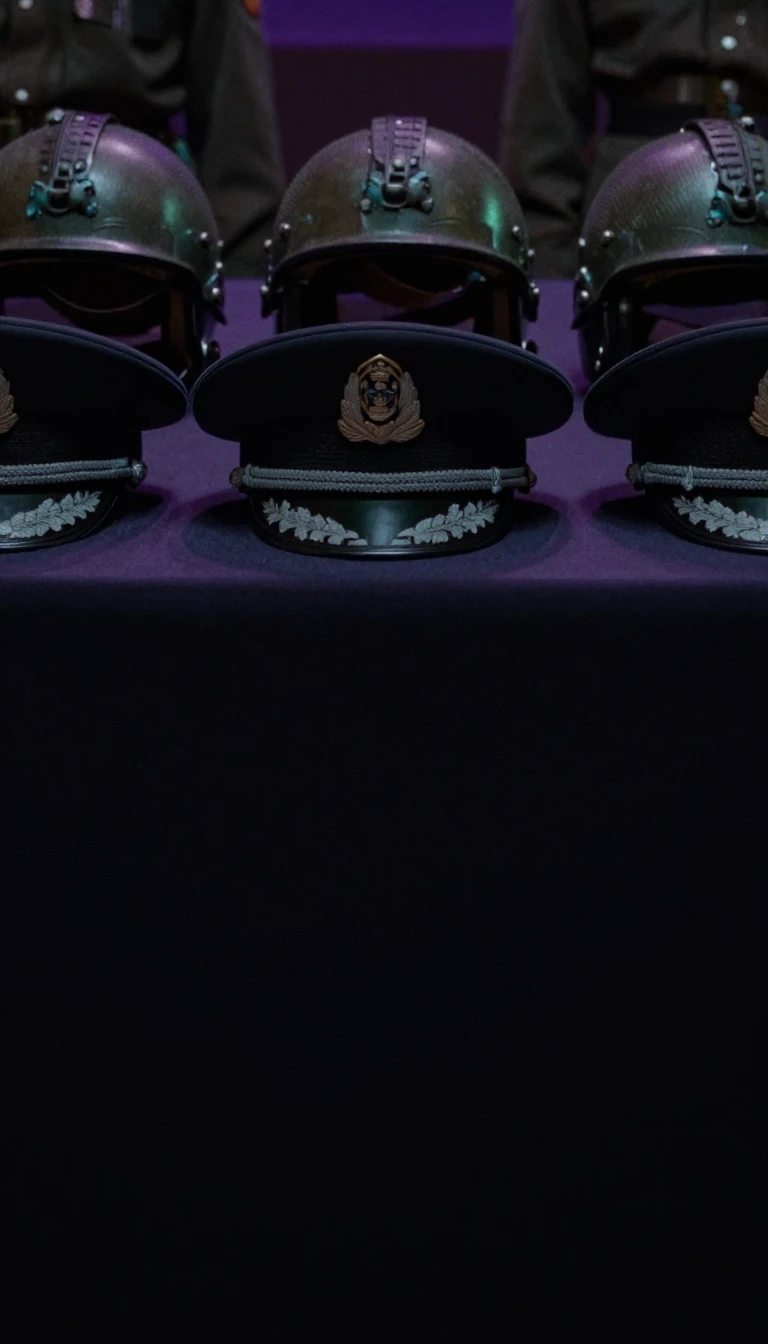 Why modern nations consolidated their military oversight into a single ministry of defenceBefore the mid-twentieth century, most nations managed their armed forces through fragmented departments, often separating army, navy, and air operations. The shift toward a unifi…
- Why the world's top diplomats are often known by their street addressesFrom the Quai d'Orsay to Foggy Bottom, the most powerful foreign ministries are frequently identified by their physical locations rather than their official titles. This tradition…
- How Israel’s secretive intelligence agency evolved from a small committee into a global forceMossad, the Central Institute for Intelligence and Special Operations, is one of Israel's three primary intelligence pillars. Established in 1949 to coordinate security efforts, i…
- How a clandestine Luanda meeting birthed a movement that ruled Angola for decadesBorn in 1956 from a secret gathering in a private home, the MPLA evolved from a quiet nationalist collective into the dominant force of Angolan politics. After fighting a brutal i…
- Could a unified Nordic federation become the world's twelfth largest economy?The Nordic Council, an inter-parliamentary body established in 1952, fosters cooperation across five nations and three autonomous territories. While it lacks formal executive powe…
- Can a regional bloc foster stability through economic cooperation in the Black Sea basin?Born from a 1992 summit in Istanbul, the Organization of the Black Sea Economic Cooperation unites thirteen nations in a quest for regional prosperity. By blending high-level dipl…
- Can a regional bloc balance the interests of tiny island nations and continental powers?The Pacific Islands Forum unites diverse nations across Oceania to tackle economic and security challenges. Yet, internal tensions—ranging from leadership disputes to the outsized…
- How the Paris Club orchestrates the global renegotiation of sovereign debt behind closed doorsSince 1956, the Paris Club has functioned as an informal, influential forum where major creditor nations coordinate to restructure sovereign debt. By requiring debtor countries to…
- How a 19th-century world fair sparked the modern global interfaith movementIn 1893, Chicago hosted the first Parliament of the World's Religions, a landmark gathering that brought together diverse faiths to foster global dialogue. What began as a side ev…
- How a century-old writers' club became a global shield for persecuted voicesFounded in 1921 to foster friendship among authors, PEN International has evolved into a formidable defender of free expression. Today, this worldwide network monitors hundreds of…
 Can animals be legal persons? The long, contentious history of the animal rights movement.For centuries, Western law categorized animals strictly as property, or legal things, lacking rights. Today, organizations like PETA challenge this status, pushing to shift animal…
- How Singapore’s dominant political force transformed a nation through decades of continuous governanceThe People’s Action Party has steered Singapore since 1959, maintaining control through rapid economic expansion and social welfare programs. By blending free-market principles wi…
- How private meetings between scientists helped avert nuclear catastrophe during the Cold WarIn 1957, twenty-two scientists gathered in a remote Canadian fishing village to discuss the existential threat of thermonuclear weapons. Operating entirely outside official govern…
- How a Paris-based non-profit fights global censorship to protect the world's journalistsReporters Without Borders defends the right to information across 180 countries. From training journalists in digital security to unblocking censored websites and lobbying interna…