 Intellect Plus
Cards starting with C
9,109 cards. Page 97 of 152.
 Can we train bacteria to turn our organic trash into biodegradable plastic?Biotechnologist Patricia Aymà Maldonado introduces a method to repurpose organic waste. By training bacteria to process discarded materials, this technology creates biodegradable …
 Can we train robotic hands to adapt to new tasks on the fly?Traditional robot training is often static. This video explores a new method for enabling robotic manipulation to learn and adjust through vision-based feedback.
 Can we transform climate anxiety into productive environmental action?Feeling overwhelmed by climate change is a normal psychological response. Psychologist Renée Lertzman explores how we can harness these intense emotions to find the resilience and…
 Can we transform discarded waste into beautiful, resilient architecture?Architect Vinu Daniel explores how the humble materials beneath our feet can be repurposed. Discover how mud, plastic, and used tires are being reimagined to create sustainable, d…
 Can we transform Mars into a second home for humanity?Terraforming Mars is often viewed as the essential first step toward colonizing the galaxy. This video examines the challenges of moving beyond cocooned settlements to creating a …
 Can we transform modern urban environments into thriving, nature-filled landscapes?Professor James Hitchmough, a noted horticulturist and author, shares his vision for integrating nature into the heart of our cities. This segment explores his approach to creatin…
 Can we transform one of Earth's greatest climate villains into a hero?Cement is the second most consumed material on our planet, but its production is a massive source of pollution. This video explores a new way to repurpose industrial waste to crea…
- Can we transform our buildings from climate liabilities into energy producers?Currently, our global structures are responsible for one third of all energy consumption and emissions. This video explores how energy policy analyst Ksenia Petrichenko proposes a…
 Can we transform our cities into engines of infinite reuse?Garry Cooper explores the potential of the circular economy, demonstrating how repurposing discarded materials from office furniture to entire buildings can drive economic growth …
 Can we transform the internet into a kinder, safer digital space?Amidst rising digital hostility and toxic comments, YouTuber Peachy Liv offers vital techniques for safeguarding your psychological health while managing social media's difficulti…
 Can we translate ancient Inca knotted cords into modern digital spreadsheets?The khipu was an ingenious device used by the Wari and Inca to store data through complex systems of knotted and coloured cords. This video explores the ongoing effort to decode t…
 Can we treat an atomic nucleus like a tiny, incompressible drop of liquid?The semi-empirical mass formula allows physicists to estimate the mass of an atomic nucleus using only its proton and neutron counts. By modeling the nucleus as a dense, spherical…
 Can we treat mental illness with the same precision as heart disease?Thomas Insel, former Director of the National Institute of Mental Health, explores whether a fundamental reframing of how we define mental illness could lead to breakthroughs in t…
 Can we treat the entire planet as a single, living, evolving urban organism?Ekistics is the science of human settlements, aiming to harmonize our physical and social environments. Coined in 1942, this framework views cities not as static structures, but a…
 Can we treat the human body as a biological internal combustion engine?Heinz Wolff’s 1975 Christmas Lectures famously compared human physiology to a petrol-driven generator. By analyzing how we consume fuel and expend energy, Wolff demonstrated that …
 Can we truly control the inner workings of generative AI?This video explores GANPaint, a method designed to provide unprecedented control over Generative Adversarial Networks, allowing for more precise image editing through visual under…
 Can we truly decode the symbolic language of prehistoric rock art?Ancient historian Tristan investigates the enigmatic carvings of the Stone Age. By examining Scottish sites alongside leading experts, this video explores how these designs were c…
 Can we truly define the boundaries of cybersecurity?Join legendary expert Professor Gene Spafford as he attempts to tackle the complex challenge of defining cybersecurity. This video provides a rare opportunity to learn from a pion…
 Can we truly disappear by bending the light around us?Invisibility is not magic, but a challenge of physics. This video explores how manipulating light waves through lenses, mirrors, and advanced materials could one day render object…
 Can we truly grasp the universe without leaving the surface of our planet?Astrophysicist Neil deGrasse Tyson and astronaut Chris Williams bridge the gap between theoretical knowledge and firsthand orbital experience. While Tyson masters the art of trans…
 Can we truly identify the safest place on Earth?Determining the world's most secure location involves more than just looking at crime rates. This video explores the complexities of global safety through the lenses of geography,…
 Can we truly predict the ultimate fate of our expanding universe?The night sky appears serene and unchanging, yet beneath the surface, the cosmos is teeming with energy exchange and matter relocation. As galaxies expand and black holes grow by …
 Can we truly prove the mysterious fifth postulate of geometry?Explore the legacy of Euclid, the Father of Geometry, and the mathematical quest to test the validity of his enigmatic parallel postulate.
 Can we truly quantify human wellbeing or is happiness an elusive personal metric?Measuring happiness is a complex challenge that goes beyond simple self-reporting. This exploration examines how institutions approach the study of wellbeing, questioning the meth…
 Can we truly quantify the complexity of the human self?From ancient theories of blood and bile to modern digital questionnaires, humanity has always sought to define the 'self.' But measuring personality is far more complex than a sim…
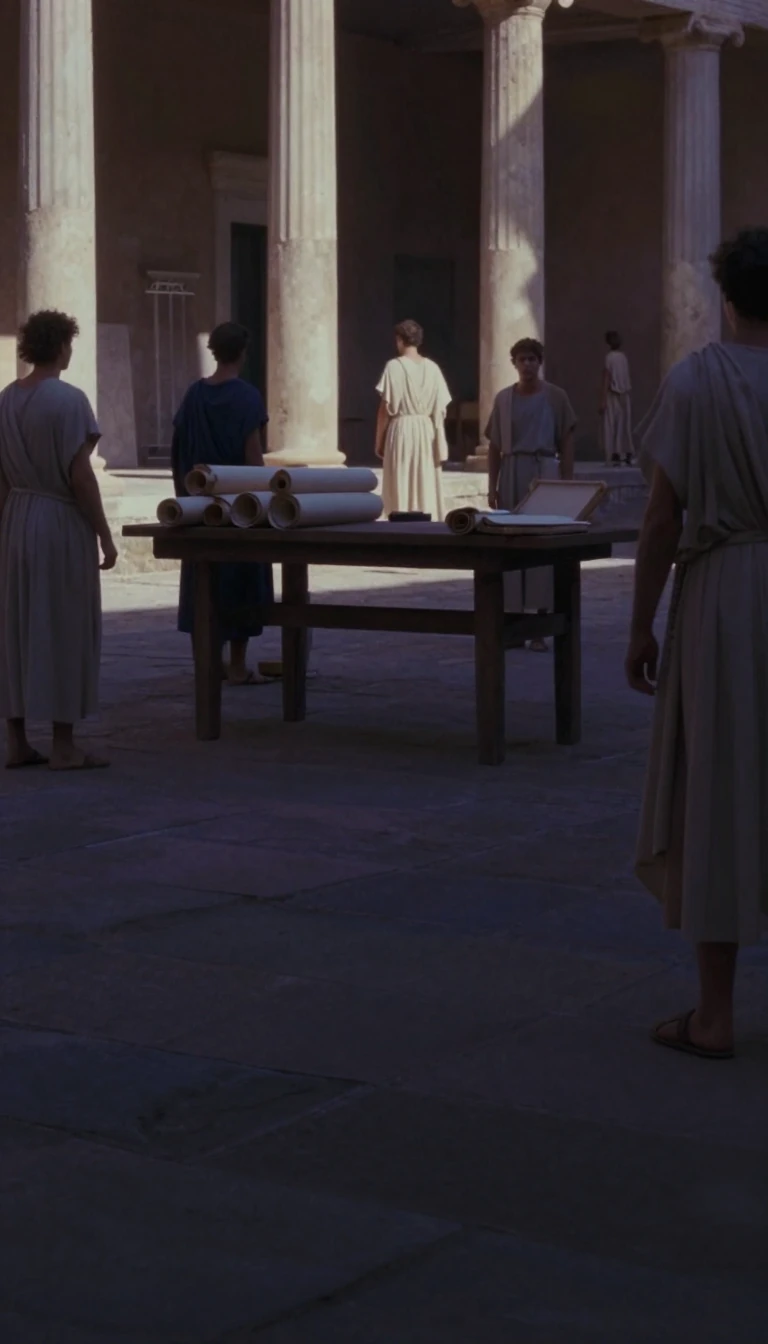 Can we truly rebuild the past without rewriting it?Anastylosis is the architectural art of resurrection. It involves re-erecting ruined monuments using their original stones, piece by piece. But in a world where history is often f…
 Can we truly reconstruct the spoken languages of the ancient world?In this lecture, Professor Rebecca Hasselbach-Andee examines the complexities of linguistic contact. Using the 24th-century BCE site of Ebla, she explores why determining how anci…
 Can we truly resurrect the extinct dire wolf, or are we just designing proxies?Robin May examines the scientific reality behind claims that the dire wolf has been brought back to life. This lecture clarifies the technical distinctions between cloning, gene e…
 Can we truly reverse environmental collapse, or are we just building novel ecosystems?Ecological restoration aims to repair damaged landscapes, but it is far more than just planting trees. It is a complex, iterative process of balancing biodiversity, climate goals,…
 Can we truly see atoms, or are we just looking at clever models?Atoms are far too small for the naked eye, yet we claim to see them. By using high-speed electrons and tungsten needles, we bypass our physical limitations. Through indirect obser…
- Can we truly separate a woman's identity from her literary craft?Professor Belinda Jack explores whether George Sand’s writing is defined by her gender or by deeper, more complex mysteries of authorship. This lecture examines the nuances of int…
 Can we truly separate an artist's personal life from their creative output?This episode of Crash Course Art History examines the enduring myth of the Great Artist. It explores the complex ethical dilemma of whether an artist's controversial actions or be…
 Can we truly speak a language we have never learned?From biblical miracles to modern reincarnation claims, the phenomenon of xenoglossy suggests humans can suddenly master foreign tongues. But is this a paranormal breakthrough or s…
 Can we truly study history while it is still happening?John Green examines the presidency of Barack Obama, navigating the fine line between current events and historical analysis to understand the foundations of modern America.
 Can we truly understand history if we did not create it ourselves?Giambattista Vico, an 18th-century Neapolitan philosopher, challenged the Enlightenment's obsession with Cartesian logic. He argued that because humans construct their own social …
- Can we truly undo extinction, or are we just creating sophisticated biological proxies?De-extinction promises to resurrect lost species like the woolly mammoth, but the reality is far more complex. Rather than faithful replicas, scientists are creating functional pr…
 Can we trust China's official economic growth statistics after three decades of rapid expansion?China has seen arguably the most significant economic growth in history over the last 30 years. This video examines the reliability of the official government figures that underpi…
 Can we trust countries to report their own carbon footprints accurately?Most global greenhouse gas data relies on self-reporting, which can be manipulated or simply incorrect. This video explores how a high-tech coalition is using satellites and AI to…
- Can we trust Gross Domestic Product as the ultimate measure of economic health?Gross Domestic Product is the primary statistic used to gauge the health of our economy. This video examines whether this widely accepted metric is truly reliable or if there are …
- Can we trust mathematical models to guide our most critical global decisions?From managing epidemics to addressing climate change, mathematical models shape our world. This lecture explores why these tools are inherently imperfect and how we can establish …
- Can we trust satellite data to track our progress toward global Net Zero targets?Satellite observations are vital for monitoring climate change, but their accuracy depends on rigorous measurement science. By applying metrological principles to space-based sens…
 Can we trust scientific studies when results are so hard to replicate?This video explores the growing crisis of scientific irreproducibility, where researchers struggle to repeat the findings of previously published work, and examines how the scient…
- Can we trust scientific theories that can never be proven or observed?For decades, the gold standard of science was falsifiability: the ability to prove a theory wrong through testing. But how do we evaluate modern ideas like string theory or the mu…
 Can we trust swarms of robots to solve our most complex human problems?Sabine Hauert explores how swarm robotics, inspired by nature, is moving from laboratory experiments to real-world applications. By mimicking the self-organized behavior of birds …
 Can we trust the black box? The race to make AI reasoning transparentModern machine learning often functions as a black box, where even designers struggle to explain why an algorithm reaches a specific decision. Explainable AI aims to solve this by…
- Can we turn a major pollutant into a building block?Concrete production is a massive source of carbon emissions, but a shift in chemistry might turn it into a carbon sink. This video explores how rethinking cement chemistry allows …
 Can we turn aquaculture waste into a harvestable, profitable, and sustainable food source?Integrated multi-trophic aquaculture mimics natural ecosystems by cycling nutrients between species. By pairing fed organisms like salmon with extractive species like seaweed and …
 Can we turn concrete into a carbon sink by growing sand in seawater?Concrete is essential for our roads and bridges, yet the process remains a massive source of carbon emissions. Scientists are now exploring a way to reverse this impact, using ele…
 Can we turn concrete into a carbon sink for the planet?Concrete is essential for our infrastructure, but its production is a massive source of carbon emissions. This video explores an innovative method to transform this building mater…
 Can we turn desalination waste into a mineral goldmine?As the global demand for clean water grows, desalination plants are left with a massive byproduct: salty brine. This video explores a novel way to repurpose this waste.
 Can we turn semiconductors into metals without breaking their underlying crystal structure?Transition metal dichalcogenides are prized for their unique electronic properties, but forcing them into a metallic state usually triggers a structural collapse. New research int…
 Can we turn silent thoughts into written words?In this demonstration, researcher Chin-Teng Lin explores how brain-computer interfaces are advancing toward a future where humans can communicate using only their neural signals.
 Can we turn the growth of cancer on or off through diet?Biochemist T. Colin Campbell suggests that the secret to managing chronic disease might not lie in your genes, but in your plate. Through decades of research, he has explored how …
 Can we turn the vacuum of space into a solid crystal?Physics suggests that empty space is never truly empty, but instead teems with active quantum fields. This video examines the possibility that under extreme conditions, these fiel…
 Can we understand the internet's impact on news by looking at the 19th century?The internet is often framed as a unique disruptor, but history suggests otherwise. By examining the 19th-century rise of mass media and the 20th-century broadcasting revolution, …
 Can we understand the universe by looking at the collective behavior of matter?Robert B. Laughlin, a Nobel laureate in physics, argues that the fundamental laws of nature are often emergent rather than reductionist. By studying how large groups of particles …
 Can we unite the physics of the massive and the microscopic?In this presentation, astrophysicist John Gribbin explores the quest for a 'theory of everything'—a single mathematical framework capable of reconciling the universe's most fundam…
 Can we unlock a life of physical and emotional vitality?Explore the foundations of well-being in this National Geographic feature. This video examines the essential elements required to improve both your physical and emotional health, …
 Can we unlock the massive energy reservoir hidden beneath our feet?Deep underground lies an energy source 50,000 times larger than all global fossil fuel reserves. This video explores how repurposing fracking technology for geothermal heat could …
 Can we use fruit peels to stop food waste?To prevent food waste, we currently rely on refrigeration and plastic packaging. Engineer and chemist Jenny Du explores a plant-based alternative that uses elements from fruit and…