 Intellect Plus
Cards starting with P
1,597 cards.
 'Powerhouse of the cell' comes from a 1957 magazine articleEvery biology student learns that mitochondria are the powerhouse of the cell. The phrase was popularised by Philip Siekevitz in a 1957 Scientific American article with that title…
 "Plastic" surgery means reshaping flesh, not operating with polymersThe label comes from Greek plastikē, the art of modelling malleable flesh—an English sense by 1598. In surgery the word appears by 1816 and was fixed by Eduard Zeis in 1838, about…
 Painting what the soul feels rather than what the eye seesExpressionism was not a style of observation, but a rebellion against it. Emerging in early 20th-century Germany, these artists traded objective reality for subjective truth, usin…
 Pakistan's most expensive film broke records despite a multi-year legal battleThe Legend of Maula Jatt wasn't just a cinematic milestone; it was a high-stakes gamble on cultural heritage. Despite a grueling copyright dispute and a massive $4.6 million budge…
 Pakistan's national space agency began as a rocket research committee during the Cold War.Established in 1961, the Space and Upper Atmosphere Research Commission, or SUPARCO, was the first space agency in the Muslim world. Initially supported by the United States to st…
 Palladium-catalyzed reactions have become a cornerstone of modern organic chemistryResearchers reviewing the history of organic chemistry found that carbon-carbon bond-forming reactions are the most significant processes in the field. While classic methods like …
 Pandemic-related plastic waste has contributed millions of tons to global pollutionResearchers using an ocean plastic model found that the COVID-19 pandemic generated an estimated 8.4 ± 1.4 million tons of plastic waste across 193 countries as of August 2021. Th…
 Papua New Guinea holds 5% of Earth's biodiversity on less than 1% landIn the remote cloud forests of Papua New Guinea, evolutionary marvels are vanishing in real-time. From mammals that lay eggs to dogs thought extinct for decades, these species rep…
 Papua's lost worlds: an ancient landscape forged by fireExplore Indonesia's eastern frontier, a land isolated for thousands of years. This documentary captures the bizarre evolution of creatures in one of the planet's richest concentra…
 Particles are not tiny billiard balls but ripples in an invisible seaIf you asked ten physicists to define a particle, you would receive ten different answers. The truth is that what we perceive as solid matter may actually be the result of quantiz…
 Particles can share a single existence across the vastness of spaceImagine two dancers performing in perfect synchrony, even if they are on opposite sides of the galaxy. In the quantum world, particles can become so deeply linked that they shed t…
 Passing the baton in orbit: how leadership shifts aboard the International Space StationWhen the International Space Station changes commanders, it is more than a mere ceremony. As one crew prepares to undock and return to Earth, the remaining orbital residents must …
 Pasteurized gut bacteria supplementation may improve insulin sensitivity and cholesterol levelsResearchers conducting a pilot study of overweight and obese volunteers found that daily oral supplementation with pasteurized Akkermansia muciniphila could improve several metabo…
 Pathogenic E. coli strains emerge from specific genetic backgrounds to optimize fitnessResearchers reviewing the population genetics of Escherichia coli found that while many diverse strains live as harmless gut residents, only a few lineages consistently cause dise…
 Pavlopetri: The Bronze Age City Beneath the SeaA documentary on Pavlopetri, the oldest known submerged town, detailing its Bronze Age history, modern discovery, and current threats.
 Peanut butter and high-tech cameras reveal the secret lives of manta raysFor years, scientists could only observe manta rays from a distance or through expensive satellite tags. Now, a simple but effective adhesive is allowing researchers to see these …
 Peanuts are not nuts and kidney beans can be toxicFrom hummus to baked beans, legumes are culinary staples with surprising biological quirks. This video explores 18 common varieties, revealing their origins, unique safety profile…
 Peeling back the layers to witness Earth's violent originsTravel back in time to see the explosive formation of our planet. This video uses modern technology to reveal what lies beneath the surface, transforming geological imagination in…
 Peer review remains the gold standard for academic trust in the digital eraAn international study of 4,000 academic researchers found that despite the shift toward digital platforms, peer review remains the primary indicator of trustworthiness for schola…
 Peering beneath the clouds to find a hurricane's sparkNASA is deploying a fleet of aircraft to capture the invisible mechanics of tropical storms. By looking beneath the cloud tops, researchers aim to identify the exact moment a depr…
 Peering beneath the crust of our solar system's most volcanic worldFor decades, we only saw the surface of Jupiter's moon Io—a landscape of towering mountains and active lava. Now, NASA's Juno spacecraft is looking deeper. By probing several feet…
- Peering into the galactic heart: a mosaic of 60 million starsThe center of our galaxy is so dense and bright it usually defies photography. Yet, by repurposing technology designed to hunt dark energy, astronomers have captured the most deta…
- Peering into the infant universe via 0.1 kelvin microwave detectorsTo understand how the cosmos began, scientists must look at light emitted just 380,000 years after the Big Bang. The Simons Observatory uses a high-altitude array in Chile to capt…
 Peering through the cosmic dust to witness a solar system being bornFor the first time, the James Webb Space Telescope has looked inside a dense cocoon of gas and dust. We are no longer just theorizing about how planets emerge; we are witnessing t…
 Peering through the dust to see our galaxy's heartThe Milky Way's core is hidden from our view by dense clouds of cosmic dust. This video explains how infrared technology allows us to pierce that veil and observe the violent birt…
 Pegon is an unconventional Arabic-based script used to write Javanese, Sundanese, and Madurese languages.Originating from the Javanese word for deviate, Pegon adapts the Arabic alphabet to represent sounds found in local languages but absent in Arabic. While it lacks a rigid standard…
 Penza: A Russian frontier fortress that evolved into a hub of rectilinear urban design.Founded in 1663 to guard against Crimean Tatar raids, Penza transformed from a wooden stockade into a meticulously planned city. Under Catherine the Great, it adopted the rigid, g…
 Perovskite solar cells achieve high efficiency but face significant stability hurdlesResearchers reviewing the rapid development of perovskite solar cells found that while these materials have reached certified efficiencies of 22.1% in just a few years, they still…
 Persian art is a 5,000-year-old dialogue between empires and ancestorsWhile many associate Persian art with the grandeur of Persepolis, its true power lies in its role as a cultural recycler. For five millennia, each new empire did not just create; …
 Persistent neurological and neuropsychiatric symptoms are common features of long-term COVID-19A meta-analysis of 19 studies involving 11,324 patients found that many people experience lasting neurological and neuropsychiatric symptoms at least three months after a COVID-19…
 Personal hygiene and social distancing are linked to lower COVID-19 infection ratesA systematic review and meta-analysis of 72 studies examined how various public health strategies influenced the spread of COVID-19. The researchers found that specific personal b…
- Philippe, Duke of Vendôme: From Battlefield General to the Heart of Parisian Libertine CirclesBorn into the high-stakes world of French nobility, Philippe, Duke of Vendôme, lived a life defined by military command, royal disgrace, and intellectual indulgence. As a Grand Pr…
 Philosophy is not just a thought, but a way of livingWhile Western philosophy often centers on abstract logic, Eastern traditions frequently embed wisdom into physical actions. This video explores how rituals like tea ceremonies and…
 Photography was not born in a single moment but evolved over centuriesTracing the lineage of the image reveals that photography is less a sudden invention and more a long journey from scientific curiosity to everyday art.
 Photons never slow down; only the waves they create doWhen light enters water or glass, it appears to decelerate, causing the familiar bend of a straw in a glass. Yet, according to physics, individual photons never actually lose spee…
 Photosynthesis & PollinationExplore the ancient origins and scientific journey of photosynthesis and pollination, the twin pillars of plant life and global ecosystems.
 Photosynthesis is a survival strategy, not just a food factoryWe often view photosynthesis as a simple solar-powered assembly line for sugar. But recent research suggests the process is actually a sophisticated defense mechanism. Beyond just…
 Physicists may not actually know what time isWe treat time as a constant, but in the world of high-level physics, it is one of the greatest mysteries. While we experience a steady flow from past to present, modern science su…
 Physics is not a discovery, but a decoding of universal lawsThis introductory guide moves beyond academic theory to explain how physics governs every aspect of our daily existence. It breaks down the fundamental mechanics of motion that di…
 Physics suggests that death is a reorganization, not a disappearanceWhile we often view death as a finality, physics offers a different perspective. This video explores Richard Feynman’s view on how matter and energy behave when the biological pat…
 Pigeons may navigate the world using magnetic sensors hidden in their liversFor decades, the mystery of how homing pigeons navigate hundreds of miles has baffled scientists. While many assumed the secret lay in their eyes or beaks, new research suggests t…
 Pinecones and Humidity-Responsive FabricsDiscover how the moisture-responsive movement of pinecones is inspiring new technologies like 4D-printed facades and active textiles.
 Pinpointing the exact year the modern world beganIs modernity a sudden spark or a slow burn? This video explores the chronological boundaries of our current era, seeking to identify the specific moment history shifted into the m…
 Pipelining doesn't make things faster; it just finishes more of them.Imagine a car factory where one person builds an entire vehicle alone versus an assembly line. The second method won't get the first car off the lot any sooner, but it will churn …
 Planet core mass drives atmospheric loss through photo-evaporationResearchers using models of the Kepler-36 system found that a planet's internal rock and iron core mass is a primary driver of atmospheric loss. While planets may receive similar …
 Planetary science is the ultimate multidisciplinary study of our cosmic neighborhoodWhat does it actually take to study other worlds? Dr. Marcella Yant of Lockheed Martin explains how planetary science bridges the gap between Earth science and deep space explorat…
- Planets may survive the violent death of their host starsWhen a star dies, it typically consumes everything in its path. However, new observations from the James Webb Space Telescope suggest that planets can endure this stellar apocalyp…
- Planning a trip to Kyrgyzstan? Here is how to navigate their specific entry rules.Kyrgyzstan offers visa-free entry for British citizens for up to 30 days, but the rules are strict. You must ensure your passport remains valid for six months beyond your arrival …
- Plant diseases have caused mass migrations and famines for millions of yearsPlants aren't just passive victims of nature; they are engaged in a sophisticated biological arms race. From chemical defenses to ancient pathogens, the history of plant health is…
 Plant extracts offer a sustainable way to create nanoparticles for medical useA review of research from the last 15 years found that plant-mediated synthesis provides an eco-friendly alternative to traditional chemical methods for creating nanoparticles. By…
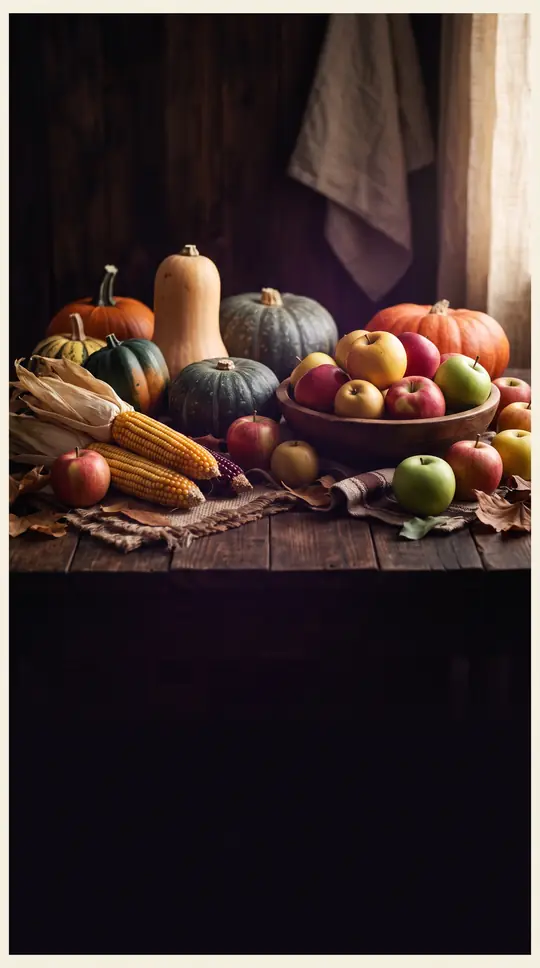 Plant-based dietary shifts could reduce global mortality and greenhouse gas emissionsResearchers using a global health and emissions model found that transitioning toward more plant-based diets could reduce global mortality by 6% to 10% by 2050. The study also obs…
- Plant-based proteins may require higher intake to match muscle growth of animal sourcesResearchers exploring sports nutrition have observed that consuming plant-derived proteins, such as soy or wheat, often results in lower muscle protein synthesis compared to eatin…
 Plants are not passive scenery; they are busy, social actors.We often view plants as static background objects, but beneath the surface lies a world of pulsing activity. From desert heights to coastal rainforests, plants behave with intelli…
 Plants are not passive victims; they wage a sophisticated chemical war.Every bite an herbivore takes is a calculated move in a multi-million-year evolutionary arms race. Plants don't just sit there; they deploy structural barriers, toxic chemicals, a…
 Plants are not passive; they possess complex social behaviors and movementsPlants are far more than static scenery. This documentary uses innovative camera techniques to reveal the hidden behaviors of the botanical world, from social interactions to comp…
 Plants may be manipulating our deepest desires to ensure their own survivalMichael Pollan challenges the idea that humans dominate nature. By examining the history of four specific plants, he reveals a reciprocal co-evolution where flora entice us into b…
 Plants may possess a hidden architectural genius we are only beginning to mapFor centuries, the world's oldest tropical forests remained largely inaccessible, hiding a complex ecosystem above the ground. Now, using hot-air balloons and specialized rafts, b…
 Plants possess a biological information superhighway that mimics human nervesWhen you touch a leaf, the plant doesn't just react; it processes a signal. Recent research into plant physiology reveals that botanical life may possess complex cognitive traits,…
 Plants use a sophisticated cellular logistics network to stay fedA tree does not simply soak up water passively; it manages an active internal shipping network. By utilizing specialized tissues to pull moisture upward and push sugars through it…
 Plants use chemical imbalances to sense the world without eyesPlants lack eyes, yet they navigate toward light and push against gravity with precision. This isn't magic; it is a sophisticated chemical signaling system. By moving hormones lik…