 Intellect Plus
Cards starting with H
40,576 cards. Page 546 of 677.
 How NASA recreates the intense heat of atmospheric entry on the groundTo ensure spacecraft survive the extreme conditions of returning to Earth, NASA uses a specialized facility to simulate hypersonic flight. This video explores the ArcJet complex a…
 How NASA replaced the heart of the Hubble Space TelescopeIn 1999, engineers discovered a critical flaw in Hubble's Power Control Unit. This video captures the high-stakes mission to replace the telescope's vital component, a process tha…
 How NASA satellites and simple cell phones are saving Pakistan's depleted Indus River basinIn Pakistan, the Indus River basin is facing a severe freshwater crisis. To manage dwindling resources, farmers are turning to an unlikely combination of space-age technology and …
 How NASA satellites are helping Jane Goodall restore Africa’s shrinking chimpanzee habitatsFor fifty years, chimpanzee populations have plummeted as their forest homes vanished. Now, the Jane Goodall Institute is turning the tide by using high-resolution satellite data …
 How NASA satellites help California wineries save water one vine at a timeManaging water across thousands of acres is a massive challenge. By using thermal sensors from 438 miles above Earth, researchers developed a way to monitor crop water consumption…
 How NASA satellites help track the origins of your favorite snacksNASA uses orbital data and advanced computer simulations to study how our planet produces the food we eat. This video explores the connection between global environmental systems …
 How NASA satellites track the planet's most vital, constantly moving resource from spaceWater is essential for life, yet it constantly shifts between liquid, solid, and gas across the globe. NASA uses a fleet of satellites to monitor these complex movements, helping …
 How NASA saved Hubble's most vital camera after a sudden electronic failureIn January 2007, a sudden electronics failure silenced the Advanced Camera for Surveys, Hubble's most used instrument. This crisis threatened the telescope's ability to survey the…
- How NASA saved the Hubble Space Telescope from a critical optical failureEd Weiler, a key figure in the Hubble program, recounts the intense challenges and eventual triumph of Servicing Mission 1. This interview explores the innovation required to revi…
- How NASA Scientists Are Turning Montana’s Harsh Prairie Snow Into Space-Ready DataNASA’s multiyear SnowEx campaign is braving the frigid, windswept Montana prairie to master the complexities of snow. By studying how snow properties shift across diverse terrains…
 How NASA scientists bridge the gap between satellite data and our daily livesNASA Science Live goes behind the scenes to explore everything from the depths of outer space to the climate of our home planet. By connecting complex satellite data with real-wor…
 How NASA scientists decode the shifting patterns of Earth's climateClimate change remains a subject of intense debate, but for NASA, it is a subject of rigorous investigation. This session explores how researchers use decades of data to understan…
 How NASA scientists monitor the complex, living pulse of our planetGo on a 40-minute visual journey through Earth's most vital systems. This cinematic tour uses satellite imagery to explore the intricate interactions within our global ecosystem.
 How NASA scientists recovered from a devastating mission loss to map Mars againAfter the Mars Observer mission failed, the Goddard team faced a critical setback. This video details their resilience as they regrouped to build a second laser altimeter for the …
- How NASA Scientists Use Earthly Maps to Navigate the Surface of MarsNASA rovers have tagged thousands of Martian rocks, hills, and craters with names to help teams track daily discoveries. While official names are regulated by the International As…
 How NASA selected the 'Original Nineteen' to endure the lunar frontierIn 1966, NASA faced a crisis: they needed a massive influx of astronauts to meet ambitious lunar goals. The result was the 'Original Nineteen,' a group selected through a grueling…
 How NASA selects the next generation of space explorers from thousands of student applicantsEvery summer, NASA’s Goddard Space Flight Center transforms into a hub of discovery for hundreds of students. In 2018, nearly 500 interns were chosen from a massive pool of over 7…
 How NASA sent images from Mars using early error correction technologyWhen the Mariner spacecraft ventured to Mars, transmitting clear images back to Earth was a monumental challenge. Professor Brailsford details the ingenious error correction metho…
- How NASA shifted from government-owned shuttles to private space taxi servicesAfter retiring the Space Shuttle in 2011, the United States lost its independent way to reach the International Space Station. To end a total reliance on Russian spacecraft, NASA …
 How NASA simulated one-sixth gravity to train Neil ArmstrongBefore the Apollo 11 mission, astronauts had to master lunar landings on Earth. This video uses archival footage to explore the specialized training facility at NASA’s Langley Res…
- How NASA simulates the vacuum of space to test Europa ClipperBefore embarking on a 1.6 billion-mile journey, NASA’s largest planetary spacecraft must survive extreme conditions. This video shows how engineers use a massive thermal vacuum ch…
- How NASA simulates the violent forces of a rocket launchTo survive the trip to space, the Nancy Grace Roman Space Telescope must endure extreme centrifugal forces. Engineers at NASA’s Goddard Space Flight Center use a massive 120-foot …
- How NASA slows a spacecraft from 12,100 mph to a crawl on MarsThis animation reel visualizes the intense seven-minute entry, descent, and landing sequence of the Perseverance rover. It provides a clear look at the physics required to safely …
- How NASA slows a spacecraft from 13,000 miles per hour to a soft landingLanding on Mars is an intense, challenging, and exciting seven-minute ordeal. To survive the journey, NASA's Perseverance rover had to shed immense speed using a combination of at…
 How NASA technology helps us understand the origins of your favorite cheese board snacks.NASA scientists use space observations and computer modeling to study the environments that produce our food. This video explores the science behind the ingredients on your plate,…
- How NASA technology is changing the way we fight and manage wildfiresNASA FireSense is integrating advanced satellite and airborne tools to provide wildland fire managers with real-time data. This initiative, involving a partnership between space a…
- How NASA tests parachutes for deep space returnsThis video captures a critical test at the U.S. Army's Yuma Proving Ground. NASA is evaluating the Orion capsule's parachutes to ensure a safe Pacific Ocean landing after high-spe…
- How NASA tests spacecraft shields against debris moving at five miles per secondMicrometeorites in space travel at staggering speeds, turning even tiny dust particles into lethal projectiles for spacecraft. To protect the ambitious Mars Sample Return mission,…
 How NASA tests supersonic parachutes for landing heavy payloads on the surface of MarsLanding heavy spacecraft on Mars requires surviving extreme supersonic speeds in a thin atmosphere. To perfect this, NASA uses sounding rockets to launch experimental parachutes i…
- How NASA tests the ultimate emergency escape hatch for astronauts on the launch padWhen a rocket faces a catastrophic failure on the pad, astronauts need a way out instantly. NASA’s Pad Abort-1 test demonstrated a sophisticated launch abort system designed to pu…
- How NASA tracked Hurricane Florence from orbit to map the storm's catastrophic inland impactWhen Hurricane Florence hit North Carolina in 2018, it was not just meteorologists watching from the ground. From the International Space Station to a fleet of specialized satelli…
- How NASA tracks every raindrop and snowflake across the globeWitness a global perspective on weather patterns through a video capturing a full week of intense precipitation, from light showers to powerful hurricanes.
 How NASA tracks the Earth's changing elevation using a single orbit of lightThe ICESat-2 mission captures the Earth's topography by measuring photon clouds from space. By analyzing ground reference track 1352, scientists can visualize elevation changes ac…
- How NASA tracks the hidden movement of water across our changing planetWater sustains two-thirds of the United States' drinking supply, yet managing this resource is increasingly difficult. By integrating satellite observations with ground-based data…
- How NASA Tracks the International Space Station as It Orbits at 17,500 Miles Per HourThe International Space Station is a marvel of human innovation, but keeping it on course requires constant precision. NASA flight controllers monitor the station's trajectory, up…
 How NASA tracks the invisible gas driving global climate changeThis briefing explores NASA's Orbiting Carbon Observatory-2 mission, a dedicated effort to map the Earth's carbon dioxide. Discover how this mission identifies the specific source…
- How NASA tracks the invisible gases warming our home planet from aboveWhile NASA is famous for deep space exploration, its Jet Propulsion Laboratory has spent decades monitoring Earth's health. This documentary explores the evolution of greenhouse g…
 How NASA tracks the rhythmic heartbeat of Earth's daily rainfallWeather does not occur at random. It follows a predictable daily rhythm known as the diurnal cycle. By merging decades of satellite data, scientists have unlocked a high-resolutio…
- How NASA tracks the shifting dynamics of our changing planetNASA has launched its Earth Expeditions campaign to better understand human impact on the world. This video introduces a series of global field experiments designed to complement …
 How NASA tracks the thousands of space rocks that could threaten our planetNASA maintains a constant watch over near-Earth objects, using advanced visualization tools to track asteroids and comets that pass through our cosmic neighborhood. By monitoring …
- How NASA trains astronauts to conduct geological research on the lunar surfaceExploring the Moon requires more than just scientific knowledge. This episode of NASA Explorers follows the specialized training astronauts undergo to adapt Earth-based geological…
- How NASA turned a century-old piano masterpiece into a lunar nature documentaryClaude Debussy’s 1905 composition Clair de Lune is famous for its quiet, contemplative mood. To celebrate NASA’s 60th anniversary, Goddard scientists transformed this melancholy p…
 How NASA turned a Cold War challenge into the first human steps on the moon.In 1961, President John F. Kennedy set a bold national goal: land a man on the moon and return him safely. By 1969, after overcoming tragedy and mastering complex orbital mechanic…
- How NASA turns live mission operations into a classroom for kidsSpace exploration is no longer a one-way broadcast. Through live feeds and interactive data, NASA is dismantling the barrier between orbital mechanics and the classroom, allowing …
 How NASA turns raw Martian data into immersive 360-degree virtual reality experiencesYou can now explore the Martian surface from your own home. By stitching together high-resolution imagery from orbiters and rovers, NASA and the American Museum of Natural History…
- How NASA used a decade of airborne missions to map the world's melting iceBetween 2009 and 2019, NASA’s Operation IceBridge filled a critical gap in satellite coverage by flying specialized aircraft over the Arctic and Antarctic. By deploying advanced s…
- How NASA used a global selfie to map the world's environmentTo celebrate the 44th Earth Day in 2014, NASA launched a massive digital experiment. They invited people across the globe to post selfies with their local environments, aiming to …
- How NASA used a modified Gulfstream jet to simulate shuttle landingsBefore Endeavour’s final voyage, astronauts didn't just study manuals; they flew a specialized aircraft designed to mimic the orbiter's unique handling. This high-stakes rehearsal…
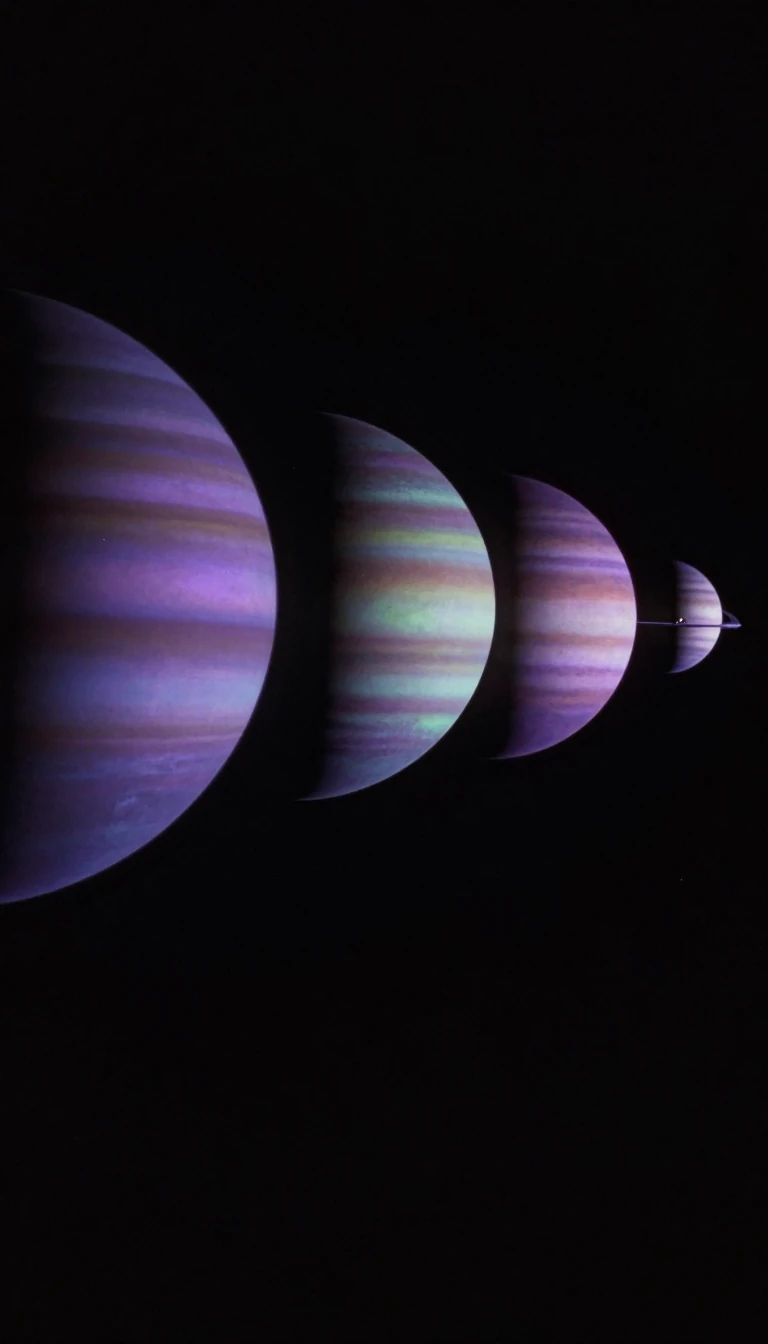 How NASA used a recycled Voyager part to map a hidden worldBefore 1990, the surface of Venus was a total mystery, hidden behind permanent, thick clouds. To pierce this veil, NASA launched the Magellan spacecraft, a mission built largely f…
- How NASA used an unmanned aerial system to track the Orion spacecraft's returnWhen NASA's Orion crew module returned to Earth in 2014, it didn't land alone. An unmanned aerial system, known as Ikhana, played a critical role in monitoring the spacecraft duri…
- How NASA used light echoes to map a black hole's shrinking coronaBy tracking X-ray reflections from a stellar-mass black hole 10,000 light-years away, scientists have observed its corona contracting from 100 miles to just 10. This breakthrough,…
- How NASA used origami to launch the largest observatory in spaceTo capture the universe's dimmest infrared light, the James Webb Space Telescope needed a massive mirror. But how do you fit a structure larger than a tennis court inside a narrow…
- How NASA used the Space Shuttle to create an ultra-high vacuum in orbitDuring the 1990s, NASA deployed a unique spacecraft designed to manufacture materials in the pristine environment of space. This video examines the Wake Shield Facility, a special…
- How NASA used twin spacecraft to see the sun in three dimensionsLaunched in 2006, NASA’s STEREO mission fundamentally changed solar science by placing two observatories in opposite orbits. By fanning out from Earth, these twin spacecraft provi…
- How NASA uses a helicopter scout to navigate the dangerous terrain of MarsNASA celebrates one year of the Perseverance rover on Mars by detailing how the mission team communicates across space and utilizes the Ingenuity helicopter to scout ahead for the…
- How NASA uses a hypervelocity gun to simulate extreme space impacts on EarthNASA Ames Research Center operates a unique vertical gun range designed to fire projectiles at orbital speeds. This facility allows scientists to replicate high-velocity impact co…
- How NASA uses a simple plush toy to signal the arrival of microgravityThe Artemis II mission will carry a unique zero gravity indicator to signal when the Orion spacecraft enters microgravity. NASA invited the public to design this mascot, which mus…
- How NASA uses a space-based spectrometer to track dust and cool the planetStrong winds carry mineral dust across continents, heating or cooling the atmosphere in ways we barely understand. Mounted on the International Space Station, NASA’s EMIT mission …
 How NASA uses aircraft and ground teams to decode the Arctic's changing landscapeThe Arctic appears pristine from above, but NASA’s ABoVE project reveals a landscape in flux. By combining ground-level field research with airborne radar, scientists are mapping …
- How NASA uses aircraft to see what satellites might missWhile a fleet of 17 satellites provides a global view of our planet, they cannot always capture every detail. To solve complex puzzles like hurricane formation or local air qualit…